




1. Rule Out The Abiotic
The first, most fundamental step in evaluating a potential biosignature—a sign of life—is to exhaustively rule out every conceivable non-biological explanation. Many chemical compounds we associate with life on Earth, like oxygen or methane, can also
be produced by purely geological or chemical processes. For instance, a planet's atmosphere might become oxygen-rich through intense photolysis, where starlight breaks down water molecules, without any need for photosynthetic organisms. The history of astrobiology is filled with ambiguous findings that were initially exciting but later attributed to non-living phenomena. Therefore, the central question must always be: is there any known (or even theoretical) abiotic process that could mimic this signal? Only when all such possibilities are eliminated can the biological hypothesis be seriously considered.
2. Check For Contamination
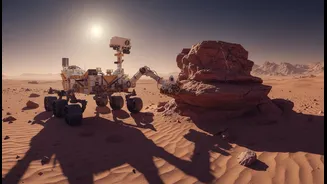
One of the biggest hurdles in life detection is ensuring we haven't simply found our own reflection. This means rigorously checking for terrestrial contamination. Spacecraft and landers are built on Earth, an environment teeming with microbes. Despite stringent cleaning procedures, it's incredibly difficult to launch a perfectly sterile piece of equipment. The Viking Mars landers in the 1970s returned results that, at first, seemed to indicate metabolic activity in the Martian soil. However, a fierce debate continues to this day about whether the results were from Martian life or a reaction caused by unexpected soil chemistry, with the lack of organic molecules found at the same time weighing against a biological interpretation. Any claim of finding life requires bulletproof evidence that the detected organisms or molecules weren't just stowaways from home.
3. Demand Multiple Lines of Evidence
A single data point, no matter how tantalizing, is not a discovery. Robust scientific claims, especially one as monumental as finding alien life, require multiple, independent lines of evidence. For example, detecting a potential biosignature gas like dimethyl sulfide in an exoplanet's atmosphere is a fascinating start. But to build confidence, scientists would also want to see evidence of a climate that could support the proposed life, such as the presence of liquid water. They might look for other chemical imbalances in the atmosphere that point to a large-scale biological metabolism at work, a state known as thermodynamic disequilibrium. A single thread can easily break; a discovery is woven from many threads braided together. This approach is central to new frameworks like NASA's Confidence of Life Detection (CoLD) scale, which proposes a seven-level system to track confidence from initial signal to confirmed evidence.
4. Understand the Environmental Context
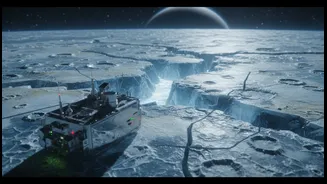
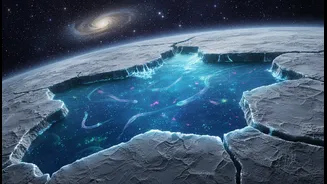
A potential biosignature cannot be interpreted in a vacuum. It must make sense within the broader environmental context of the planet or moon where it's found. Is the setting habitable for the type of life being proposed? A discovery of complex organic molecules is more compelling in the subsurface ocean of a moon like Enceladus, which is known to have liquid water and energy sources, than it would be on a dry, irradiated surface. Scientists must consider factors like temperature, pressure, radiation levels, and the availability of solvents like water. A proposed biosignature is only as strong as its environmental context is plausible. This is why so much effort is put into characterizing planetary environments, even before the direct search for life begins.
5. Assess the Sample’s Journey
For missions that analyze samples, whether from a Martian meteorite found on Earth or a scoop of soil from a rover, the sample's history is paramount. How was it collected and handled? Could it have been altered after collection but before analysis? In the famous case of the Martian meteorite Allan Hills 84001, scientists in 1996 announced it contained what looked like microscopic fossils. Subsequent, intense scrutiny from the broader scientific community suggested these features could also be explained by non-biological processes or might be the result of contamination after landing on Earth. This highlights the need to understand a sample's entire journey and the potential for changes along the way, a crucial element for future sample-return missions.
6. Be Wary of Agnostic Biosignatures
While looking for 'life as we know it' (carbon-based, water-dependent) is a logical starting point, scientists also consider 'agnostic' biosignatures—signs of life not tied to a specific biochemistry. These might include unexpected levels of chemical complexity or strange patterns that are hard to explain through simple geology. For example, a complex network of chemicals in an atmosphere that seems statistically unlikely to have formed by chance could be a sign. However, this approach carries its own risks. Because we are looking for 'life as we don't know it,' the potential for false positives is high. We don't know all the ways a planet can be weird without being alive. This makes it a fascinating but challenging frontier in the search for life.