








The Belief: A Connection Through Your Soles
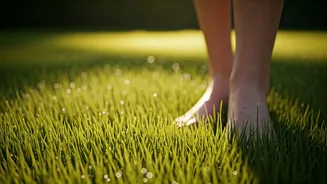
The idea that walking barefoot on grass can improve eyesight isn't new. It’s rooted in principles of reflexology and traditional Chinese medicine. These practices propose that our feet are like maps of our entire body, with specific pressure points on the
soles connected to different organs, glands, and body parts. According to reflexology charts, the nerves corresponding to the eyes are located in the area just below the second and third toes. The theory is that when you walk barefoot, especially on a textured surface like grass, these nerve endings are stimulated. This gentle pressure is believed to clear energy blockages and improve the function of the corresponding organ—in this case, the eyes. The cool, dewy grass is thought to have an additional soothing and healing effect.
The Science: Grounding and Its Limits
When we look for modern scientific validation, the picture becomes more complex. There is no direct clinical evidence to prove that mechanically stimulating the soles of your feet can cure eye conditions or reverse refractive errors like myopia or hyperopia. However, there is a related field of research around a concept called “earthing” or “grounding.” This theory suggests that direct physical contact with the vast supply of electrons on the surface of the Earth can have positive physiological effects. Some small studies suggest that grounding may reduce inflammation, pain, and stress, and improve sleep and blood flow. While stress and inflammation can contribute to health issues, a direct link between walking barefoot and healing specific eye ailments like strain remains unproven and is considered highly speculative by mainstream ophthalmology.
The Real Magic of a Morning Walk
So, if the foot-to-eye connection is weak, why do so many people feel better after a morning walk? The benefits are real, but they likely have little to do with reflexology. Firstly, going for a walk gets you to look away from your screens. When you’re outdoors, your eyes naturally focus on distant objects—trees, the horizon, the sky. This is a crucial exercise for relaxing the ciliary muscles inside your eyes, which get overworked from constantly focusing on near objects like your phone or laptop. Secondly, exposure to natural morning light helps regulate your body’s circadian rhythm, which improves sleep quality. Poor sleep is a major contributor to tired, dry, and irritated eyes. Finally, any form of light exercise, including walking, reduces stress and releases endorphins. Since stress can heighten our perception of discomfort, including eye strain, a relaxing walk can make your eyes feel better simply by improving your overall sense of well-being.
Proven Ways to Fight Eye Strain
While a morning walk is wonderful, for targeted relief from digital eye strain, you need to rely on methods backed by ophthalmologists. The most famous is the 20-20-20 rule: every 20 minutes, look at something 20 feet away for at least 20 seconds. This simple habit gives your eye muscles a much-needed break. Ensure your workspace is well-lit and your screen is positioned at eye level, about an arm's length away. Remember to blink! We blink far less when staring at screens, which leads to dry eyes. Make a conscious effort to blink fully and frequently. Using lubricating eye drops can also provide temporary relief. Most importantly, if you experience persistent eye strain, headaches, or changes in your vision, schedule a visit with an eye doctor.
Walk Barefoot, But Walk Smart
If you enjoy the sensation of walking barefoot on grass, there’s no reason to stop, provided you take precautions. Public lawns and parks can hide sharp objects like glass, stones, or metal, as well as bacteria and fungi that can cause skin infections. Tetanus is also a risk if you get a puncture wound. Choose a clean, familiar, and well-maintained grassy area. Visually inspect the path before you walk. After your walk, wash your feet thoroughly with soap and water. For many, the mental benefits of connecting with nature in this simple way are significant, and that in itself is a valid reason to do it.