






The Rise of Invisible Money
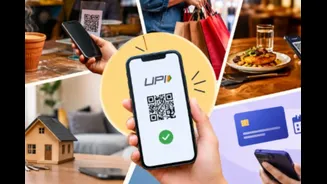
The Unified Payments Interface (UPI) has fundamentally changed how India transacts. From bustling city markets to quiet neighbourhood Kirana stores, the QR code has become ubiquitous. This digital revolution offers incredible convenience, making it possible
to pay for almost anything with a quick scan of your phone. Person-to-merchant transactions now account for a majority of UPI volume, and the average transaction size has decreased, highlighting its use for frequent, small purchases. Studies show that UPI adoption has significantly increased the ease and speed of transactions, encouraging more frequent buying. This shift from physical cash to digital numbers, however, has a profound psychological effect. When you hand over a crisp ₹100 note, you feel the departure of that money. With UPI, the transaction is abstract and frictionless, a mere tap on a screen. This 'invisibility' of money makes each small spend feel insignificant in the moment.
The Psychology of Frictionless Spending
Behavioural economists have long talked about the 'pain of paying'—the psychological discomfort we feel when parting with physical cash. This friction causes us to pause and consider a purchase. Digital payments, by their very design, remove this friction. The process is so seamless that it can bypass our critical thinking, reducing the cognitive load associated with financial decisions. Research indicates that this lack of friction encourages impulse buys and higher spending. Studies have shown people are willing to pay significantly more when using cards compared to cash, and the effect is magnified with instant mobile payments. The convenience of not needing to carry exact change or wait for a card machine turns every small purchase, from a ₹20 chai to a ₹100 auto fare, into an effortless, almost unconscious, act. One study introduced the concept of 'Spendception' to describe how the reduced visibility of digital payments lowers our psychological resistance to spending. This effect is particularly strong among younger generations who have grown up with seamless checkout as the norm.
Death by a Thousand Digital Cuts
While a single ₹50 payment for a snack seems harmless, the cumulative effect can be damaging to a monthly budget. This is the classic 'death by a thousand cuts' scenario. Each transaction is too small to trigger financial alarm bells, but together they form a steady drain on your account. Without the visual cue of a thinning wallet, it becomes incredibly difficult to keep a mental tally. By the time your bank statement arrives, it’s a chaotic list of tiny debits that are hard to track and categorise. This is a common struggle, with many finding it difficult to maintain consistency with manual expense tracking. Research has confirmed that the ease of UPI can contribute to increased discretionary spending, with some studies finding that nearly 75% of users reported spending more after adopting the service. This isn't a failure of personal discipline but a predictable outcome of a system designed for ultimate convenience.
Reclaiming Control of Your Digital Spends
The good news is that awareness is the first step toward control. While the convenience of UPI is undeniable, managing it requires a more conscious approach. Many UPI apps, including Google Pay, PhonePe, and the BHIM app, have built-in expense tracking features that automatically categorise your spending. Taking a few minutes each week to review these summaries can provide a clear picture of where your money is going. Setting a weekly budget for miscellaneous expenses like food and transport can also be effective. Some apps even allow you to set self-imposed spending limits and will send you alerts as you approach them. For those who want more detailed analysis, third-party apps are available that can read bank SMS alerts to automatically log and categorise every UPI payment without needing direct bank access. The key is to reintroduce a moment of reflection that frictionless payments have removed, turning invisible spending visible again.