



The Moon’s Sharpest Problem
For billions of years, the Moon has been bombarded by micrometeorites without an atmosphere to protect it. This constant barrage has pulverized the surface rock into a fine powder called regolith. Unlike on Earth, where wind and water smooth particles
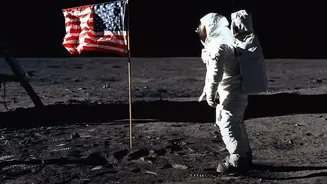
over time, lunar dust particles remain jagged, sharp, and glass-like. This abrasive material is also electrostatically charged by the solar wind, making it incredibly sticky. During the Apollo missions, astronauts discovered just how troublesome this dust could be, as it clung to everything it touched—spacesuits, tools, and equipment. Apollo 17 commander Eugene Cernan described it as one of the most “aggravating, restricting facets of lunar surface exploration.”
A Gritty Threat to Astronauts and Tech
The dangers of lunar dust are twofold: it threatens both the health of astronauts and the integrity of their equipment. When brought inside the lunar module, the fine particles caused what astronauts called “lunar hay fever,” leading to sneezing, watery eyes, and sore throats. Scientists are concerned that long-term exposure could lead to more serious respiratory issues, as the silicate particles are similar to those known to cause lung damage on Earth. The dust is also a serious mechanical hazard. Its abrasive nature wore through layers of spacesuit boots, scratched helmet visors, and clogged the seals of sample containers during the short Apollo missions. For the long-duration stays planned for the Artemis program, this wear and tear could lead to critical equipment failures, affecting everything from life support systems and solar panels to scientific instruments.
NASA's Lunar Detective Toolkit
To prepare for a sustainable presence on the Moon, NASA is intensely focused on understanding and mitigating the dust problem. This involves a multi-pronged investigation strategy. On Earth, at facilities like the Lunar Development and Test Facility at Johnson Space Center, engineers use lunar dust simulants in vacuum chambers to test how hardware holds up. This allows them to evaluate the performance of spacesuits, moving parts, and new dust-removal tools in controlled, Moon-like conditions before they ever leave the planet. They are also developing novel measurement techniques, such as using portable X-ray fluorescence (XRF) analyzers to quickly quantify how much dust has accumulated on a surface, which helps in testing the effectiveness of cleaning technologies.
Experiments on the Lunar Surface
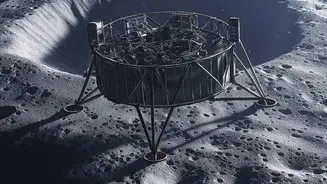
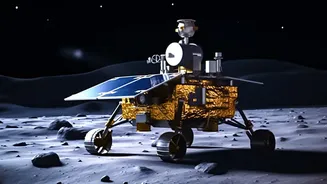
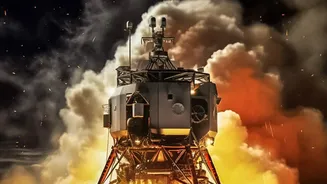
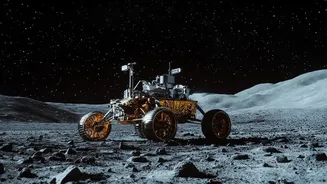
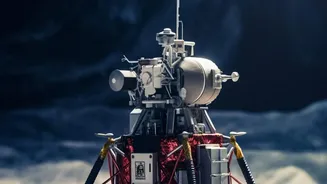
The most crucial data, however, comes from the Moon itself. Through its Commercial Lunar Payload Services (CLPS) initiative, NASA is sending a suite of instruments to the lunar surface aboard commercially built landers. Payloads like the Regolith Adherence Characterization (RAC) experiment are designed to expose various materials—fabrics, coatings, and solar cells—to the lunar environment to see which ones best resist dust. Another key technology being tested is the Electrodynamic Dust Shield (EDS), which uses an electric field to actively repel and clear dust from surfaces. Early tests of the EDS on a lunar lander have shown it can successfully remove dust, offering a promising solution for protecting everything from camera lenses to solar panels and even spacesuits. Other experiments are designed to study how rocket plumes kick up dust during landings and how it moves and settles across the surface.