

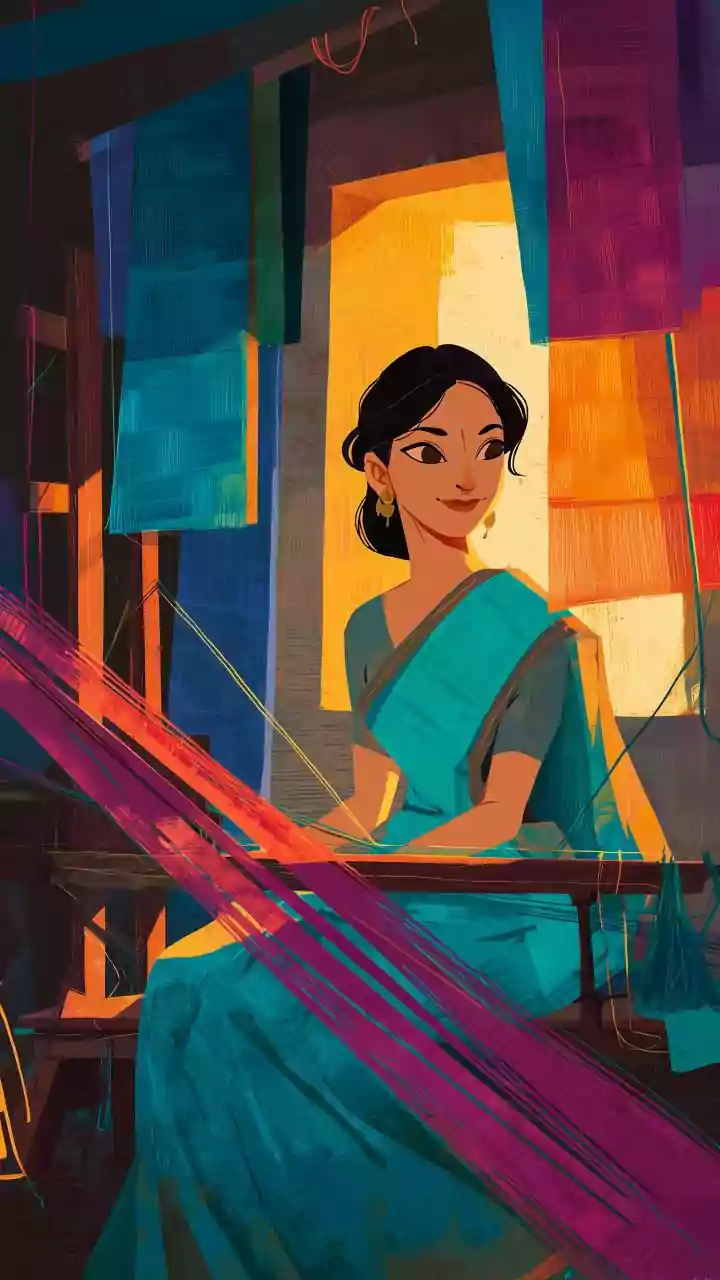
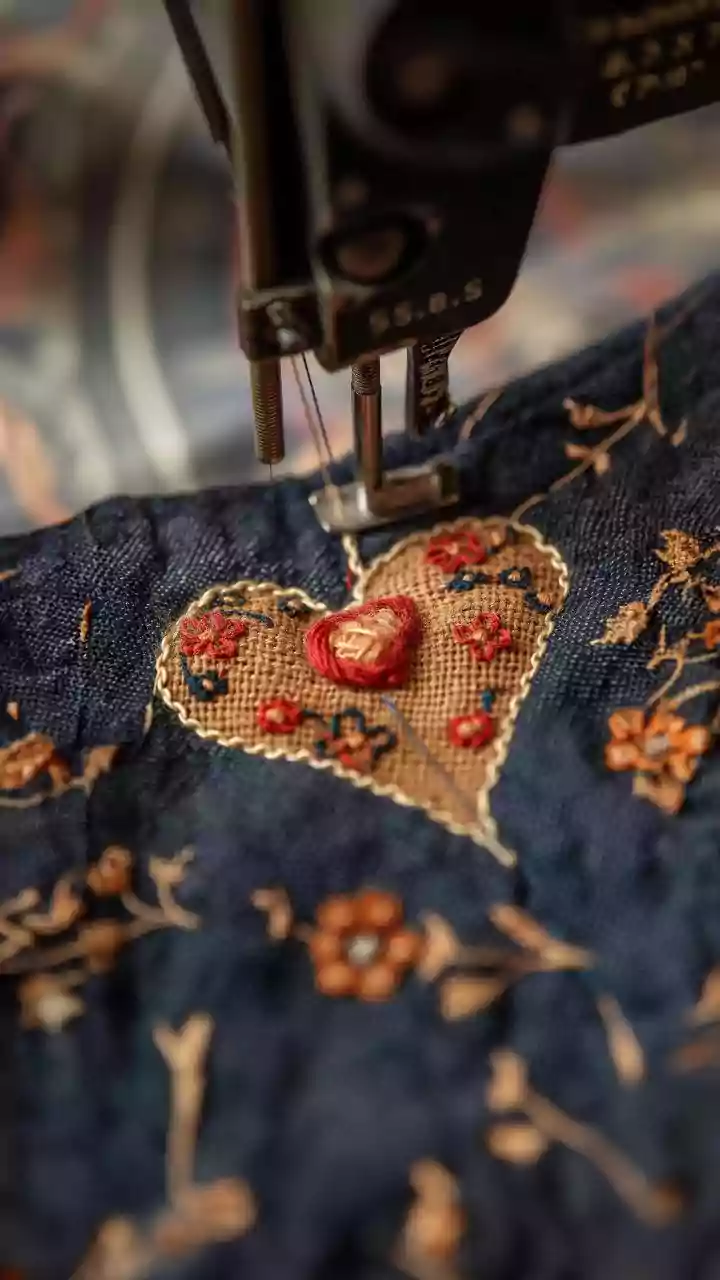
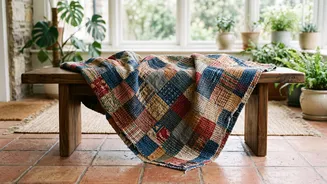
Long before 'upcycling' became a buzzword, a quiet and powerful tradition was alive in Indian homes. Here, worn-out cloth was not waste but the beginning of something beautiful, transformed by women into priceless textile heirlooms.
The Philosophy of Second Chances
In countless homes
across India, the end of a garment’s life was simply the start of a new one. The ethos of 'nothing goes to waste' drove generations of women to see potential in faded, torn, and softened fabrics. Old saris, dhotis, and clothes were not discarded but carefully collected. This practice was born from a blend of necessity and creativity, a sustainable tradition long before sustainability became a global conversation. By layering these fabrics, women could create new textiles for their families, imbuing them with history and affection. Every piece of cloth carried a memory—a wedding sari, a child's first garment—and stitching them together was an act of preserving that past. These weren't just blankets or covers; they were patchworks of life, stitched with care and resourcefulness.
Kantha: The Running Stitch of Bengal
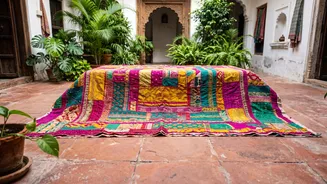
In West Bengal and Bangladesh, this tradition took the form of Kantha. The craft is deceptively simple: layers of old saris or dhotis are stacked together and joined with a simple running stitch, the 'kantha'. But in the hands of rural women, this basic stitch becomes a tool for intricate storytelling. The entire surface of the fabric is covered with thousands of these stitches, creating a unique, slightly wrinkled texture. Historically, women used Kantha to make light quilts ('lep'), swaddling clothes for babies, and covers. The threads themselves were often drawn from the colourful borders of old saris. Beyond its function, Nakshi Kantha evolved into a narrative art form, with motifs of flowers, animals, and scenes from daily life or mythology capturing the hopes and dreams of the maker.
Godhadi: The Warmth of Western India
In Maharashtra and surrounding states like Gujarat, a similar spirit is embodied in the Godhadi. A Godhadi is a hand-stitched quilt made from layers of old clothing, especially saris. Unlike the often decorative Kantha, the Godhadi is primarily about comfort, warmth, and memory. The process was a communal one; women would gather in the afternoons, especially during seasons with less farm work, to stitch and share stories, their songs and conversations woven into the fabric. A grandmother’s story tells of the patches being like family members, and the stitches the bonds between them. These quilts are deeply personal, often taking months to complete and becoming treasured family possessions, valued more for their sentimental history than any monetary worth.
Sujani: A Narrative of Care in Bihar
Another powerful example comes from Bihar, with its Sujani embroidery. The name itself is derived from 'su' (facilitating) and 'jani' (birth), as the craft originated with making soft quilts for newborns from layers of used cloth. Like Kantha, Sujani uses a running stitch, but it evolved to 'draw' narrative and pictorial designs. It became a canvas for women to express their personal stories, hopes, and even social commentary. What began as a practical way to provide a soft, protective wrap for a baby, stitched with wishes and blessings, became a distinct and celebrated art form. The craft was nearly lost but revived in the late 20th century, empowering women artisans who continue the tradition today.
From Household Craft to Modern Icon
Today, these traditions are finding new relevance. Kantha, Godhadi, and Sujani are no longer confined to the home. They are celebrated as examples of circular design and slow fashion. Designers and social enterprises are working with rural artisans, bringing these handcrafted textiles to a global audience and ensuring the women who practice these crafts gain financial independence. Owning a Kantha throw or a Godhadi quilt is now seen not just as an aesthetic choice but a conscious one, supporting centuries-old skills and the women who keep them alive. These heirlooms are a powerful reminder that the most beautiful things are often made with patience, love, and the wisdom to see value where others see waste.