






Why Balanced Strength Is Crucial
It's common for one leg to be stronger or more dominant than the other. This can happen from daily habits like always stepping up with the same foot, compensating for an old injury, or playing sports that favor one side. While exercises that use both
legs at once, like squats, are excellent for building overall power, they can sometimes mask or even worsen these strength differences as the stronger leg naturally takes over. Over time, this asymmetry can increase the risk of injury, affect your posture, and limit your athletic potential. Unilateral exercises, which train one limb at a time, are the key to exposing and correcting these imbalances.
The Power of the Walking Lunge
The walking lunge is a dynamic, unilateral exercise that builds strength, balance, and coordination all at once. Unlike a stationary lunge where you push back to the start, the walking lunge propels you forward, moving from one lunge directly into the next. This continuous movement challenges your stability and forces your core to work hard to keep your torso upright. Each step independently works the major muscles of your lower body: the quadriceps, hamstrings, and glutes. By forcing each leg to manage its own load without help from the other, walking lunges effectively identify and close the strength gap between your two sides.
How to Perform the Perfect Walking Lunge
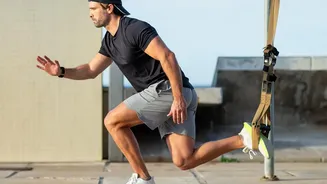
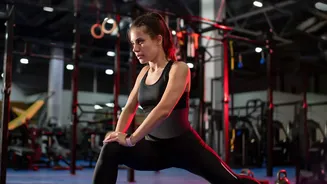
Mastering the form is essential for getting the benefits and avoiding injury. Start slow and focus on control. 1. Start Position: Stand tall with your feet hip-width apart and engage your core. You can place your hands on your hips or clasp them in front of you for balance. 2. Step Forward: Take a controlled step forward with your right leg. The step should be long enough so that when you lower your body, your front knee can form a 90-degree angle without extending past your toes. 3. Lower Down: Bend both knees and lower your hips until your front thigh is parallel to the floor. Your front shin should be vertical, and your back knee should hover just above the ground. 4. Push Through and Step: Drive through your front heel to stand up. Instead of returning to the starting position, bring your back (left) leg forward to step directly into the next lunge. 5. Continue and Alternate: Continue 'walking' forward, alternating legs with each repetition.
Common Mistakes to Avoid
Even a simple exercise can be done incorrectly. Watch out for these common errors to ensure you are performing the movement safely and effectively. Leaning Too Far Forward: This often happens due to a weak core or trying to rush. It shifts stress to your lower back instead of your legs. Keep your chest up and torso upright. Front Knee Collapsing Inward: A sign of weak hip stabilisers, this puts unnecessary strain on the knee joint. Actively track your front knee so it stays in line with your foot. Taking Steps That Are Too Short or Too Long: An overly short step can stress the knee, while an overly long one can strain the hip and hamstring. Find a stride length that allows both knees to comfortably bend to 90 degrees. Rushing the Movement: Performing lunges too quickly leads to poor form and reduces the exercise's effectiveness. Focus on a slow, controlled descent and a powerful push-off.
Integrating Lunges Into Your Routine
Because they require no equipment, walking lunges are incredibly versatile. You can incorporate them into your warmup, use them as a primary strength building exercise on leg day, or perform them as a finisher to boost your heart rate. For building strength, aim for 3 sets of 10–12 lunges per leg. If your goal is endurance, you might perform higher reps, such as 15–20 per leg. If you're new to lunges, you can start with stationary lunges (forward or reverse) to build foundational strength and balance before progressing to the walking version. For an added challenge, you can hold dumbbells or a kettlebell to increase the resistance.