





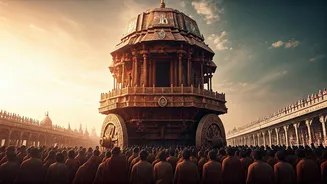


What Makes Kamakhya Prasadam Special?
In Hinduism, prasadam is food or other items first offered to a deity and then distributed among devotees as a holy blessing. At Kamakhya, one of the most venerated Shakti Peethas, prasadam is believed to carry the potent energy and blessings of the Goddess.
Unlike many temples, the central object of worship here is the 'yoni' (vulva) symbolising creation and fertility, bathed by a natural spring. The prasadam from this sacred site is thus considered exceptionally powerful and auspicious, making it a vital part of the pilgrimage experience.
The Daily Bhog: A Nourishing Blessing
The most common form of prasadam available daily is the 'Bhog,' a simple yet delicious cooked meal. Typically, this is a vegetarian meal consisting of khichdi (a mix of rice and lentils), a vegetable curry, and sometimes a sweet dish. This bhog is offered to the Goddess first before being served to the devotees. There are designated halls or areas within the temple complex where you can receive the bhog. While there is usually a system for distribution, which can be free or involve a nominal token fee, partaking in this meal is seen as a way of directly receiving the Goddess's nourishment and grace.
Dry Prasadam: Blessings to Take Home
For visitors who wish to carry the temple's blessings back to their families, the 'Shukla Bhog' or dry prasadam is the ideal choice. These are non-perishable items available at official counters within the temple premises. The packets usually contain items like 'mishri' (rock sugar crystals), dried fruits, and puffed rice. These are convenient to transport and are often kept in home altars or distributed among loved ones who couldn't make the pilgrimage. Purchasing from official counters ensures authenticity and supports the temple.
Ambubachi Mela's Sacred Angavastra
The most unique and sought-after prasadam from Kamakhya Temple is distributed during the annual Ambubachi Mela, a festival celebrating the Goddess's yearly menstruation. During this period, the temple remains closed for three days. It is believed that the waters of the natural spring turn red. Small pieces of red cloth, known as 'Rakta Bastra' or 'Angavastra,' are soaked in this holy water and distributed to devotees as prasadam. This sacred cloth is considered a powerful symbol of fertility, protection, and the creative life force of the Goddess. It is treated with immense reverence by devotees, who often keep it to ward off evil and attract prosperity.
Tips for Receiving Prasadam
To ensure a smooth and respectful experience, keep a few things in mind. First, always receive prasadam with your right hand, preferably with both hands cupped together as a sign of respect. Look for official temple counters or distribution points to avoid being misguided. Timings for bhog distribution can be specific, so it's wise to ask a temple official upon your arrival. When you receive items like the Angavastra or Nirmali (leftover flowers from worship), treat them with sanctity. Do not throw them away casually; they are meant to be kept in a clean, sacred space like a home altar or a wallet.