






The Legacy of Halley's Comet
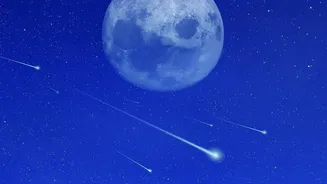
The Orionid meteor shower, active from early October to early November, is more than just a light show; it's a direct link to one of history's most famous celestial objects. Each meteor you see is a tiny piece of ice and dust left behind by Halley's Comet.
Every year, Earth passes through this stream of ancient debris, and when these particles enter our atmosphere at incredible speeds—around 66 kilometres per second—they burn up, creating the brilliant streaks we call shooting stars. While Halley's Comet itself won't be visible from Earth again until 2061, the Orionids offer an annual chance to witness its legacy.
When and How to Watch in 2026
The 2026 Orionid meteor shower is predicted to peak on the night of October 21-22. Under perfect conditions, viewers can expect to see between 10 to 20 meteors per hour. However, the 2026 viewing will face a challenge from a bright, waxing gibbous Moon, which will be in the sky for much of the night and can wash out fainter meteors. The best strategy is to plan your viewing for the pre-dawn hours, after the Moon has set but before the sun begins to rise. This will provide a crucial window of darker skies, maximising your chances of seeing the show. The meteors will appear to radiate from the constellation Orion but can be seen across the entire sky, so you don't need to stare at one spot.
Hanle, Ladakh: India's Premier Dark Sky
For the ultimate stargazing experience, no place in India compares to Hanle in Ladakh. It is home to India's first officially designated Dark Sky Reserve, situated at an altitude of over 4,500 metres. The high altitude, clear air, and near-total absence of light pollution provide exceptionally dark skies. On a clear night here, the Milky Way is often visible to the naked eye, creating a breathtaking backdrop for meteor showers. While getting to Hanle requires some planning, the reward is an unparalleled view of the cosmos. The area around the Indian Astronomical Observatory is a testament to the site's world-class conditions.
Spiti Valley, Himachal Pradesh: A High-Altitude Desert
Another phenomenal high-altitude location is the Spiti Valley in Himachal Pradesh. Often called a 'cold desert', its remote villages like Kaza and Kibber offer skies that are almost as dark as Ladakh's but with slightly easier accessibility. The dry climate means there are many clear nights, making it a reliable destination for astro-tourists. The dramatic mountain landscapes provide a stunning foreground for night-sky photography, making it a favourite for those looking to capture the Orionids against a majestic Himalayan backdrop.
Rann of Kutch, Gujarat: A Surreal Salt Desert
For a truly unique viewing experience, consider the Great Rann of Kutch in Gujarat. The vast, flat expanse of the white salt desert offers unobstructed, 360-degree views of the sky. Far from major cities, the Rann has very little light pollution. On moonless nights, the starlight reflecting off the white salt can create a surreal, almost otherworldly feeling of being surrounded by the stars. The best time to visit is from November to February, which aligns well for catching the tail end of the Orionid activity in early November.
Coorg, Karnataka: A Southern Starry Escape
You don't need to travel to the Himalayas for dark skies. In South India, the hills of Coorg (Kodagu) in Karnataka offer a fantastic alternative. Nestled in the Western Ghats, the coffee plantations and misty hillsides are far enough from urban centres to provide clear, dark skies. Many homestays and resorts in the area have open spaces perfect for setting up for a night of stargazing. While the monsoon season can be a problem, October typically brings clearer weather, making it a great time to head out and watch the Orionids from this lush, green paradise.
Your Viewing Checklist for Success
To make the most of the Orionid meteor shower, a little preparation goes a long way. First, find a spot away from all city and street lights. Give your eyes at least 20-30 minutes to fully adjust to the darkness; avoid looking at your phone screen, as its white light will ruin your night vision. You don't need a telescope or binoculars, as they limit your field of view; your eyes are the best tool for the job. Get comfortable—bring a blanket or a reclining chair, dress in warm layers, and be patient. Watching a meteor shower is a marathon, not a sprint, but the reward is a personal connection to the cosmos.