





The Secret Ingredient Revealed
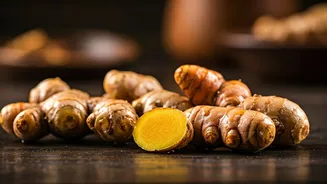
The rhizome in question is Mango Ginger, known in India by names like Amba Haldi, Ambe Halad, and Manga Inji. Despite its name, it is not a hybrid of a mango and a ginger. It's a member of the turmeric family, Curcuma amada. Visually, it's a near-twin
to common ginger with its knobbly, beige-skinned appearance. However, slice it open, and you'll find a pale yellow interior and a crisp texture. The real giveaway is its aroma: an unmistakable, delightful scent of raw, unripe mango. This unique characteristic is what makes it such an exciting addition to any cook's arsenal.
A Tangy Twist on Flavour
The primary difference between mango ginger and regular ginger lies in the taste. While standard ginger brings a fiery, pungent heat, mango ginger offers a much milder, less sharp flavour profile. Its magic is the surprising combination of a subtle ginger-like warmth with the distinct sourness and fragrance of green mango. This allows it to impart a layer of fresh, tangy brightness to a dish without the sometimes overpowering spice of its more common cousin. Think of it not as a replacement for ginger, but as a completely new flavour dimension.
How It Upgrades Your Curry
Integrating mango ginger into your curries introduces a layer of complexity that is both surprising and delicious. Its tangy notes can cut through the richness of coconut-based or creamy gravies, adding a refreshing lift. In lighter, broth-based curries, it provides a fragrant, aromatic foundation that doesn't rely on intense heat. You can use it in a paste with other aromatics like garlic and onions, or add it finely chopped or grated towards the end of cooking to preserve its fresh, zesty character. It pairs especially well with lentil (dal) dishes, fish curries, and vegetable preparations where its unique flavour can shine.
Beyond the Curry Pot
While it's a fantastic curry enhancer, mango ginger's uses are incredibly versatile. It is most famously used across India to make tangy pickles and refreshing chutneys. In North India, it's a key component of chutneys, while in the South, it's popularly pickled, often with lemon juice, green chillies, and salt. You can also grate a small piece into buttermilk (chaas), blend it into smoothies, or add thin slices to salads for a zesty crunch. Infusing it into teas or 'kadhas' with other herbs is another way to enjoy its unique properties. These preparations are a great way to familiarise yourself with its taste before you start experimenting with cooked dishes.
Finding and Using Mango Ginger
Fresh mango ginger is a seasonal ingredient, typically available during the monsoon and winter months in India. You can find it at local vegetable markets and increasingly, through online grocery platforms. When buying, look for firm rhizomes with smooth skin, free from soft spots or wrinkles. To use it, simply wash, peel, and then chop, slice, or grate it as your recipe requires. It's softer and less fibrous than regular ginger, making it easier to prepare. Store it in an airtight container in the refrigerator for up to a week, or pickle it to preserve its flavour for months.