






The Quantum Frontier in Orbit
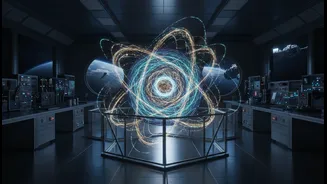
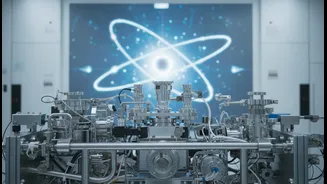
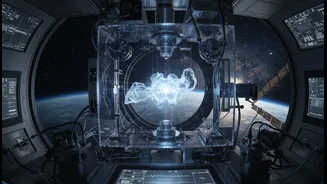
The Cold Atom Lab (CAL) is a facility the size of a mini-fridge with a monumental task: to explore the strange world of quantum mechanics by cooling atoms to temperatures just a fraction above absolute zero. At these extremes, colder than any naturally
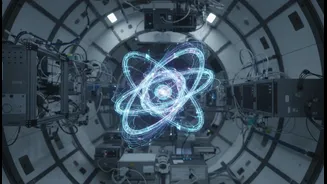
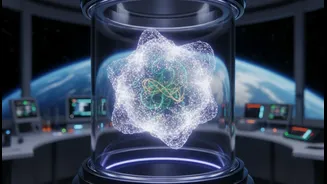
occurring place in the universe, atoms slow down and begin to exhibit bizarre behaviors. They can form a fifth state of matter called a Bose-Einstein Condensate (BEC), where millions of individual atoms behave like a single, massive quantum wave. The microgravity environment of the ISS is the key. On Earth, gravity pulls these delicate condensates apart in fractions of a second. In space, scientists can observe them for much longer—up to 10 seconds or more—providing an unprecedented window into fundamental physics. This is the laboratory promise: to test foundational principles of physics and potentially unlock secrets about gravity and dark energy.
From a Lab Bench to the ISS
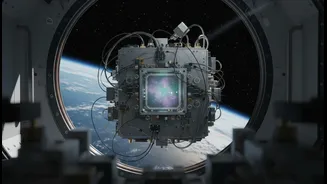
Getting a quantum physics lab into orbit is a staggering engineering challenge. Ground-based experiments to create BECs can take up entire rooms. The CAL team at NASA's Jet Propulsion Laboratory had to miniaturize all of that complex equipment—lasers, vacuum chambers, and magnetic traps—into a standardized rack on the ISS. The instrument was launched in 2018 and has been operating, and even upgraded, on-orbit. Astronauts have performed maintenance and installed new hardware, sometimes guided by engineers on the ground using mixed-reality headsets. This success story, however, is where the risk begins to creep in. The ability to launch, operate, and even service such a complex instrument can create the illusion that it is a simple, robust appliance. The reality is far more complicated.
The Reality of a Deployed System
Any piece of equipment on the ISS is, by definition, a deployed system. It must withstand the rigors of launch and operate in a harsh, remote environment where hands-on repair is a rare and complex undertaking. Astronauts are incredibly busy, and their time is allocated for thousands of hours of maintenance and scientific operations across the entire station. Unlike a prototype in a lab on Earth, the CAL can't be easily tweaked or fixed by the scientists who designed it. It is operated remotely from Earth, and every interaction is meticulously planned. When something goes wrong—a software glitch, a hardware failure, a corrupted solid-state drive—it can halt research for months. These are not signs of failure; they are the normal, expected realities of operating a first-generation, cutting-edge system far from its creators. It is not a push-button device; it is a permanent, ongoing experiment in both science and engineering.
The Peril of Mismatched Expectations
The main risk, therefore, is not technical, but perceptual. When we forget to separate the 'laboratory promise' from the 'deployed system', we fall into a trap. We begin to expect the clean, linear progress of a mature technology from something that is, at its heart, a research-and-development project. The promise of CAL is breathtaking quantum discovery, but its reality is a system that needs maintenance, suffers from unpredictable issues, and requires constant, painstaking work from ground crews and astronauts. Conflating the two creates a dangerous disconnect. It can lead to impatience from stakeholders, unrealistic demands for scientific output, and a misunderstanding of the resources required to keep such a pioneering facility running. Treating a first-of-its-kind quantum laboratory like a finished product ignores the very nature of exploration and innovation.