





A Universe of New Policies
The catalyst for this transformation arrived in June 2020, when the Indian government unlocked the space sector for private enterprise. This landmark decision was followed by the Indian Space Policy 2023, a framework designed to empower non-governmental
entities to participate in everything from rocket and satellite manufacturing to downstream data services. To guide this new era, the Indian National Space Promotion and Authorisation Centre (IN-SPACe) was established. Acting as a single-window agency, IN-SPACe's mission is to promote, authorize, and supervise private space activities, effectively bridging the gap between startups and the vast infrastructure of the Indian Space Research Organisation (ISRO). This policy shift was complemented by liberalised Foreign Direct Investment (FDI) rules in 2024, allowing up to 74% automatic FDI in satellite manufacturing and 49% in launch vehicles, signaling to the world that India is open for business.
The Rocket Startups Taking Off
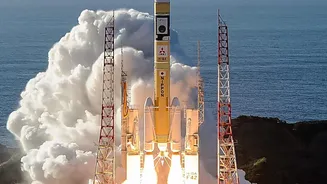
At the forefront of this new wave are ambitious rocket developers. Hyderabad-based Skyroot Aerospace made history on July 18, 2026, with the successful orbital launch of its Vikram-1 rocket, making India the third country with a private orbital launch capability. This achievement, which placed several payloads into a 450-kilometer orbit, was a monumental step for the company and the nation. Skyroot, which became India's first space-tech unicorn in May 2026, is already preparing for its second Vikram-1 mission, signaling a move towards a regular launch cadence. Not far behind is Chennai-based Agnikul Cosmos, which is pioneering launch vehicles powered by single-piece, 3D-printed engines. The company, which has successfully test-fired its semi-cryogenic engine clusters, aims to provide customizable launches for small satellites, a fast-growing segment of the global market.
Eyes in the Sky: The Satellite Revolution
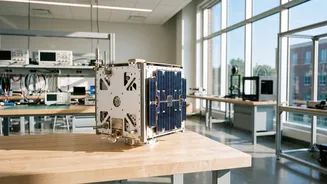
Beyond launch vehicles, a vibrant ecosystem of satellite and data companies is flourishing. Pixxel is a standout in this domain, building a constellation of the world's highest-resolution hyperspectral imaging satellites. These satellites can see the Earth in hundreds of wavelengths of light, providing incredibly detailed data for sectors like agriculture, mining, and climate monitoring. Having successfully launched its initial 'Firefly' satellites, the company is now moving toward deploying its full constellation by 2026. This capability has already attracted global attention, including a significant contract from NASA. Other companies like Dhruva Space are focusing on full-stack satellite platforms, while Digantara is tackling the critical issue of space debris tracking, showcasing the diverse applications emerging from India's private space sector.
An Engine for Economic Growth
The economic impact of this privatization is already significant. India's space economy, currently valued at around $8-9 billion, is projected to grow to between $40-45 billion by the next decade. The number of space startups has skyrocketed from a handful to over 400 by mid-2026. Private investment has surged, growing nearly six-fold between 2021 and March 2026. This influx of capital and innovation is not just creating high-skilled jobs but is also fostering a 'Make in India' ecosystem for advanced space technology. Initiatives like a ₹1,000 crore Venture Capital fund under IN-SPACe are designed to further fuel this growth by providing crucial early-stage capital to promising startups.
The Challenges on the Launchpad
Despite the incredible momentum, the path ahead is not without its challenges. Space is an inherently high-risk, capital-intensive industry. Startups face immense pressure to secure long-term funding, navigate complex regulatory landscapes, and compete on a global stage with established players. The journey from development to commercial profitability is long and fraught with technical hurdles that can lead to costly delays or failures. Furthermore, as the sector grows, issues like managing space debris and ensuring the responsible use of space-based technologies will become increasingly critical. Sustaining the current pace of innovation will require a continued partnership between the government's guiding hand and the private sector's agile and entrepreneurial spirit.