





The Psychology of Frictionless Spending
Have you ever looked at your bank statement and wondered where all the money went? Chances are, it wasn't one large expense, but a series of small UPI payments—a coffee here, a quick online order there. This is a common experience, and it's rooted in psychology.
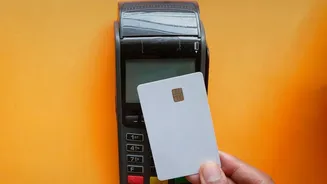
When you pay with cash, you physically hand over money, creating a tangible sense of loss known as the “pain of paying”. This friction acts as a natural brake on spending. Digital payments remove this barrier entirely. A transaction becomes an abstract event on a screen, making it psychologically easier to spend without feeling the financial impact. Studies show people are willing to spend significantly more when using digital methods compared to cash. This frictionless nature, combined with the instant gratification of a quick scan, creates a perfect storm for impulse buying, where small, seemingly harmless purchases accumulate and eat into your salary.
The 'Digital Lakshman Rekha' Strategy
The solution is to reintroduce friction into your digital spending habits. Think of it as drawing a “Lakshman Rekha” for your daily UPI expenses—a firm boundary you consciously decide not to cross. This isn't about stopping UPI use, but about making it more mindful. The goal is to set a realistic daily budget for non-essential UPI spending. While the default NPCI limit is a generous ₹1 lakh per day, this is a security ceiling, not a budgeting tool. Your personal cap should be much lower, based on your income and financial goals. For example, you might decide on a cap of ₹300 or ₹500 for daily discretionary spending on food, transport, and small shopping. This act of setting a limit forces you to be deliberate about your purchases and helps you distinguish between wants and needs before you scan that QR code.
How to Enforce Your Daily Cap
While most major UPI apps like Google Pay and PhonePe do not currently offer a built-in feature for users to set their own low daily budget limits, there are effective ways to enforce your personal cap. The most direct method is to use your bank's own net banking portal or mobile app. Several major banks, including HDFC, ICICI, and SBI, allow you to manually lower your overall daily UPI transaction limit. By reducing your official bank-level limit from ₹1 lakh to a much smaller amount, say ₹2,000, you create a hard stop that prevents overspending. Another effective strategy is to link your UPI apps to a secondary bank account that you maintain with a deliberately small balance. You can transfer your designated weekly budget into this account and use it for all your UPI spending. Once the funds are gone, your spending automatically stops. For less direct enforcement, use budgeting apps that send you alerts as you approach your self-imposed limit.
UPI Lite: A Built-In Tool for Small Spends
For those who find adjusting bank limits cumbersome, UPI Lite offers a simpler, built-in solution for managing micro-transactions. UPI Lite functions as an on-device wallet that you can load with a balance up to ₹5,000, with a maximum cumulative daily usage of ₹10,000. The key benefit is that you can set a small, intentional budget within the wallet. By topping up your UPI Lite wallet with, for instance, ₹2,000 for the week, you can use it for all your small-ticket purchases under ₹1,000 without a PIN. This isolates your small, impulsive spends from your main bank account, making it far easier to track and control them. It acts as a pre-paid buffer, ensuring that your chai and snack runs don't accidentally cascade into a larger financial drain.
The Long-Term Financial Payoff
Curbing small, frequent purchases might seem minor, but the long-term impact on your financial health is significant. Saving even ₹200 a day by avoiding impulse buys adds up to ₹6,000 a month, or ₹72,000 a year. That's money that can be redirected towards a significant goal—paying off debt, building an emergency fund, or investing for the future. Setting a spending cap is a powerful form of financial planning that provides clarity and control. It transforms you from a passive spender reacting to impulses into an active manager of your own money. By making your spending conscious and deliberate, you ensure that your salary is working towards your long-term goals, rather than disappearing into a hundred small, forgotten transactions.