





The Ultimate Dress Rehearsal
Before humanity takes its next giant leap to the Moon or Mars, astronauts must first endure the ultimate dress rehearsal. Known as analogue missions, these Earth-based simulations recreate the immense challenges of long-duration spaceflight. They are
critical for testing hardware, finalising procedures, and, most importantly, understanding the human element. The goal is to iron out every possible kink before a multi-billion dollar mission is millions of kilometres from home. These missions are not simple training exercises; they are complex scientific campaigns designed to mimic the isolation, confinement, and extreme conditions of space, allowing researchers to study how crews perform under intense pressure. By simulating everything from communication delays to equipment failures, space agencies can significantly reduce risks and increase the chances of mission success.
Simulating Alien Worlds on Earth
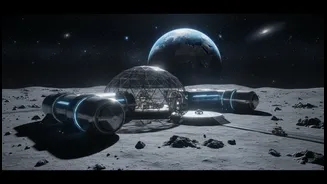
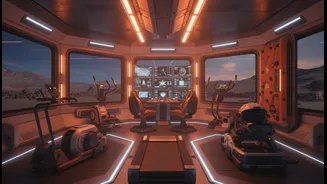
To prepare for alien worlds, agencies turn to Earth's most extreme environments. NASA's NEEMO (NASA Extreme Environment Mission Operations) project sends astronauts to live in the Aquarius underwater laboratory, 19 metres below the surface off the coast of Florida. In this undersea habitat, aquanauts can simulate spacewalks in different gravity environments by adjusting their buoyancy, test new equipment, and experience profound isolation. For a Martian experience, there's HI-SEAS (Hawaii Space Exploration Analog and Simulation), located on the volcanic slopes of Mauna Loa in Hawaii. Here, crews live for months in a small dome on terrain that closely resembles the geology of Mars. They conduct geological fieldwork in mock spacesuits and live with a 20-minute communication delay to simulate the real-time lag between Earth and Mars, testing their autonomy and problem-solving skills.
The Psychological Gauntlet
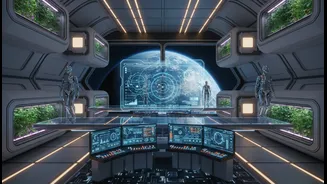
Technical skills are only half the battle. The psychological and social challenges of long-duration spaceflight are arguably even greater hurdles. Analogue missions are crucial for studying the effects of isolation, confinement, and monotony on astronaut mental health. For months on end, small crews are confined to spaces roughly the size of a small apartment, with no escape from their colleagues. They face the stress of separation from loved ones, the boredom of a routine environment, and the constant pressure of being watched. These simulations consistently show the importance of crew cohesion, conflict resolution, and psychological support. Research gathered during these missions helps NASA and other agencies refine crew selection, develop better support strategies, and design habitats that promote well-being, for instance by including windows or finding ways to maximise privacy.
India's Earth-Bound Astronauts
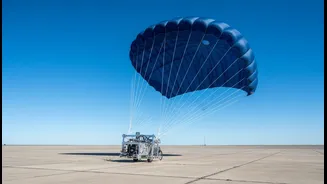
This focus on rigorous preparation is central to India's own human spaceflight ambitions with the Gaganyaan mission. The four astronaut-designates, all decorated Indian Air Force pilots, are undergoing an intensive training regimen to prepare for the country's first crewed spaceflight. Their training began in Russia and now continues at a dedicated Astronaut Training Facility in Bengaluru. The process is comprehensive, covering academics, physical fitness, yoga, and extensive simulator training to master every aspect of their spacecraft and flight procedures. They are preparing for every conceivable scenario, from microgravity familiarisation on parabolic flights to survival and recovery training. A significant part of their conditioning, handled by the Institute of Aerospace Medicine, is psychological, ensuring they are mentally prepared for the stresses of space.