

A Galaxy of Opportunity Beyond Government
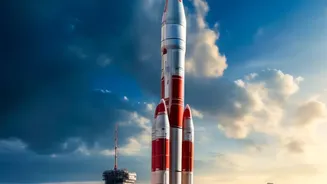
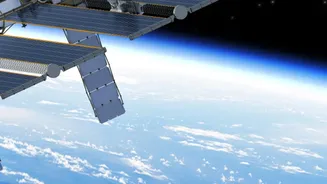
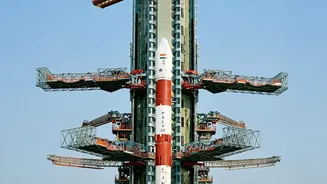
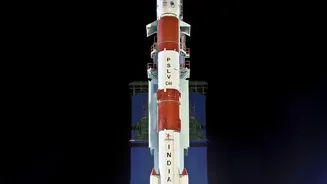
The Indian space industry is undergoing a profound transformation. What was once a domain dominated by the government-run Indian Space Research Organisation (ISRO) is rapidly evolving into a dynamic, multi-billion-dollar ecosystem. The key turning point
was in 2020, when the government opened the sector to private participation. This led to the creation of the Indian National Space Promotion and Authorisation Centre (IN-SPACe), a single-window agency designed to regulate and promote private space activities. The goal is no longer just for ISRO to lead, but for it to act as a mentor and enabler for a thriving commercial industry. This shift is turning what was a state-led research field into a commercially driven employment engine. Projections show India’s space economy, valued at around $8.4 billion, could surge to $44 billion by 2033, creating hundreds of thousands of new jobs in the process.
The Rise of the Space-Tech Startups
The most visible sign of this new era is the explosion of space-tech startups. Since the reforms, the number of private space companies has grown from just a handful to over 400. These startups are not just small-time players; they are building everything from launch vehicles to entire satellite constellations. Companies like Skyroot Aerospace, which launched India's first private rocket, and Agnikul Cosmos, known for its 3D-printed engines, are pioneering new technologies. Others, such as Pixxel, are focused on building Earth-observation satellites, while Dhruva Space provides satellite platforms and deployment services. This startup boom has diversified the industry, creating a competitive landscape that fosters innovation and, crucially, creates a wide array of jobs that didn't exist a decade ago.
The New In-Demand Roles
A career in the space sector is no longer limited to aerospace engineers and research scientists. The private industry requires a much broader set of skills. While hardware roles in propulsion, avionics, and mechanical engineering remain vital, the fastest-growing track is in software and data. Aerospace software engineers who can code in C++ and Python are in high demand to develop flight software and autonomous systems. Data scientists and GIS analysts are needed to interpret the terabytes of information sent back by Earth-observation satellites, providing insights for agriculture, climate monitoring, and urban planning. Beyond core tech roles, the ecosystem needs project managers, space law experts, financial analysts, and business development professionals to help these startups scale and compete globally.
Building a Career in the New Space Age
For students and professionals looking to enter this field, the pathways are more varied than ever. A traditional B.Tech in aerospace, mechanical, or electronics engineering is still a strong entry point. However, private startups often value hands-on experience as much as academic credentials. Participating in projects like CubeSat development or robotics competitions can make a candidate stand out. Expertise in adjacent high-precision industries like automotive engineering or data analytics is also becoming a valuable asset, allowing for career transitions into the space sector. Universities are also adapting, with institutions like the Indian Institute of Space Science and Technology (IIST) providing a direct pipeline to the industry, while others are introducing specialised courses in remote sensing and space law.