





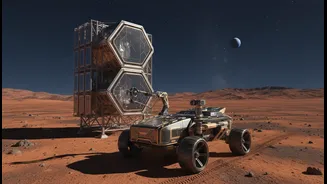


A New Blueprint for the Red Planet
Historically, NASA designed, built, and operated its own rockets and spacecraft for interplanetary missions, a model that defined the Apollo era. While incredibly successful, this approach is enormously expensive and time-consuming. To accelerate its timeline
for both robotic and eventual human missions to Mars, the agency is now applying the lessons learned from its successful commercial partnerships for Earth orbit and lunar missions. The strategy is simple: let NASA focus on the high-level science and exploration goals, while private industry handles much of the hardware and transportation. This allows the agency to act more like a customer purchasing services, rather than a manufacturer building everything from scratch. This model aims to increase the frequency of missions and lower costs by fostering competition and innovation in the private sector.
The Commercial Pioneers
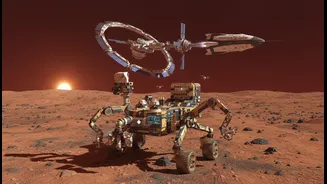
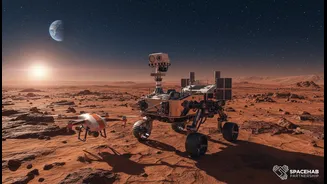
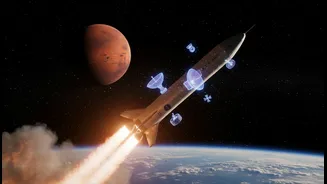
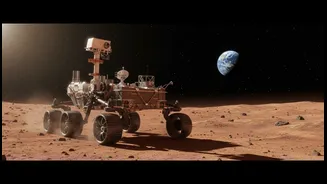
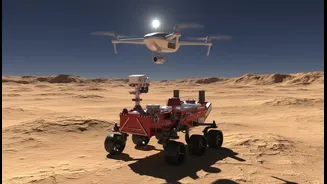
This new approach is exemplified by a recent partnership with Relativity Space for a Mars mission scheduled for 2028. In this landmark deal, NASA is providing a sophisticated suite of scientific instruments called Aeolus, designed to study the Martian atmosphere. In return, Relativity Space is responsible for providing the rocket, the spacecraft, and the interplanetary flight operations to get the instruments to Mars. This division of labor is a first for a Mars mission and marks a significant strategic shift. Beyond a single mission, NASA is also nurturing a broader ecosystem of innovation. The agency recently selected seven companies, including Astrobotic, Intuitive Machines, and AeroVironment, to develop next-generation robotic mobility systems for the Martian surface under its STRIDE initiative. These efforts are meant to create advanced rovers and aerial vehicles that can explore difficult terrain unreachable by current technology.
The Promise: Speed, Innovation, and Savings
The primary driver behind this public-private model is efficiency. By leveraging commercial investment, NASA can dedicate more of its budget to pure science and research, rather than the costly development of launch vehicles. NASA Administrator Jared Isaacman has called these partnerships a "force multiplier for science," enabling the agency to "deliver more science, more often." The competition spurred between commercial providers can also lead to faster technological advancement and more resilient supply chains. This model has already proven successful with the Commercial Crew Program, which uses companies like SpaceX to ferry astronauts to the International Space Station, and the Commercial Lunar Payload Services (CLPS) initiative, which contracts companies to deliver science to the Moon. Applying this framework to the far more complex challenge of Mars is the next logical step in the agency's long-term exploration architecture.
Navigating the New Risks
While promising, this shift is not without its challenges. Relying on commercial partners introduces new variables and risks. The success of a mission can become dependent on the financial health and technical readiness of a private company. For instance, Relativity Space, NASA's partner for the 2028 Aeolus mission, has yet to successfully launch a payload into orbit, though its first attempt showed promise and a new, more powerful rocket is slated for a 2026 debut. This reliance requires a new kind of oversight from NASA, managing contracts and partnerships rather than just internal engineering projects. The agency formalizes these collaborations through frameworks like Space Act Agreements, which provide a stable structure for development but represent a departure from traditional government procurement. Successfully balancing scientific objectives with the commercial realities of its partners will be critical as NASA charts its ambitious course to the Red Planet.