



What Is a Solar Storm?
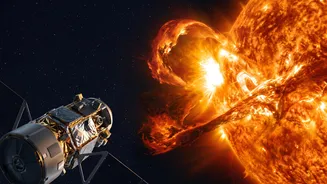
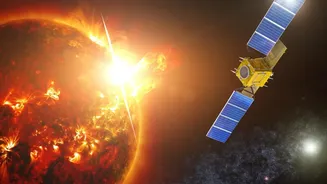
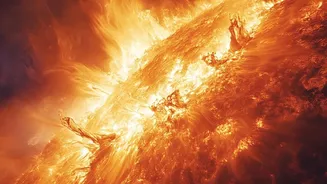
Before we dive into the aviation risks, let's clarify what a solar storm is. It isn't a storm in the earthly sense with wind and rain. Instead, it’s a disturbance on the Sun, which can erupt, sending streams of energized particles and radiation hurtling
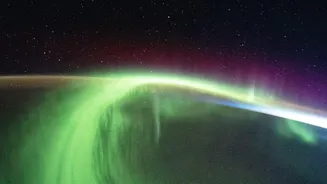
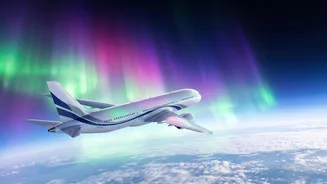
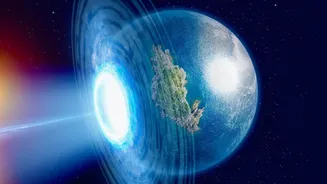
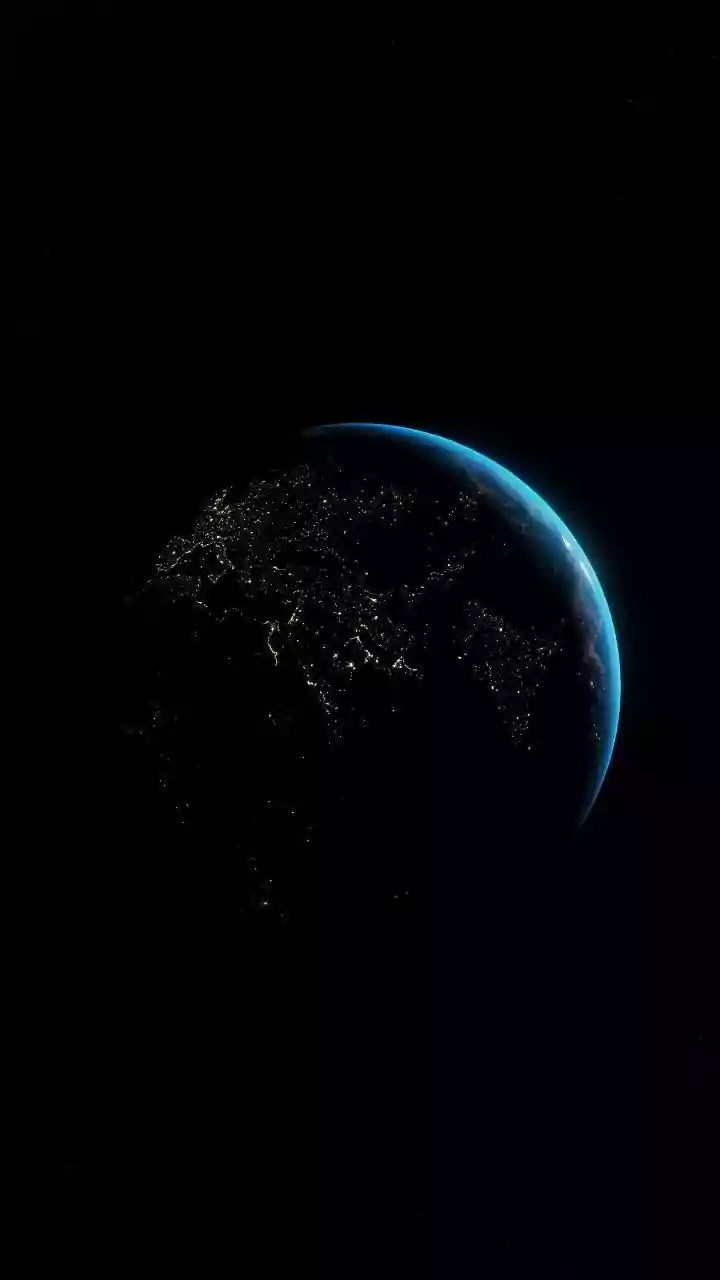
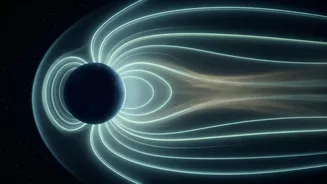
into space. When these ejections, known as Coronal Mass Ejections (CMEs) or solar flares, are aimed at Earth, they interact with our planet’s magnetic field and upper atmosphere. This interaction, often called space weather, is what creates the northern and southern lights, but it can also cause significant disruptions to our technology-dependent world.
The Communication Breakdown
One of the most immediate impacts on aviation is the disruption of communication systems. Aircraft flying long-haul routes, particularly over oceans and polar regions, rely heavily on High-Frequency (HF) radio to communicate with air traffic control. During a solar storm, the energized particles can disturb the Earth's ionosphere, a layer of the atmosphere that HF radio signals bounce off to travel long distances. This disturbance can degrade or completely block these signals, leading to a radio blackout. While aircraft have other communication methods, the loss of primary HF contact complicates operations and can force pilots and controllers to use less direct backup procedures, increasing workload and potentially leading to flight delays.
Navigating Without a Perfect Signal
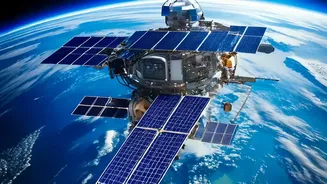
Modern aircraft are wonders of navigation, relying extensively on the Global Positioning System (GPS) for precise location data. However, GPS is not immune to space weather. The same ionospheric disturbances that affect radio signals can also distort or delay the signals sent from GPS satellites to an aircraft's receiver. This can lead to positioning errors of several meters or, in severe cases, a complete loss of the GPS signal. While planes are equipped with robust backup navigation systems, such as Inertial Reference Systems (IRS), which don't rely on external signals, a loss of GPS accuracy can affect advanced navigation procedures and increase the separation required between aircraft, contributing to air traffic congestion and delays.
The Radiation Question
Flying at high altitudes already exposes passengers and crew to more cosmic radiation than on the ground. During a major solar storm, this exposure can increase significantly. The particles from the sun can penetrate the upper atmosphere, raising radiation levels, especially on flights over the polar regions where Earth's magnetic field provides less protection. This is primarily a concern for frequent flyers and aircrew, as the dose from a single flight is generally low. However, in response to a particularly strong solar event, airlines may choose to fly at lower altitudes or reroute flights away from polar areas to minimise this exposure, which can increase flight time and fuel consumption.
Grounded Flights? Mitigation and Management
The good news is that the aviation industry is well aware of these risks and has procedures in place to manage them. Space weather prediction centres around the world constantly monitor the Sun's activity and issue alerts to airlines and air traffic control. Based on these forecasts, airlines can proactively make decisions. This might involve changing a flight's route to avoid the polar regions, adjusting cruising altitude, or ensuring extra fuel is carried for potential diversions. Grounding flights is considered a last resort, reserved for only the most extreme and rare solar events where the combination of communication, navigation, and radiation risks could be too severe to manage in the air.