




Mistake 1: Not Giving Your Eyes Time to Adapt
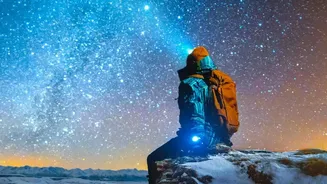
One of the biggest yet simplest mistakes is impatience. Your eyes need at least 20 to 30 minutes to fully adjust to the dark, a process called dark adaptation. Many beginners feel underwhelmed within the first few minutes, not realising that thousands
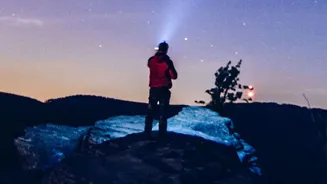
of stars are about to become visible. Looking at a bright phone screen or a white flashlight can instantly ruin your night vision, forcing you to start the adaptation process all over again. A simple fix is to use a red-light torch, as red light has a much lower impact on your night vision. If you use a stargazing app, set it to its red-light or night mode before you head out.
Mistake 2: Starting With the Wrong Equipment
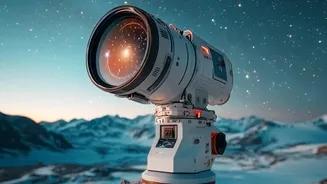
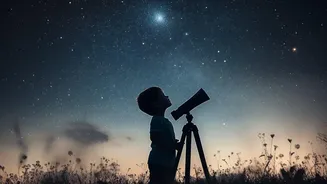
The belief that you need a large, expensive telescope from day one is a common trap. These instruments can be complicated to set up and align, leading to frustration. Often, the best first instrument for a beginner is a good pair of binoculars. They are affordable, portable, and offer a wide field of view that makes it easier to scan the Milky Way and learn constellations. When you do decide to buy a telescope, don't just focus on high magnification. A stable mount is just as important to avoid shaky views. Many experts recommend starting with a simple, user-friendly model like a Dobsonian or a small refractor.
Mistake 3: Underestimating Light Pollution
Trying to stargaze from a city or a brightly lit neighbourhood is a recipe for disappointment. Artificial light creates skyglow, a dome of light over urban areas that washes out all but the brightest stars and planets. More than 80% of the world's population lives under light-polluted skies. To see the true beauty of the night sky, you need to get away from city lights. Even moving to a local park or finding a spot shielded by buildings or trees can make a significant difference. For the best views, consider travelling to a designated dark sky park or a rural area where light pollution is minimal.
Mistake 4: Ignoring the Moon and Weather
A clear sky is essential, but it’s not the only factor. The Moon is a source of natural light pollution. A bright, full moon can make it just as difficult to see faint stars and galaxies as a streetlight. For the best stargazing, plan your sessions around the new moon phase, when the sky is at its darkest. Also, always check the weather forecast. Even thin, high-altitude clouds or haze can obscure your view. Winter nights often provide clearer, crisper skies than hazy summer evenings.
Mistake 5: Not Having a Plan
Simply stepping outside and looking up without a goal can feel overwhelming. It helps to have a simple plan for the night. Before you go out, decide what you want to see. Are you hoping to spot Jupiter's moons, the rings of Saturn, or a specific constellation? Use a planisphere (a rotating star chart) or a stargazing app to learn what will be visible. Start with bright, easy-to-find objects to build your confidence. Knowing what to look for and where to find it turns a random glance at the sky into a rewarding celestial treasure hunt.
Mistake 6: Forgetting About Comfort
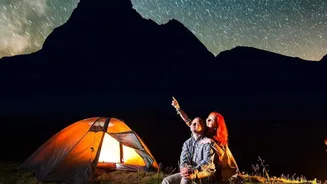
Stargazing involves being still for long periods, and the temperature can drop quickly after sunset, even on a warm day. Being cold or uncomfortable will cut your night short. Dress in layers, and don't forget a hat and gloves. A comfortable camping chair or a blanket to lie on will make the experience much more pleasant than straining your neck while standing. Bringing a warm drink and some snacks can also help you stay comfortable and focused on the wonders above.