





A Pet’s Sensory World
To understand your pet's fear, we must first appreciate how they experience the world. Dogs and cats have hearing that is vastly more sensitive than our own. They can detect a range of frequencies, particularly low-frequency rumbles, that are barely perceptible
to humans. A distant thunderclap that you might ignore can sound like an approaching threat to your pet. This isn't just about volume; it's a completely different sensory experience. What's more, their sensitivity isn't limited to sound. Many animals can sense the drop in barometric pressure that precedes a storm, putting them on edge long before the first raindrop falls or thunder rumbles.
The Storm's Three-Pronged Attack
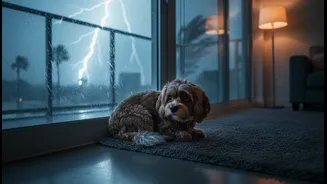
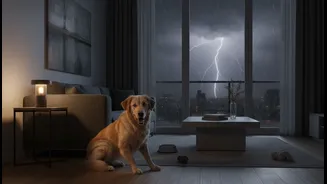
A monsoon storm is a multi-sensory assault for an anxious animal. First, there's the thunder, a loud and unpredictable noise that animals often associate with danger. Second, the flashes of lightning create sudden, startling changes from light to dark, which can be extremely distressing for pets who don't understand the source. Finally, there's the buildup of static electricity in the air, which can cause an uncomfortable tingling sensation on a pet's fur, adding a physical discomfort to their psychological stress. Your pet isn't just hearing the storm; they are feeling it in the air around them.
Your Apartment, an Unintended Echo Chamber
This is where apartment living intensifies the problem. While you might feel safe and secure, the construction of modern buildings can inadvertently create a stressful environment for pets. Hard surfaces like concrete walls, large glass windows, and tiled floors are highly reflective of sound waves. Instead of absorbing the low-frequency rumbles of thunder, these surfaces cause the sound to bounce around and reverberate, effectively trapping and amplifying the noise inside your home. The very walls that give you shelter can make your pet feel like there's no escape from the menacing sounds, creating a feedback loop of anxiety.
Create a Calming Monsoon Den
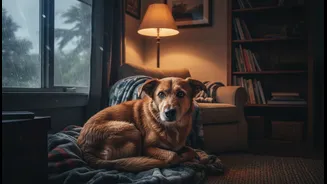
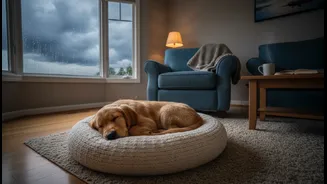
The most effective first step is to create a 'safe space' where your pet can retreat. This doesn't have to be fancy; an interior closet, a bathroom, or a crate covered with a heavy blanket can work wonders. The goal is to provide a dark, enclosed area that muffles sound and blocks out lightning flashes. Fill this space with familiar comforts like their favorite bed, a toy, or an item of your clothing that carries your scent. This gives them a sense of control and a secure place to ride out the storm. It’s also helpful to close curtains and play calming music or a white noise machine to help mask the storm's sounds.
Active Calming and Distraction
Your own behaviour is crucial. Pets are highly attuned to their owners' emotions, so if you act anxious, it will only escalate their fear. Project a calm, normal attitude. Gentle reassurance is good, but avoid excessive coddling, which can sometimes reinforce the idea that there is something to fear. Instead, try to create a positive association with the storm. Engage your pet in a calm indoor game or offer a special long-lasting treat like a food puzzle. This distraction can help shift their focus from the scary noises outside to a rewarding activity inside. For some pets, a snug-fitting anxiety vest can also provide calming, consistent pressure.