







The Brain’s Mission Control
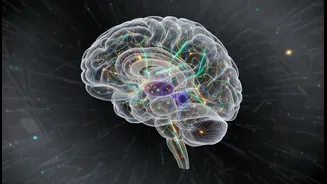
The brainstem, a thumb-sized structure connecting the brain to the spinal cord, is the body's unsung hero. It works silently in the background, regulating all the vital functions we never think about: our heartbeat, breathing, blood pressure, and sleep
cycles. It is the neurological powerhouse, a central hub for signals traveling between the brain and the body. Despite its critical role, the brainstem has remained one of the most mysterious and difficult parts of the brain to study due to its densely packed and complex structure. Damage to this small area can be catastrophic, linked to severe conditions like Parkinson's disease, Alzheimer's, and the loss of basic life functions. Until now, our maps of this region have been incomplete, limiting our ability to diagnose and treat problems effectively.
ANCHOR: A Made-in-India Atlas
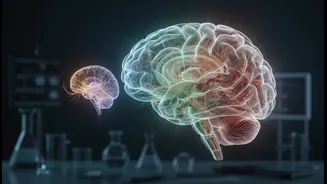
Enter ANCHOR, which stands for Atlas of Neurochemical Characterization of the Human Brainstem with 3D Reconstruction. Developed by the Sudha Gopalakrishnan Brain Centre at the Indian Institute of Technology-Madras (IIT-Madras), this is one of the world’s most detailed 3D atlases of the human brainstem. Unlike previous atlases, which were often based on a limited range of populations, ANCHOR provides a new and highly detailed reference. The research team meticulously mapped over 200 distinct brainstem nuclei and fibre tracts, providing a level of detail that was previously unimaginable. By creating this comprehensive map, which spans prenatal, childhood, and adult stages, the researchers have provided a powerful new tool for scientists and doctors in India and across the globe.
From MRI Scans to Cellular Detail
Creating the ANCHOR atlas was a monumental task. The IIT-Madras team employed a multimodal approach, integrating several advanced techniques. They started with high-resolution MRI scans and combined them with histology—the microscopic study of tissues. By slicing postmortem brainstem samples into hundreds of ultra-thin sections, they could examine the cellular architecture in minute detail. Using special chemical stains, they identified different types of nerve cells and their pathways, essentially colour-coding the complex circuitry of the brainstem. This combination of macro-level MRI views and micro-level cellular images allows users to seamlessly navigate from a broad structure down to the individual cells within it, all through a publicly available online portal.
Transforming Diagnosis and Treatment
The real-world implications of the ANCHOR atlas are immense. For neurologists and neurosurgeons, it’s like upgrading from a blurry sketch to a high-definition satellite map. This new detail can significantly improve the diagnosis of brainstem lesions and neurodegenerative diseases. For instance, in conditions like Parkinson's disease, which involves the loss of specific neurons in the brainstem, ANCHOR can help doctors pinpoint the affected areas with much greater accuracy. It will also be a critical guide for surgical procedures like Deep Brain Stimulation (DBS), where electrodes are implanted in precise locations to treat movement disorders. With a better map, surgeons can target these areas more effectively, improving patient outcomes while minimising the risk of damaging nearby critical structures.
A Global Contribution to Neuroscience
While developed in India, the ANCHOR atlas is a gift to the global scientific community. The data has been made publicly accessible, allowing researchers from all over the world to use it for their own studies. This open-source approach accelerates research and fosters collaboration, helping to unlock the remaining secrets of the brainstem and its role in health and disease. According to the Principal Scientific Adviser to the Government of India, Ajay Kumar Sood, these maps represent a significant step forward in clinical applications and our understanding of the brain. The project not only highlights India's growing capabilities in advanced scientific research but also places it at the forefront of global neuroscience, contributing a vital tool that will fuel discoveries for years to come.