




The Coldest Spot in the Known Universe
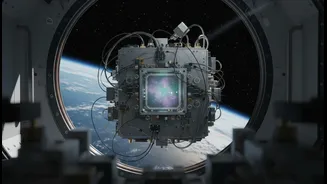
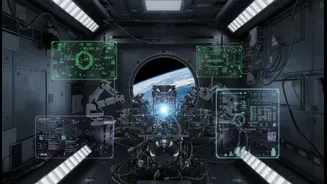
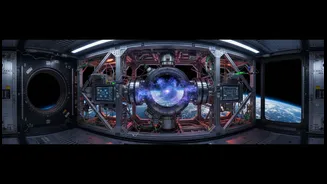
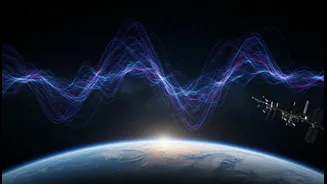
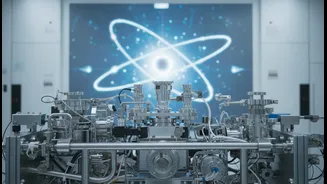
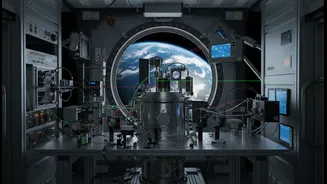
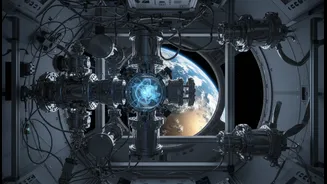
About the size of a mini-fridge, NASA’s Cold Atom Lab (CAL) has a singular, mind-bending purpose: to create the coldest temperatures in the universe. Since its installation on the International Space Station (ISS) in 2018, this remotely operated facility
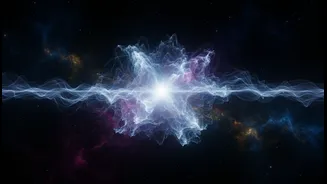
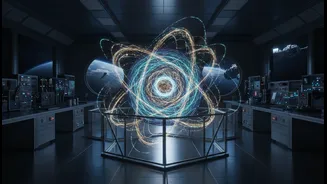
has been chilling atoms to just a fraction of a degree above absolute zero, the theoretical point where all atomic motion ceases. At these extreme temperatures, clouds of atoms stop behaving like individual particles and transition into a bizarre fifth state of matter known as a Bose-Einstein Condensate (BEC). In a BEC, the atoms act as a single, unified quantum wave, allowing scientists to observe quantum phenomena on a macroscopic scale. It’s a state of matter so fragile that even the slightest interaction can destroy it.
Why Do This in Space?
Creating a BEC is difficult enough on Earth, but gravity is a constant enemy. The Earth’s gravitational pull constantly tugs on the delicate atomic clouds, causing them to collapse in fractions of a second and limiting observation times to mere milliseconds. This is where the ISS provides a game-changing advantage. In the persistent freefall of microgravity, the pull of gravity is all but eliminated. This allows scientists to let the condensates expand and evolve for much longer periods—sometimes for more than a second—giving them an unprecedentedly clear and extended window into the quantum world. The extended observation time is crucial for making the ultra-precise measurements that are the ultimate goal of this research.
Fresh Context From Recent Upgrades
Recent upgrades to the Cold Atom Lab, installed in the spring of 2026, have significantly enhanced its capabilities. This fourth major upgrade included a redesigned magnetic trap, which gives researchers greater control over the shape and geometry of the quantum gas clouds. Scientists can now form these ultracold atoms into exotic shapes like bubbles and shells, which are impossible to maintain in a terrestrial lab due to gravity. These new tools are providing fresh context on how these quantum systems behave and interact, pushing the boundaries of fundamental physics. Researchers are exploring how atoms behave in these new configurations, offering insights that could rewrite our understanding of many-body physics.
The Future Promise of Precision Sensing
While the science is fundamental, the potential applications are revolutionary. The ability to manipulate and observe BECs is a cornerstone of a field called atom interferometry. By treating atoms as waves, scientists can use them to measure forces like gravity with astonishing precision. This could lead to a new generation of quantum sensors with far-reaching business and technological implications. Imagine navigation systems for ships and aircraft that don't rely on GPS, using subtle changes in gravity to chart a course. These sensors could also create high-resolution maps of Earth’s gravitational field, allowing for the discovery of underground water sources or mineral deposits. In space, the technology could help us probe the composition of distant planets or even search for dark energy.
The Limits That Remain
For all its success, the headline is correct: the limits have not been removed. These experiments are incredibly complex, and the technology is still in its infancy. One of the major challenges is creating BECs from multiple atomic species simultaneously, which is necessary for certain tests of fundamental physics, like the equivalence principle. The hardware must be incredibly robust to survive launch and operate remotely on the ISS. Furthermore, while microgravity helps, it doesn't eliminate all sources of noise and decoherence that can disrupt a fragile quantum state. The path from a lab demonstration on the ISS to a commercial, palm-sized quantum sensor is long. Scientists are still grappling with how to miniaturize the complex systems of lasers, vacuum chambers, and magnetic coils needed for this work from a room-sized lab to a practical device.