


A Unique Vantage Point
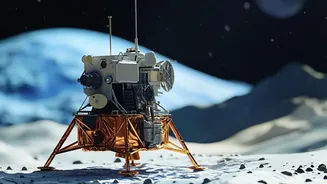
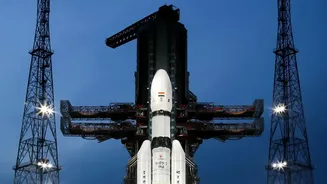
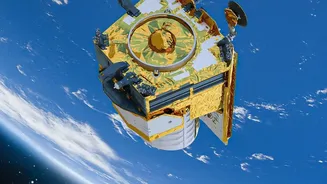
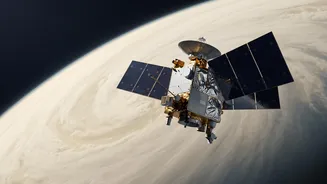
On its journey to the Moon, the Chandrayaan-3 mission’s Propulsion Module had a secondary, but equally ambitious, objective. After successfully deploying the Vikram lander and Pragyan rover, the module didn’t simply become space debris. Instead, it settled
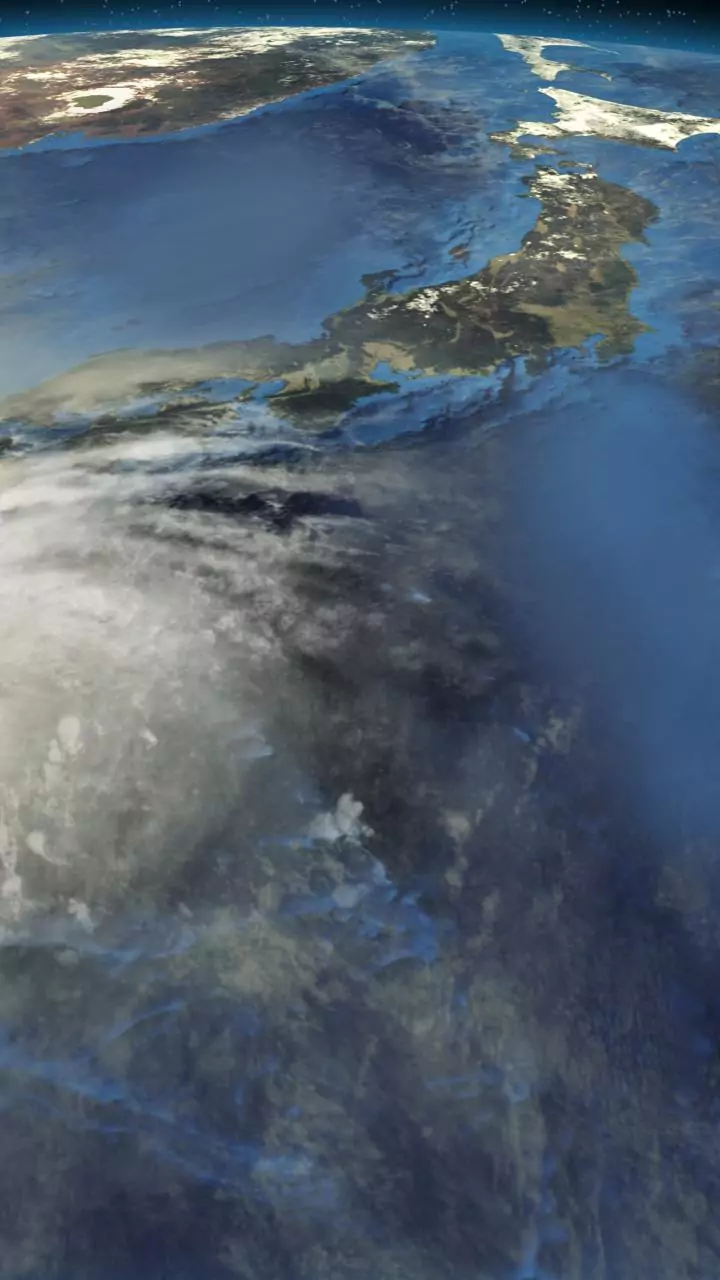
into orbit and turned its gaze back towards Earth. This manoeuvre allowed a specialised instrument to view our home as if it were a distant exoplanet—a planet orbiting a star other than our Sun. The goal was to capture the unique signatures of a known life-bearing world from afar, creating a vital reference point for scientists searching for other habitable planets across the galaxy.
The SHAPE Payload: A New Way of Seeing
The instrument responsible for these observations is called SHAPE, which stands for Spectro-polarimetry of Habitable Planet Earth. It was the only scientific payload on the Propulsion Module. Designed by ISRO's U. R. Rao Satellite Centre, SHAPE analyses the light reflected from Earth in the near-infrared spectrum. It does this in two ways. First, through spectroscopy, it breaks down light to find the chemical 'fingerprints' of gases in our atmosphere. Second, using polarimetry, it studies how light is scattered by particles, which provides crucial information about clouds and surface features. By combining these two measurements, SHAPE can gather detailed data on what makes Earth's environment unique and potentially detectable from light-years away.
Earth as a Scientific Blueprint
The core genius of the SHAPE experiment lies in using Earth as the ultimate control subject. We know Earth has liquid water, a specific atmospheric composition, and life. By observing our own planet from a great distance, scientists can definitively catalogue the light signatures associated with these features. The data collected by SHAPE answers key questions: What does the combined light spectrum of a planet with oceans, continents, and a breathable atmosphere look like? How does the polarization of that light reveal the presence of clouds? How do these signatures change as the planet rotates, showing different faces to the observer? This information creates a template, or a blueprint. When future, more powerful telescopes are pointed at rocky exoplanets in the habitable zones of distant stars, astronomers will know exactly what patterns and signals to look for that might indicate an Earth-like world.
Pioneering the Search for Life
The data from SHAPE is not just a theoretical exercise; it is a practical tool that will help refine the techniques used in the search for extraterrestrial life. Over 5,000 exoplanets have been discovered, and the next major step is to characterise their atmospheres to determine if any could support life. SHAPE's observations provide a crucial test bed for these methods. By studying the disc-integrated signatures of Earth, ISRO is contributing invaluable knowledge that will guide future exoplanet-hunting missions, whether they are launched by India or international partners like NASA and ESA. Essentially, Chandrayaan-3's backward glance at home has provided a forward leap in our ability to recognise another one.