



The Science of a Rainy Day Craving
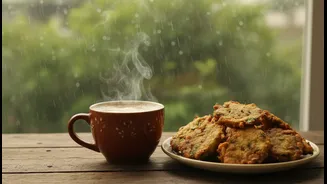
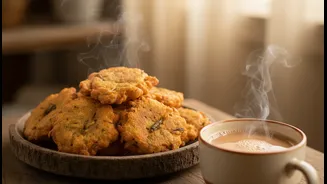
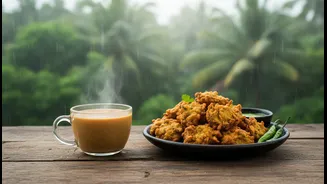
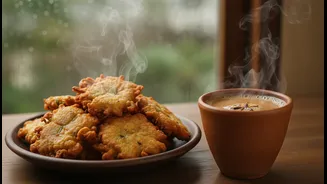
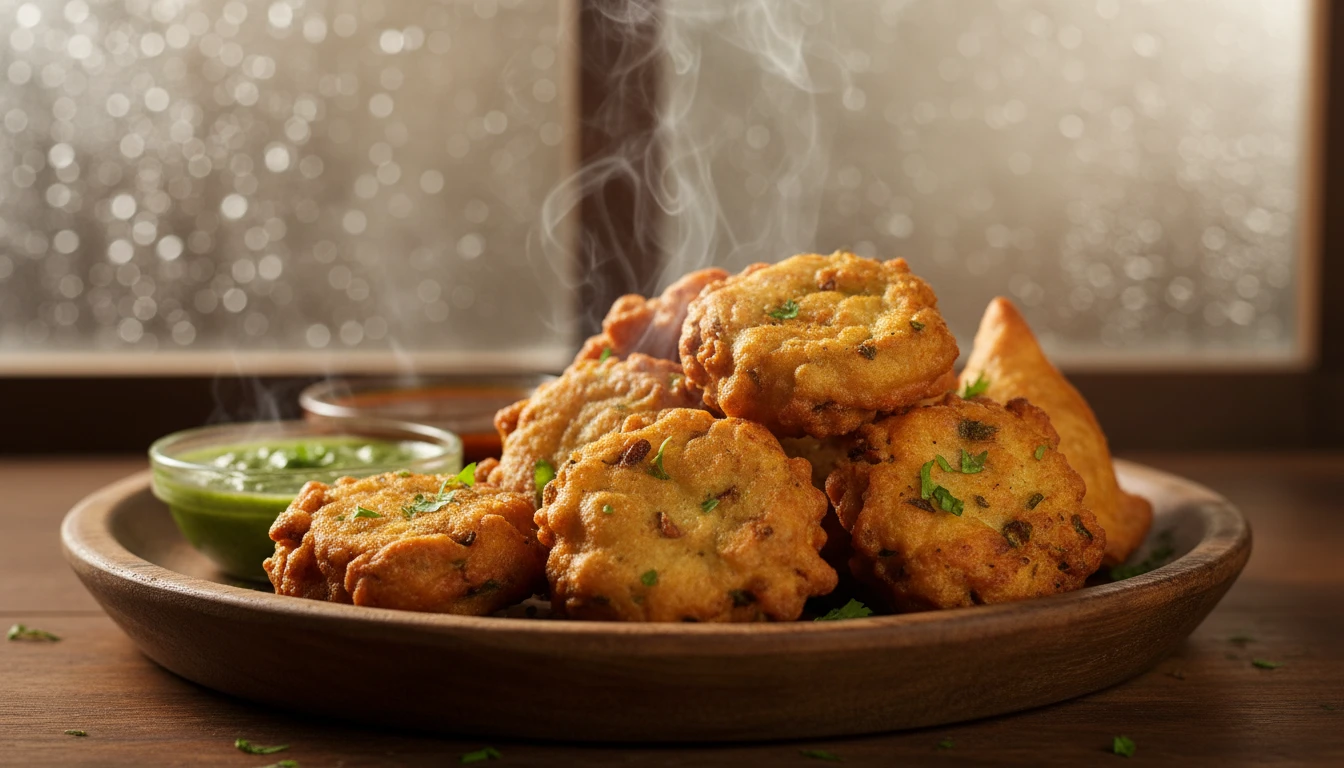
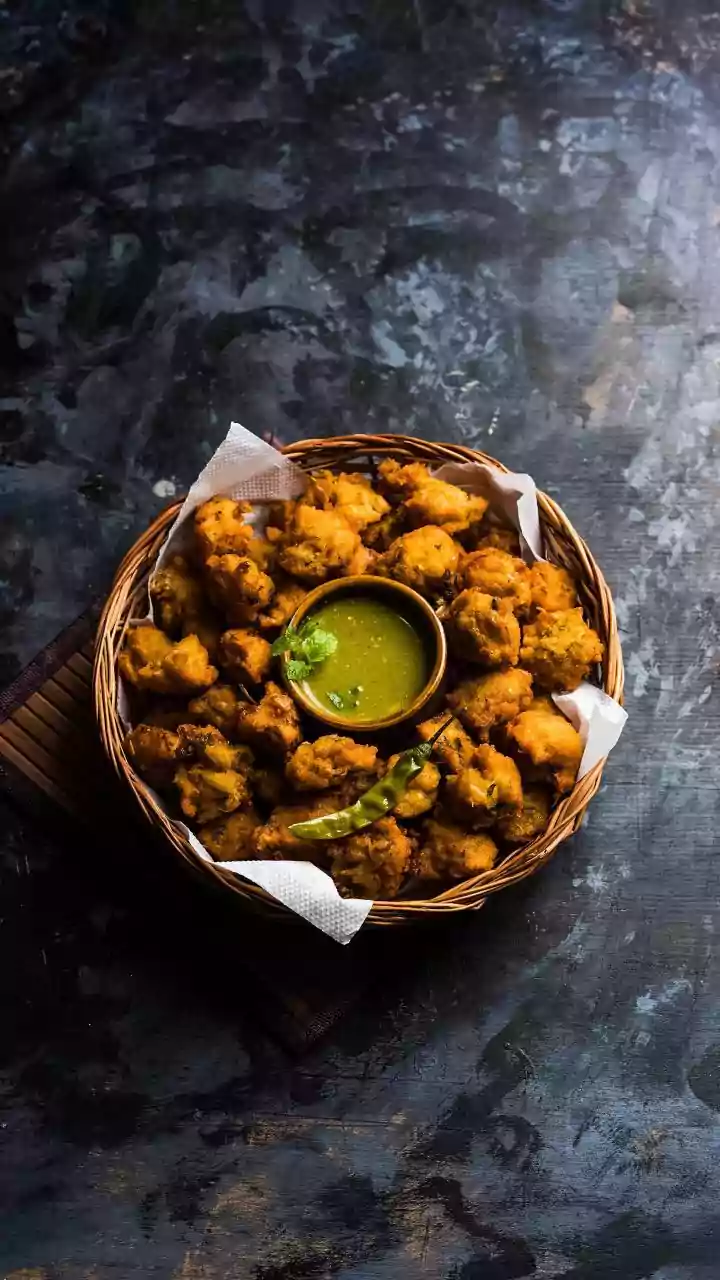
There's a reason the cool, damp weather makes you yearn for a plate of hot pakoras. When it rains, reduced sunlight can cause a dip in your body's serotonin levels, the hormone that helps regulate mood and appetite. To counteract this, your brain craves
carbohydrates and fats, which help produce more serotonin, creating a temporary feeling of happiness and well-being. Fried foods, rich in both, become an instinctive choice. Furthermore, the drop in temperature makes our bodies desire warm, calorie-dense foods to help maintain our core temperature, a process known as thermogenesis. The satisfying crunch of a samosa or bhajiya also provides a delightful sensory contrast to the damp, sluggish feeling of a humid day.
A Bite of Nostalgia
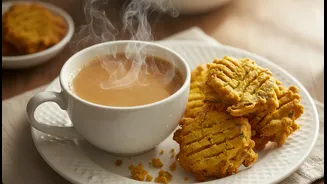
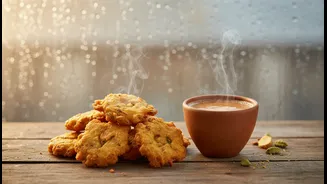
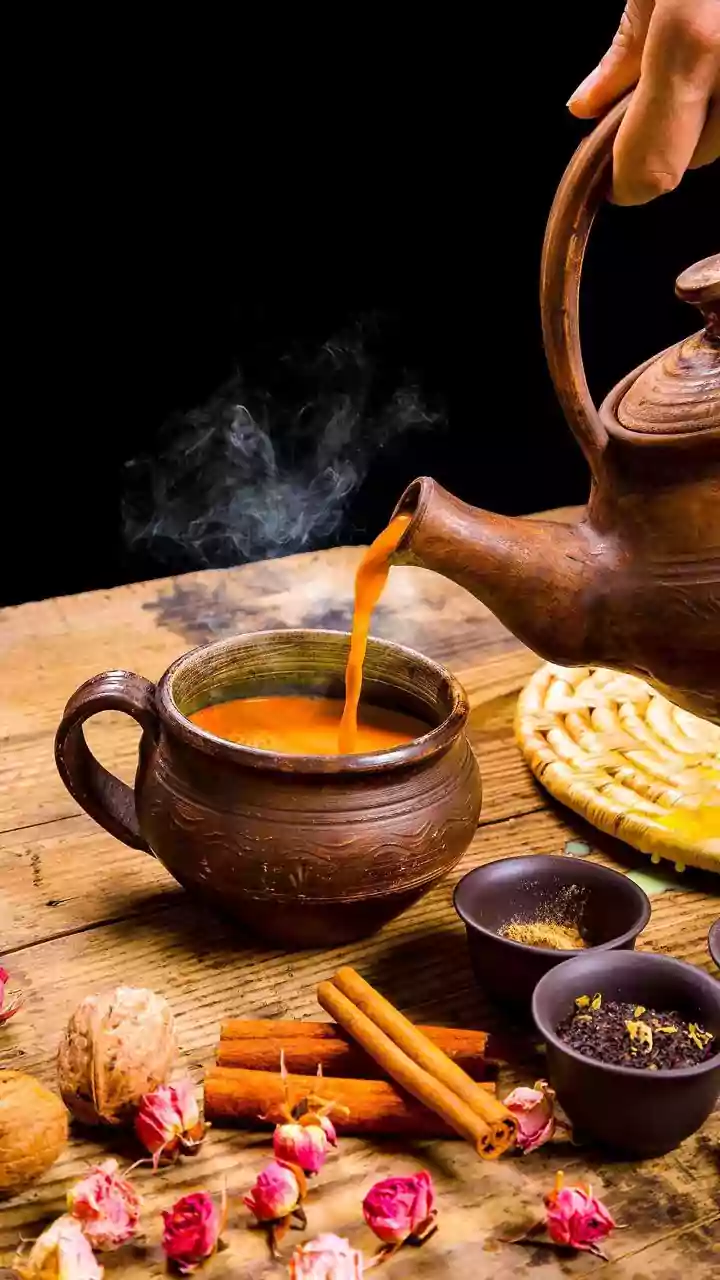
Beyond the biological triggers, monsoon snacks are potent vessels of memory. The specific pairing of chai and pakoras is a cultural ritual that became widespread in the mid-20th century, cementing itself in the national consciousness. Psychologists explain that our brains are wired to connect food with emotion and memory. The smell of besan hitting hot oil or ginger being crushed for tea can transport us back to childhood. These food-related memories often evoke feelings of security, care, and simpler times, when a rainy day meant a holiday from school and a treat from the kitchen. This nostalgic comfort is so powerful that even just thinking about these foods can reduce feelings of loneliness and improve mood.
The Taste of Togetherness
The ritual of preparing and sharing monsoon snacks is as important as eating them. The question, “Should we make some bhajiyas?” is an invitation, a way to bring family and friends together. In many households, the rain provides a reason to pause, gather in the kitchen, and participate in the communal activity of chopping vegetables and frying snacks. This act of sharing food strengthens social bonds and creates new memories. From roadside stalls where strangers huddle under an awning to share a plate, to family living rooms filled with laughter, these snacks are a social glue. They are an edible expression of hospitality and connection, turning a gloomy afternoon into an occasion for warmth and camaraderie.
An All-India Affair
While the combination of chai and pakoras is iconic, the tradition of rainy-day snacking is celebrated with regional variations across the country. In Maharashtra, Kanda Bhajji (onion fritters) and Batata Vada are staples. Head east to Bengal, and you might find Beguni (eggplant fritters) or delicate Kumro Phool Bhaja (pumpkin flower fritters). Rajasthan offers the fiery Mirchi Vada, a large chilli stuffed with a spicy potato filling. Down south, the craving might be for a crispy Medu Vada served with hot filter coffee. Even the humble bhutta, or roasted corn on the cob, becomes a cherished treat, often enjoyed on the streets while watching the downpour. Each region has its own hero snack, but the underlying sentiment is the same: finding joy and comfort in a hot, flavourful bite while the rain falls outside.