




Why The New Moon is Your Best Friend
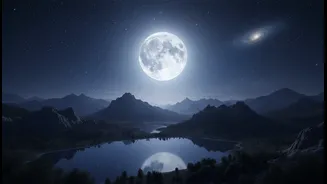
For any stargazer, the Moon is both a beautiful sight and the biggest source of natural light pollution. A full moon can be so brilliant that it washes out all but the brightest stars and planets, making it impossible to see fainter objects. The new moon,
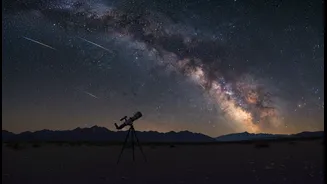
which in July 2026 falls on Tuesday, the 14th, is the opposite. During this phase, the Moon is not visible in the night sky, leaving behind a perfect dark canvas. The nights surrounding the new moon, from roughly July 11th to July 18th, are the darkest of the month. This creates the ideal conditions to witness the subtle beauty of the cosmos, especially for those hoping to catch a glimpse of the Milky Way or faint meteor trails. It’s the perfect time to take advantage of any break in the monsoon clouds.
A Celestial Parade: What to Spot
July’s dark nights are playing host to a spectacular lineup of planets. In the evenings, look to the west shortly after sunset to spot the dazzling planet Venus. On July 17, it will be joined by a slender crescent moon, creating a beautiful and easily photogenic pairing. For those willing to stay up late or wake up early, the pre-dawn sky is just as rewarding. Saturn, the ringed giant, will be visible for most of the night, rising after midnight in the eastern sky. Mars, with its distinct reddish hue, will also appear in the hours before sunrise. Look for a special gathering on the morning of July 11, when the crescent moon, Mars, and the beautiful Pleiades star cluster will form a celestial triangle in the east.
Gazing into the Galactic Heart
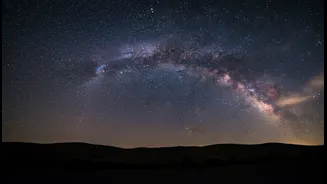
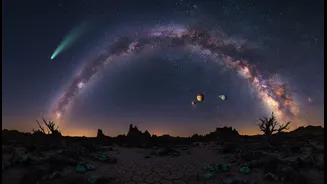
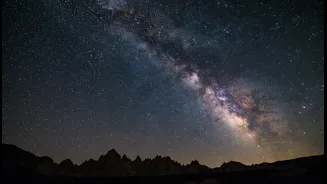
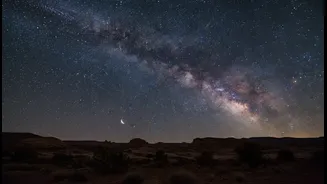
The moonless nights of mid-July are the absolute best time to view the magnificent core of our own galaxy, the Milky Way. From India, the galactic centre, located in the constellation Sagittarius, is positioned high in the southern sky during summer nights. To find it, look for a group of stars that form a distinctive shape resembling a teapot. The dense, shimmering band of the Milky Way appears like steam rising from the teapot's spout. This dense collection of billions of stars, gas, and dust is a truly awe-inspiring sight, but one that is completely invisible from light-polluted cities. Escaping to a darker location during the new moon window is essential to experience its full glory.
Late-Month Fireworks (With a Caveat)
Towards the end of the month, two meteor showers peak simultaneously on the nights of July 30 and 31: the Southern Delta Aquariids and the Alpha Capricornids. The Delta Aquariids can produce up to 20 faint meteors per hour, while the Alpha Capricornids are known for producing a smaller number of exceptionally bright fireballs. However, it's important to manage expectations. The peak of these showers unfortunately coincides with the full 'Buck Moon' on July 29, and its bright glare will wash out many of the fainter meteors. Despite the moonlight, you may still catch a few of the brilliant fireballs from the Alpha Capricornids, which can be bright enough to streak across the sky, offering a dramatic closing spectacle to the month's celestial events.
Tips for the Indian Stargazer
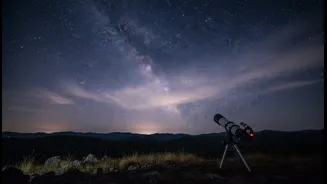
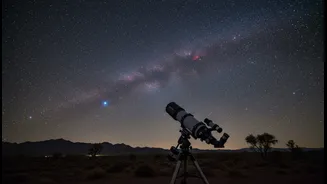
Making the most of these opportunities, especially during the monsoon, requires a little planning. First, escape city lights. Even a short drive away from urban centres can dramatically improve what you can see. Second, be patient. Give your eyes at least 20-30 minutes to fully adapt to the darkness; avoid looking at your bright phone screen during this time. If you need light, use a torch with a red filter, as red light is less disruptive to your night vision. Third, use technology to your advantage. Apps like Stellarium or Star Walk can help you identify planets, constellations, and other objects in real-time. Finally, check the weather forecast obsessively for cloud cover and plan your stargazing for any clear breaks you can find. Even a couple of clear hours on a moonless night can be incredibly rewarding.