






A Historic Dry Spell
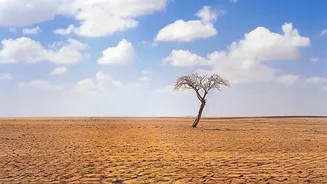
July is usually a time of consistent, if not heavy, rainfall for Bengaluru. This year, however, was a stark exception. The India Meteorological Department (IMD) recorded a mere 23 mm of rainfall for the entire month. To put that in perspective, the city
typically receives between 80 mm and 100 mm in July. This makes July 2026 the second-driest since 1918, when just 18.5 mm was recorded. The unusually dry month came after a promising start to the season, with strong pre-monsoon showers providing a healthy surplus. But the prolonged dry spell in July has raised questions about the overall performance of the southwest monsoon.
The View from the Reservoirs
Bengaluru's water supply is intrinsically linked to the health of the monsoon, which replenishes key reservoirs in the Cauvery basin, such as the Krishna Raja Sagar (KRS). The city requires approximately 2.3 thousand million cubic feet (tmc) of water every month. Following the poor July rains, concern has naturally shifted to the water levels in these reservoirs. In late July, officials from the Bangalore Water Supply and Sewerage Board (BWSSB) stated that the city has enough water in reserve to last for about four to six months without immediate shortages. However, they also issued a note of caution, stating that if the region does not receive adequate rainfall in the coming months, a shortage could develop.
An Official but Cautious Stand
Despite the alarming rainfall deficit, the BWSSB has assured residents that there is no immediate crisis. The board has stated that adequate water is available in the Cauvery basin reservoirs to meet the city's current needs, and that emergency plans are in place. These measures include an alternative supply system using mobile tankers and borewells if required. The BWSSB has also appealed to citizens to use water responsibly and avoid non-essential uses like washing cars or gardening with treated drinking water, a sign that conservation is a high priority. While there is no official panic, the messaging is clear: the situation is being monitored closely.
The Bigger Picture: El Niño and Future Forecasts
This local dry spell is occurring within a larger climatic context. Meteorologists point to moderate El Niño conditions over the Pacific Ocean, which are expected to strengthen and can negatively impact the Indian monsoon. Looking ahead, the IMD has forecast below-normal rainfall for many parts of the country for August and the second half of the monsoon season. This national forecast offers little comfort to a region already experiencing a rainfall deficit. While August and September are typically Bengaluru's wettest months, the current trend suggests that a significant recovery is needed to balance the city's annual water budget.
A Wake-Up Call for a Growing City
The dry July serves as another reminder of Bengaluru's precarious water situation. Even with official assurances, some residents in large apartment complexes are reportedly already facing water restrictions and difficulties in arranging water tankers. This highlights the dual water economy of the city, where many depend on borewells and private tankers that are immediately affected by a lack of rain, even if the municipal supply from reservoirs holds steady. This single dry month forces a larger conversation about long-term water security, the impact of rapid urbanization, and the city's resilience in the face of increasingly erratic weather patterns. The focus now shifts to August and September, with the city hoping for a much-needed revival of the monsoon.