



Imagine having a baby picture of the universe, a snapshot from when it was just 380,000 years old. That's the Cosmic Microwave Background (CMB), and scientists are now running new tests on this ancient light, hoping to unlock our deepest cosmic secrets.
The Universe's Oldest Light
The Cosmic Microwave Background is often called the afterglow of the Big Bang. Think of it as the faint, leftover heat from the universe's creation. In the first moments after the Big Bang, the universe was an incredibly hot, dense fog of plasma and radiation. Light couldn't travel far without bouncing off a particle, making the cosmos opaque. It took about 380,000 years for the universe to expand and cool enough for the first atoms to form. At that point, light was suddenly free to travel unimpeded. That liberated light, stretched over 13.8 billion years by the expansion of the universe into the microwave spectrum, is what we detect today as the CMB.
A Blueprint of the Cosmos
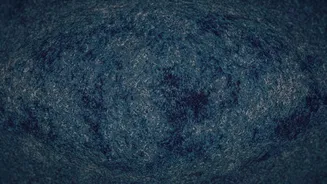
This ancient light is much more than a simple glow; it’s a detailed blueprint of the early universe. The CMB is remarkably uniform in temperature, at about 2.7 degrees above absolute zero, no matter which way we look. But tiny temperature fluctuations—variations as small as one part in 100,000—reveal the 'seeds' from which all cosmic structures, including galaxies, eventually grew. By studying these minuscule differences, scientists can deduce fundamental properties of our universe, such as its age, composition, and geometry. This makes the CMB one of the most powerful pieces of evidence supporting the standard model of cosmology, which posits a universe dominated by dark matter and dark energy.
Putting the Blueprint to the Test
Scientists 'test' the CMB by mapping its temperature and polarization with incredibly sensitive telescopes. Experiments on the ground, like the South Pole Telescope (SPT) and the Simons Observatory in Chile, and past space missions like Planck, have been crucial. These instruments are designed to detect faint microwave light and chart its properties across the sky. The primary goals are to measure the patterns with ever-increasing precision and to hunt for specific polarization patterns, known as B-modes. These B-modes are considered a potential smoking gun for cosmic inflation—a theorized period of hyper-rapid expansion in the first fraction of a second after the Big Bang. Detecting them would be a monumental breakthrough, confirming a key pillar of modern cosmology.
What New Observations Reveal
Recent and ongoing experiments are pushing the boundaries of what we know. The SPT_3G camera, for instance, completed a massive survey in 2024, mapping a huge patch of the sky with unprecedented sensitivity. These new, high_resolution maps allow scientists to study a phenomenon called gravitational lensing, where the path of CMB light is bent by the gravity of massive structures it passes on its way to us. By analyzing these distortions, researchers can create maps of all the matter—including dark matter—between us and the edge of the visible universe. This technique provides a new way to test cosmological theories and even helps constrain the mass of elusive particles like neutrinos.
The Lingering Anomalies
Despite its successes, the standard model of cosmology isn't perfect, and the CMB holds clues to its potential weaknesses. For years, scientists have noted several 'anomalies' in the CMB maps—large_scale features that don't quite fit the theory's predictions. These include a 'Cold Spot' (an unusually large, cool area), a lopsidedness in temperature variations across the sky, and a lack of correlation at the largest scales. While some scientists believe these could be statistical flukes, others speculate they might hint at new physics, perhaps even suggesting that the Big Bang was more of a 'Big Bounce' from a previous universe. These anomalies ensure that the CMB will remain a fertile ground for discovery for decades to come.