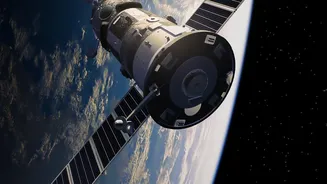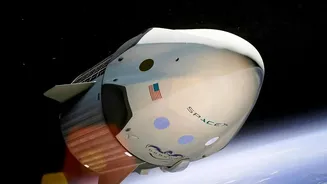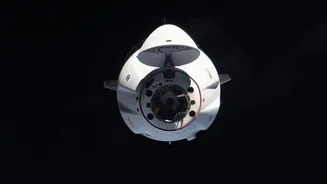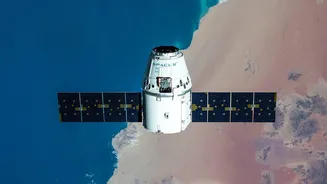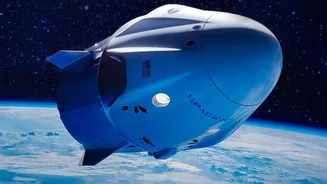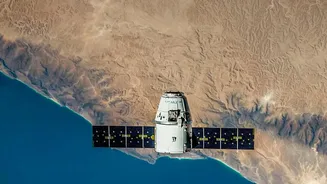




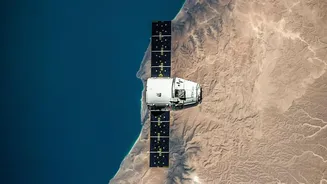
After more than a month attached to the International Space Station, a SpaceX Dragon capsule has splashed down in the Pacific Ocean. But this was no empty vessel; it was a treasure chest of scientific data returning to Earth.
More Than Just a Delivery Service
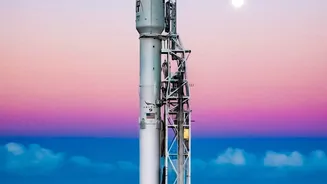
On October 13, SpaceX launched
its 35th Commercial Resupply Services (CRS) mission for NASA, sending over 2,800 kilograms of supplies, hardware, and new science experiments to the astronauts aboard the International Space Station (ISS). While the upward journey is crucial for sustaining the crew and upgrading the station—this mission delivered the final pair of new solar arrays to boost the ISS's power supply—the return trip is where much of the scientific value is realised. The Dragon capsule is currently the only cargo vehicle capable of returning significant amounts of material from the station. Other cargo craft, like Northrop Grumman's Cygnus, are designed to burn up on reentry. This unique ability makes Dragon an essential link in the chain of space-based research, allowing scientists to analyse samples back in their own labs.
The Unique Laboratory of Microgravity
The ISS offers a research environment that is impossible to replicate on Earth: persistent microgravity. When the force of gravity is removed, fundamental physical and biological processes behave differently. Fluids don't separate by density, crystals can grow with fewer imperfections, and the human body undergoes changes that mimic diseases and the aging process on an accelerated timescale. This allows scientists to study conditions like muscle atrophy, bone density loss, and cardiovascular issues in a compressed timeframe. By studying these phenomena in space, researchers hope to unlock new insights that can lead to medical breakthroughs and new technologies for everyone on Earth.
A Precious Cargo of Discovery
The CRS-35 mission returned a diverse portfolio of experiments. Among the most anticipated are frozen tumour organoids—small, lab-grown models of cancerous tumours that were treated with experimental drugs while in orbit. Scientists hope to see how microgravity affected their growth and response to treatment, potentially revealing new ways to improve cancer therapies. The capsule also carried a 3D-bioprinted blood vessel construct, created to study vascular aging and cardiovascular disease. By examining how this tissue developed without the stresses of gravity, researchers aim to better understand what causes these conditions on Earth. Another key payload included frozen microbial samples to investigate how antibiotic-resistant bacteria adapt and evolve in space, a critical area of study for both astronaut health and combating superbugs on our planet.
From the Ocean to the Laboratory
The journey for these experiments didn't end with the splashdown on November 21. Once the Dragon capsule was retrieved from the ocean off the coast of California, a specialised team went to work. Time-sensitive samples are unloaded immediately and prepared for transit, often on charter flights, to get them to research centres as quickly as possible. The goal is to minimise the effects of Earth's gravity on the samples before scientists can conduct their post-flight analysis. This rapid retrieval process is vital for preserving the integrity of biological samples, such as the organoids and microbial cultures, ensuring the data collected is as pure as possible. The insights gained will build on decades of research conducted in orbit, from understanding how to manufacture artificial retinas to studying the fundamental physics of specialised glass.