







First, Decode the Weather Alerts
Before you even think about your route, it’s crucial to understand what the official warnings mean. The India Meteorological Department (IMD) uses a colour-coded system to help citizens grasp the severity of expected weather. A Green alert means all is
clear, and no advisory is in place. A Yellow alert signals you to 'be aware,' as bad weather is possible, which could affect daily activities. An Orange alert is a call to 'be prepared,' indicating a forecast of extremely bad weather with potential disruptions to transport and power. The most severe is a Red alert, which means 'take action.' This is issued when weather conditions are expected to be so severe that they pose a significant threat to life and property, and authorities may advise against any travel.
Proactively Plan Your Primary and Backup Routes
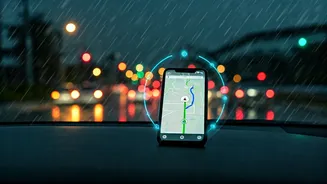
The core message is to think ahead. Don’t wait until you’re stuck in traffic to find another way. Before leaving home, use navigation apps to check your standard route. But don't stop there. Identify at least one or two alternative routes. Modern apps like Waze and Mappls provide community-driven updates on waterlogging, accidents, and other hazards in real time. Mappls, an Indian app, even offers alerts for potholes and speed breakers, which can be especially useful on rain-slicked roads. Check for known flood-prone areas or underpasses on your intended path and plan to avoid them entirely if an Orange or Red alert is active.
Prepare Your Vehicle for the Challenge
A well-maintained vehicle is your best defence against a monsoon breakdown. Before the season truly kicks in, get your car or two-wheeler serviced. Pay special attention to your tyres, brakes, and windscreen wipers. Good tyre tread is essential for maintaining grip on wet roads and avoiding hydroplaning. Ensure your brakes are responsive, as stopping distances increase significantly in the rain. Functioning wipers are non-negotiable for visibility. Also, check that all your lights—headlights, taillights, and indicators—are working correctly so that you can see and be seen.
Essential Tips for Driving in Downpours
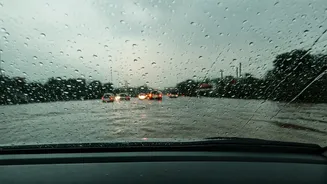
Once you are on the road, safety is paramount. The single most important rule is to slow down. Reducing your speed gives you more time to react to hazards. Increase the following distance between your vehicle and the one in front to at least a few seconds. Never drive through standing water if you can't tell how deep it is; it takes only a few inches of flowing water to move a car. If you must cross a waterlogged patch, do so slowly and in a low gear to avoid stalling the engine. Avoid sudden acceleration or hard braking, as this can cause you to lose control.
Assemble a Commuter’s Monsoon Kit
Being prepared isn't just about your route; it's also about what you carry with you. A 'monsoon kit' can make a huge difference if you get stranded. Essentials include a sturdy umbrella and a waterproof bag or cover for your electronics and important documents. A power bank for your phone is a modern-day necessity, ensuring you can stay connected and access navigation apps. Keeping a small towel, a change of clothes or footwear at your workplace, and a bottle of drinking water and some snacks in your vehicle can turn a miserable, rain-soaked delay into a more comfortable wait.