




The Rise of 'Catification'
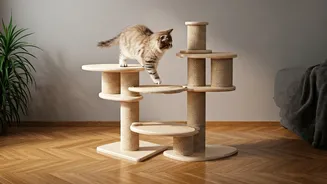
For years, cat furniture meant one thing: a bulky, carpet-covered tree that rarely matched any human’s interior design aesthetic. But modern pet ownership has evolved. Today’s cat parents understand that enriching their pet’s indoor environment is crucial
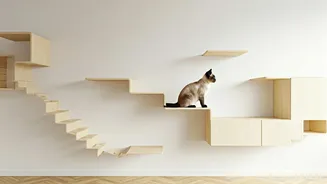
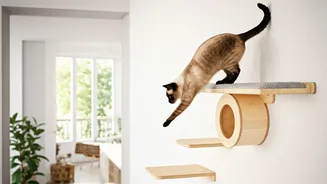
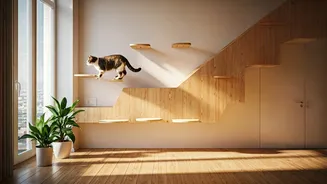
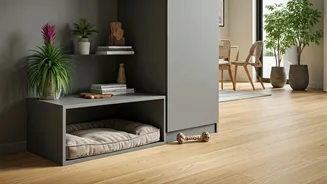
for their mental and physical health. This has given rise to ‘catification’—the conscious design of a shared living space to meet the instinctual needs of a cat. It’s not about surrendering your home to your pet; it’s about integrating their needs seamlessly into your own. Floating walkways are the perfect embodiment of this philosophy, turning unused vertical wall space into a functional playground that doubles as minimalist wall art.
Why Cats Crave High Places
To understand the appeal of these walkways, you have to think like a cat. In the wild, cats are both predator and prey. Climbing provides a distinct advantage for both roles. From a high perch, a cat can survey its territory for potential threats or opportunities, giving them a sense of security and control. This instinct doesn’t disappear just because they live indoors. A lack of vertical space can lead to boredom, stress, and anxiety, which can manifest as unwanted behaviours like scratching furniture or aggression. Providing vertical territory, especially in multi-cat households, helps establish hierarchy and reduce conflict by giving them separate spaces to retreat to. A floating walkway becomes their personal ‘superhighway’, allowing them to navigate their world from a safe and empowering vantage point.
Design Meets Feline Function
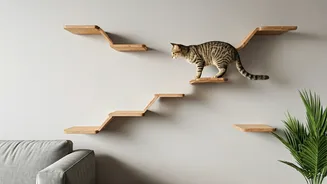
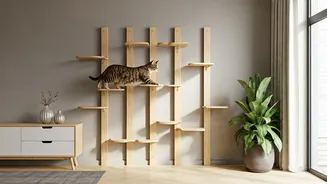
What makes floating wooden walkways so appealing is their marriage of form and function. Unlike traditional cat trees that consume valuable floor space, these systems mount directly to the wall. This is a game-changer for anyone living in a smaller apartment or aiming for a clean, uncluttered look. The use of natural wood—like pine, birch, or oak—fits perfectly with popular interior design trends, from Scandinavian minimalism to modern farmhouse. These shelves can be arranged in countless configurations, creating a unique architectural feature in any room. They offer your cat the climbing and perching opportunities they crave while looking like a deliberate, stylish design choice.
Planning Your Cat's Wall-Mounted World
Before you start drilling holes, a little planning goes a long way. First, map out a logical path. A good cat highway has clear entry and exit points, often starting near a piece of furniture your cat can easily jump from, like a sofa or a sturdy bookshelf. Think about flow. The shelves should be spaced at a distance your cat can comfortably and safely jump—not too close, not too far. Observe your cat’s current habits. Do they like to look out a specific window? Consider running the walkway towards that view to create a prime bird-watching perch. The goal is to create a path that feels natural and inviting for them to explore. Also, ensure the path doesn't lead them directly above fragile items like a television or a collection of vases.
Safety, Materials, and Installation
Safety is paramount. Ensure any shelves you buy or build are designed to hold your cat's weight, and then some. Always mount them into wall studs for maximum stability; drywall anchors alone are not sufficient. The surface of the shelves is another key consideration. While sleek, polished wood looks great, it can be slippery for cat paws. Look for shelves with a non-slip surface, like an integrated carpet pad, cork, or a textured finish. If you’re going the DIY route with standard wooden shelves, you can easily add non-slip grip tape or a piece of secured sisal fabric. Whether you purchase a ready-made kit from a pet furniture specialist or build your own, always double-check the sturdiness of each component before letting your cat explore.