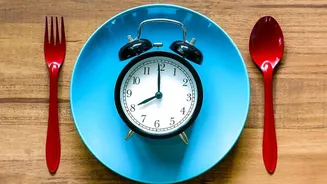







Meet Your Internal Body Clock
Deep inside your brain is a master clock, known as the suprachiasmatic nucleus (SCN), that governs your body's 24-hour operating system. This is your circadian rhythm, and it tells your body when to wake up, feel hungry, get tired, and perform countless
other functions. But it's not just one clock; nearly every organ and cell, from your liver to your fat tissue, has its own 'peripheral' clock. While the master clock in your brain syncs primarily to light, these peripheral clocks are strongly influenced by when you eat. When your eating schedule is erratic or too late, it's like telling your liver it's lunchtime while your brain is getting ready for bed. This misalignment can throw your entire system out of whack.
Why Late Meals Disrupt Metabolism
Your body's ability to process food is not the same at 8 p.m. as it is at 1 p.m. Metabolism naturally slows in the evening as the body prepares for rest. Insulin sensitivity, your body's ability to efficiently use glucose from food, is highest in the morning and declines throughout the day. When you eat a late dinner, your body is less prepared to handle the influx of calories and sugar. This can lead to higher blood sugar and insulin levels overnight, which, over time, increases the risk of insulin resistance and other metabolic issues. Furthermore, studies show that late eating can slow down the rate at which your body burns fat by about 10%, encouraging your body to store fat rather than use it for energy.
Turn On Your Fat-Burning Engine Earlier
The practice of eating within a specific window, particularly one that ends earlier in the day, is known as early time-restricted eating (eTRE). Research suggests this approach can significantly benefit metabolic health. By finishing your last meal several hours before bed, you give your body a longer overnight fasting period. This allows insulin levels to drop, which in turn signals the body to switch from storing energy to burning its fat reserves. Studies have shown that aligning meals with the body's natural rhythms can improve fat metabolism, lower blood pressure, and reduce oxidative stress. This isn't necessarily about eating fewer calories, but about consuming them when your body is most efficient at processing them.
The Surprising Link to Better Sleep
A late, heavy meal can directly interfere with your ability to get a restful night's sleep. The digestive process is an active one, and asking your body to do this work when it should be powering down can be disruptive. Moreover, eating late can affect key hormones. For example, high insulin levels from a late meal can potentially delay the release of melatonin, the hormone that signals your body it's time to sleep. This misalignment can delay sleep onset and reduce sleep quality. Conversely, participants in studies on early time-restricted eating have often reported better, more restful sleep, creating a positive feedback loop: better sleep leads to better food choices and more stable energy the next day.
Simple Steps to Shift Your Dinner Time
Moving your dinner time isn't always easy, but it doesn't have to be an overnight overhaul. Start by shifting your last meal 15 to 30 minutes earlier every few days until you reach your goal, ideally finishing at least two to three hours before bedtime. To manage evening hunger, ensure your earlier dinner is balanced with protein, fibre, and healthy fats to promote satiety. Stay hydrated with water or herbal tea. If you're used to a post-dinner snack, try to distinguish between true hunger and habit. If you do need something, opt for a small, protein-focused bite rather than something high in sugar or carbs. The key is consistency; a stable eating schedule helps anchor your circadian rhythms just as much as a regular sleep schedule does.