







A Battle for the Buffet
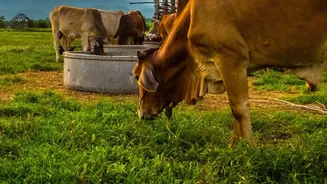
At the heart of the issue is a simple competition for food. Tiger reserves are complex ecosystems that must support a healthy population of prey animals like deer, sambar, and wild boar. When large herds of cattle are left to graze freely within these
protected areas, they consume vast quantities of the same grasses and foliage that these wild herbivores depend on. This direct competition can lead to a significant decline in the prey population. For a reintroduced tiger population, which is already adapting to a new environment, a scarcity of food is a primary obstacle to survival and establishing a breeding population. Sustaining prey numbers requires active habitat management, and a key part of that is reducing the pressure from domestic livestock.
The Invisible Threat of Disease
The interaction between domestic livestock and wildlife creates a dangerous bridge for pathogens. Cattle and the stray dogs that often accompany them can carry and transmit diseases to wild animals, which typically have no natural immunity. Diseases like Canine Distemper Virus (CDV), Foot-and-Mouth Disease, and bovine tuberculosis can spread from livestock to wild prey populations, and subsequently to the tigers that hunt them. In some tragic cases, entire tiger families have been wiped out by CDV, a highly infectious virus that attacks an animal's respiratory and nervous systems. The close proximity and shared water resources in grazing areas make disease transmission a silent, ever-present threat to fragile tiger populations.
Degrading the Tiger’s Home
Beyond just eating the available food, overgrazing by cattle has a cascading effect on the entire habitat. The constant trampling compacts the soil, preventing the regeneration of native grasses and undergrowth that smaller animals and birds rely on. This degradation simplifies the complex forest structure, making it less suitable for a diverse range of wildlife. Unchecked grazing can alter the very landscape, impacting water sources and the overall ecological balance. For tigers, this means the quality of their home diminishes, affecting not just their food supply but also the cover they need for hunting and raising cubs. A degraded habitat simply cannot support a thriving predator population.
Fueling Human-Wildlife Conflict
When the natural prey base is diminished due to competition with livestock, tigers may be forced to turn to an easier alternative: the cattle themselves. This predation on livestock is a major driver of human-wildlife conflict. Farmers who lose their animals may resort to retaliatory killings, often using poison, which can kill not just the target tiger but other scavengers in the ecosystem. This cycle of conflict undermines conservation efforts and eroded local support for tiger reintroduction projects. Studies have shown that unregulated, open-access grazing is simply not compatible with large carnivore conservation in the same landscape, as it inevitably increases negative interactions between tigers, humans, and livestock.
The Path to Coexistence
The solution is not necessarily a complete ban on grazing, which is a vital livelihood for many local communities. Instead, it lies in 'controlled' or 'conservation' grazing. This involves creating designated grazing zones outside of critical core habitats, regulating the number of cattle allowed, and working with communities to implement better livestock management practices. By ensuring that core areas of tiger reserves remain inviolate, we give the natural prey base a chance to recover. This, in turn, provides a sustainable food source for tigers, reducing their dependence on livestock and minimizing conflict. It's a management strategy that respects both local livelihoods and the ecological needs of India's national animal.