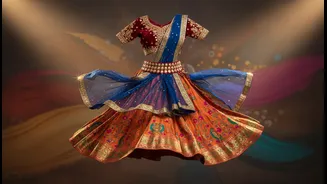









A Tangible Tie to Heritage
For many in the Indian diaspora, particularly second and third-generation immigrants, classical dance forms like Bharatanatyam and Kathak serve as a profound and tangible connection to a homeland they may have never lived in. In countries like the US,
UK, and Canada, dance schools are not just places of artistic instruction; they are community hubs where cultural values, mythology, and languages are transmitted alongside intricate footwork and expressive gestures. Parents often enroll their children in these classes to instill a sense of cultural identity and heritage. This practice helps young people navigate the complexities of a dual identity, grounding them in the rich traditions of their ancestors while they grow up in a different cultural landscape. The dance becomes a living, breathing archive of stories and traditions, passed down through generations.
Preserving Parampara, Navigating New Realities
The traditional method of teaching classical dance, the guru-shishya parampara (teacher-disciple tradition), is a deeply personal and immersive relationship. Replicating this abroad comes with unique challenges. Teachers, or gurus, find they must often adopt new methods to explain cultural nuances that would be implicitly understood in India. For instance, explaining a mythological story or the significance of a particular gesture might require more explicit historical and cultural context for a student in Australia or America. Furthermore, the practicalities of running a dance school as a business in a market-driven economy, often without the institutional support found in India, place immense pressure on artists who are driven by passion. Despite these hurdles, dedicated gurus work tirelessly to maintain the authenticity and rigour of the art form, ensuring the continuity of these ancient lineages.
The Dialogue Between Authenticity and Innovation
Diaspora dancers often face a double-edged sword: the pressure to be 'authentic' cultural ambassadors while also feeling the creative impulse to innovate and reflect their own hybrid identities. This tension, however, is a fertile ground for artistic growth. Many dancers are now exploring contemporary themes, collaborating with artists from other disciplines, and fusing classical techniques with modern and global sensibilities like ballet, jazz, or even hip-hop. This isn't about dilution, but evolution. These artists are creating new choreographies that speak to their lived experiences, addressing issues of identity, belonging, and social change. They are asking critical questions about the art form and its place in the 21st century, creating a dynamic dialogue between tradition and modernity.
Finding a Global Stage and New Audiences
What once was a niche art form appreciated mainly within the diaspora community is now finding a wider, more diverse audience. International arts festivals, university programmes, and cultural exchange initiatives have helped bring Indian classical dance into the global mainstream. This increased visibility is not just for performers from India, but for diaspora artists who are gaining recognition for their unique contributions. Interestingly, this global journey is also attracting practitioners from non-Indian backgrounds, who are drawn to the depth, beauty, and discipline of these forms. The art form's appeal is proving to be universal, moving beyond ethnic or national boundaries and becoming a shared global language of artistic expression.