






Why Your Usual Route Might Not Work
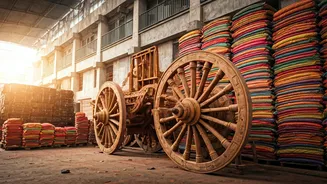
During major festivals, cities and towns transform. The most significant reason for travel disruption is the processions. Events like Puri’s Rath Yatra, Muharram Tazia processions, and Ganesh Visarjan involve massive chariots or idols moving through main
thoroughfares, leading to rolling road closures. For instance, during the Rath Yatra, entire sections of the Bhubaneswar-Puri National Highway are regulated, and access to the Grand Road in Puri is completely pedestrianised. Security is another major factor. To manage the immense crowds, which can run into lakhs, police establish cordons and restricted zones around key temples and celebration hubs, such as the Jhandewalan and Kalkaji temples in Delhi during Navratri. This means roads that are usually open may be blocked or have their direction of traffic reversed. Add to this the general surge in vehicles, and you have a recipe for travel chaos if you're unprepared.
The Official Word: Your Most Reliable Source
Before you even start your journey, your first port of call should be official sources. City and state traffic police departments are your best friends during festival season. They regularly issue detailed traffic advisories ahead of major events. These advisories are not vague warnings; they are specific guides outlining which roads will be closed, the exact timings of the restrictions, and designated alternative routes. You can find these advisories on their official websites and, more immediately, on their social media handles, especially X (formerly Twitter). For example, Delhi Traffic Police consistently posts detailed plans for festivals like Holi, Navratri, and New Year's Eve, complete with maps and lists of diverted roads. These announcements also specify parking arrangements, often setting up large, temporary lots on the outskirts with shuttle services to the main venues.
Your Digital Co-Pilot: Apps for Real-Time Guidance
While official advisories provide the overall plan, the situation on the ground can change rapidly. This is where real-time navigation tools become indispensable. Apps like Google Maps and Waze, as well as homegrown alternatives like MapmyIndia, are crucial for navigating festival traffic. These platforms incorporate live traffic data, including information on road closures, accidents, and congestion sourced from millions of users and official alerts. When a road is suddenly closed for a procession, these apps can often suggest an alternative route on the fly, saving you from being stuck for hours. Don't just set your destination and forget it; keep an eye on the traffic overlay (usually colour-coded in red, yellow, and green) to anticipate bottlenecks before you reach them. These tools are no longer a luxury but a necessity for any festival road trip.
The Power of Local Knowledge
Technology is fantastic, but it should be supplemented with local, human intelligence. If you are travelling to another city, call a friend or relative who lives there. They can provide on-the-ground insights that an app might miss, like a neighbourhood road that’s become an unofficial-but-effective detour. Local radio stations and regional news websites are also excellent sources for minute-by-minute updates on traffic flow and unexpected disruptions. This hyper-local information can be particularly valuable for navigating the final leg of your journey as you get closer to the festival epicentre. Sometimes, the best advice is to park your vehicle at a safe distance and use local transport like auto-rickshaws or festival-specific shuttle buses to cover the last few kilometres, a common strategy employed during the Puri Rath Yatra.
Plan for Delays, Hope for the Best
The golden rule of festival travel is to build buffer time into your schedule. No matter how well you plan, delays are almost inevitable. Start your journey earlier than you normally would, especially if you are travelling on the peak days of a festival. Have a Plan B, and even a Plan C, for your route. If you're driving into a major city, identify multiple potential parking areas in advance. If you plan to use public transport like the Metro, check for any special arrangements or restrictions; some key stations near celebration hubs may have restricted entry or exit times to manage crowds. A flexible mindset is your most important travel accessory. Getting frustrated by a delay won't clear the road, but having a backup plan will keep your festive spirits high.