



The Sun’s Violent Temperament
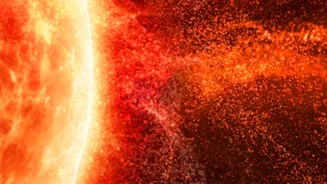
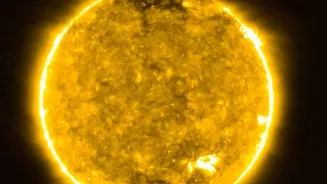
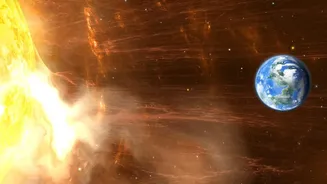
The Sun, our life-giving star, has a turbulent side. It constantly ejects a stream of charged particles known as the solar wind. Sometimes, this escalates into more violent events: solar flares, which are intense bursts of radiation, and coronal mass
ejections (CMEs), which are massive clouds of magnetised plasma hurled into space at incredible speeds. When Earth is in the path of these events, our planet's magnetic field is our primary shield. However, strong solar storms can overwhelm these natural defences, posing a significant threat to our technological infrastructure. These solar plasma streams can disrupt radio communications, damage satellites, and even knock out power grids on the ground, as seen in the 1989 Quebec blackout.
The Space Weather Forecasters
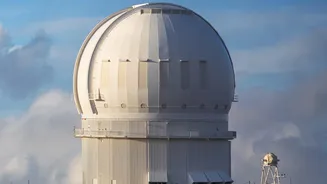
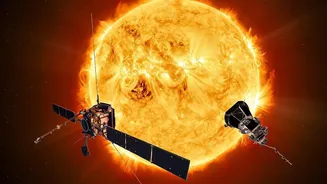
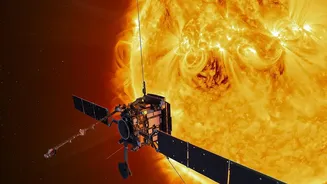
Just like meteorologists forecast storms on Earth, space weather scientists forecast storms from the Sun. Their observatories are not just on mountaintops; they are also in space. Ground-based telescopes, like those at the Kodaikanal Solar Observatory and Udaipur Solar Observatory, have long tracked the Sun's activity by observing sunspots—dark, magnetically active regions on the solar surface. However, to get a truly clear and early warning, scientists need a front-row seat. This is where space-based observatories come in. Satellites positioned between the Earth and Sun provide an uninterrupted view, allowing scientists to see flares and CMEs as they happen. They use a variety of instruments to track these plasma flows, from optical telescopes to computer-vision algorithms and machine-learning models that analyse solar imagery.
India’s Eye in the Sky: Aditya-L1
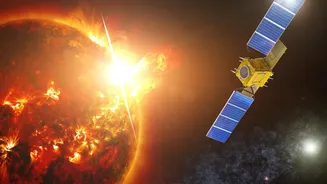
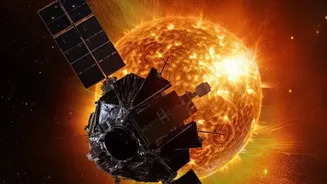
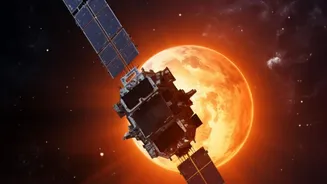
India has taken a major leap in becoming self-reliant in space weather forecasting with its Aditya-L1 mission. Launched by ISRO, this state-of-the-art observatory is positioned at Lagrange Point 1 (L1), about 1.5 million kilometres from Earth. This vantage point gives it a continuous, unobstructed view of the Sun. Aditya-L1 is equipped with seven payloads designed to study the Sun's outermost layers, including its visible surface (photosphere), the plasma layer above it (chromosphere), and the superheated outer atmosphere (corona). By simultaneously observing in different wavelengths, from ultraviolet to X-ray, scientists can study how solar storms are born and track their journey towards Earth, providing a crucial early-warning time of 30 to 60 minutes.
From Prediction to Protection
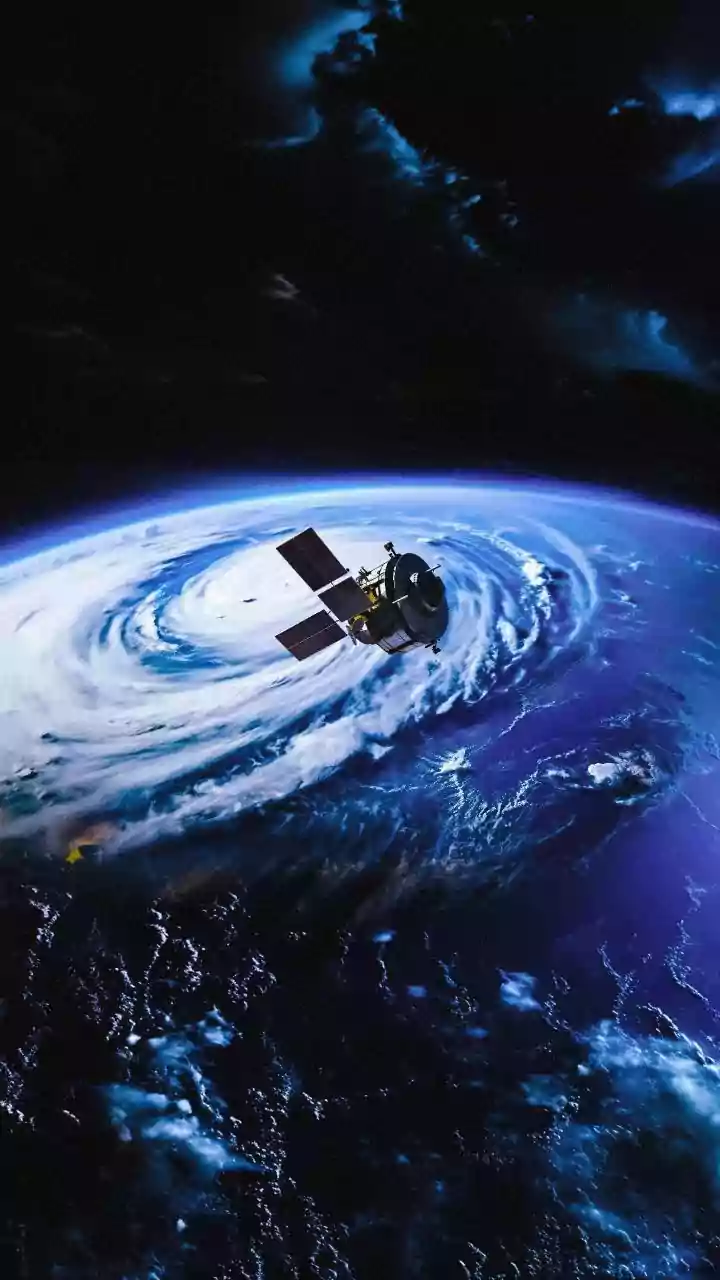
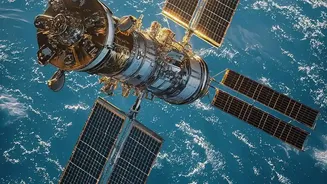
Once a threatening solar event is detected, the race against time begins. Observatories and space agencies like ISRO and NOAA issue alerts to satellite operators, aviation authorities, and power grid managers. For satellites, this warning is critical. Operators can put the spacecraft into a temporary 'safe mode,' shutting down sensitive high-voltage electronics to prevent them from being fried by the incoming charged particles. Satellites are also built with physical protection. Key components are shielded with dense materials like aluminum or tantalum, and their electronics are 'radiation-hardened'—designed with special insulating layers and larger transistors to withstand the harsh space environment. These measures prevent the particles from causing short circuits or corrupting data, ensuring our vital communication links remain intact.