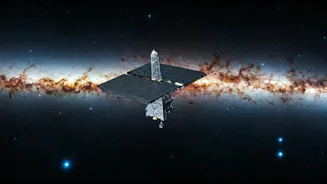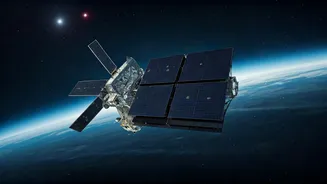








Meet Roman: The Next Great Observatory
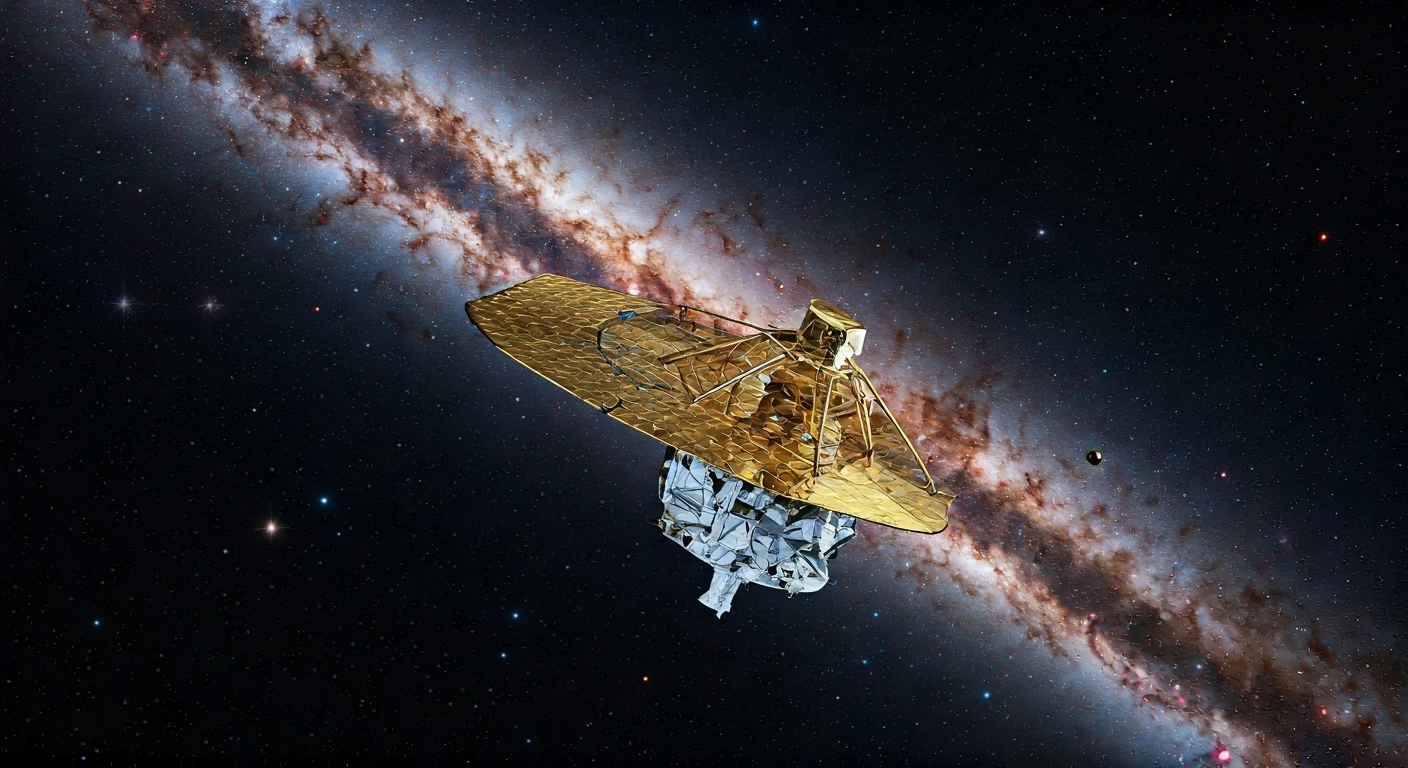
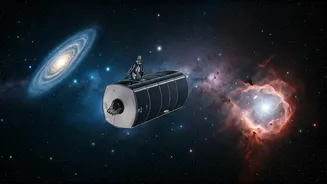
NASA's next flagship mission is the Nancy Grace Roman Space Telescope, an observatory poised to continue the legacy of its famous predecessors. Named after Dr. Nancy Grace Roman, NASA's first chief of astronomy and the “mother” of the Hubble Space Telescope, this
new observatory is a top priority for the agency. After years of development, the telescope is fully assembled and undergoing final preparations for its launch, which is officially scheduled for August 30, 2026, aboard a SpaceX Falcon Heavy rocket. The mission is reportedly ahead of schedule and under budget, a significant achievement for a project of this scale. It will travel to the second Lagrange point (L2), about 1.5 million kilometres from Earth, the same region where the James Webb Space Telescope (JWST) operates.
A Panoramic View of the Universe
Roman's standout feature is its immense field of view. While its 2.4-meter primary mirror is the same size as Hubble's, its Wide Field Instrument (WFI) will capture an area of the sky 100 to 200 times larger in a single snapshot. This means a single image from Roman will contain the detail equivalent to 100 Hubble images. This panoramic capability will allow the telescope to map the sky at a blistering pace, collecting data up to 1,000 times faster than Hubble. This survey-first approach is what sets Roman apart; where Webb performs deep, narrow dives into specific cosmic targets, Roman will create vast, high-resolution maps of the universe, providing context and identifying new targets for other telescopes to study in more detail.
Tackling Cosmic Mysteries: Dark Energy and Exoplanets
The Roman mission has two primary scientific goals: to unravel the secrets of dark energy and to discover thousands of new exoplanets. By surveying a billion galaxies, Roman will map the large-scale structure of the universe to study how dark energy is driving its accelerating expansion. It will also conduct a massive survey of the inner Milky Way to find new planets orbiting other stars. Using a technique called microlensing, Roman is expected to uncover thousands of exoplanets, providing a statistical census of planetary systems throughout our galaxy. This will include discovering types of planets that have been difficult to detect with previous methods.
A New Tool for Seeing the Unseen
Beyond its wide-field camera, Roman is also equipped with a Coronagraph Instrument, a technology demonstration designed to directly image exoplanets. This instrument works by blocking the overwhelming glare from a host star, allowing the much fainter light from an orbiting planet to be seen and analyzed. This technology is a critical stepping stone for future missions, such as the planned Habitable Worlds Observatory (HWO), which aims to search for signs of life on Earth-like planets in the 2040s. The coronagraph on Roman is expected to achieve a contrast 1,000 times better than previous space-based versions, paving the way for the next generation of planet-hunting telescopes.