

An Unexpected Scientific Opportunity
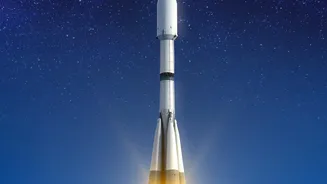
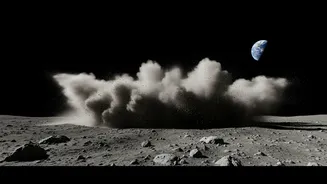
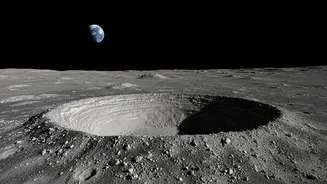
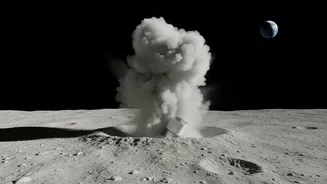
On August 5, 2026, a spent upper stage of a Falcon 9 rocket completed its long, unguided journey through space by slamming into the Moon. The four-tonne piece of space hardware, left over from a 2025 mission, created a new crater near a region known as
Einstein crater. While the collision was unintentional, it was not a surprise. Astronomers had been tracking its decaying orbit for months, predicting the impact with remarkable accuracy. Instead of seeing it as an accident, scientists viewed it as a unique, free experiment. They knew the exact time, location, and object involved—a level of detail they never get with random meteorite strikes. This foreknowledge allowed observatories on Earth and satellites orbiting the Moon to prepare to watch the event unfold, turning a piece of space debris into an invaluable scientific probe.
Digging Deep Without a Drill
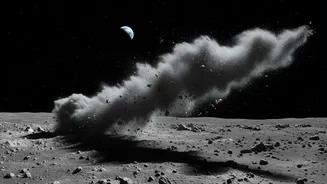
So why is crashing something into the Moon a good thing for science? The lunar surface is not as pristine as it looks. For billions of years, it has been bombarded by solar radiation and micrometeorites, a process called 'space weathering'. This alters the chemical nature of the very top layer of lunar dust, or regolith, meaning what we see on the surface isn't necessarily what lies underneath. An impact, whether from a meteorite or a rocket booster, acts like a cosmic excavator. The kinetic energy of the crash blasts a crater, digging up and throwing out fresh, unweathered material from below the surface. By analysing this ejected plume of dust and rock, scientists can get a much clearer picture of the true composition of the lunar crust. It's a chance to study the Moon's geology without the multi-billion-dollar expense of landing a robotic drill.
What the Debris Cloud Reveals
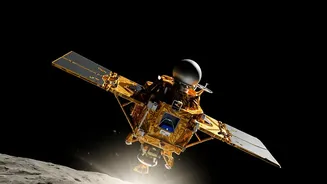
As the rocket stage hit, it was expected to create a crater roughly 20 to 30 metres wide. More importantly, it would have sent a plume of material high above the surface. Scientists are now eagerly analysing data from this event. Instruments on Earth and on orbiters like NASA's Lunar Reconnaissance Orbiter (LRO) were poised to study this cloud. Using a technique called spectroscopy, which analyses the light passing through the dust, researchers can identify the chemical elements and minerals present. This data will reveal the specific geology of the impact site. Furthermore, the LRO will take high-resolution before-and-after images of the crater itself. The shape of the crater and the pattern of the ejecta blanket around it can tell scientists about the physical properties of the crust—whether it's solid bedrock, loose rubble, or something else entirely. These clues are vital for building accurate models of the Moon's internal structure.
The Global Quest for Lunar Knowledge
Understanding the lunar crust is a key goal for space agencies across the globe. The crust is the Moon's historical archive, holding clues about its violent formation, its volcanic past, and the history of impacts from asteroids and comets. This recent impact observation adds another piece to a complex puzzle that is being assembled by missions from multiple nations. For India, a nation with a proud and ambitious space program, these findings are of immense interest. ISRO's Chandrayaan missions have already contributed significantly to our understanding of the Moon, particularly with the discovery of water molecules. Data from events like this SpaceX impact can inform future Indian missions, helping to select landing sites for rovers and astronauts that are scientifically rich and safe for exploration. Discoveries about the crustal composition are not just academic; they have practical implications for 'living off the land'—using lunar resources to create oxygen, water, and building materials for future bases.