




A Champion's Second Act
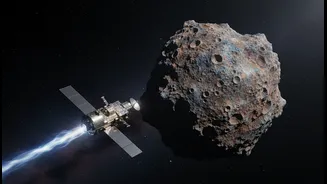
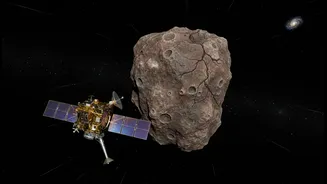
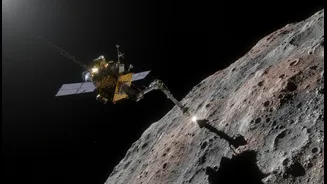
First, let's recall why Hayabusa2 is a legend in space exploration. Launched by the Japan Aerospace Exploration Agency (JAXA) in 2014, its primary mission was to rendezvous with the asteroid Ryugu. It didn't just visit; it deployed rovers, fired a projectile
to create an artificial crater, and collected pristine subsurface samples. In December 2020, it successfully dropped off these precious materials at Earth before firing its engines to begin a new, extended mission. That audacious second act is now underway, proving the incredible longevity and reliability of the spacecraft.
Meet Torifune: A Different Kind of Rock
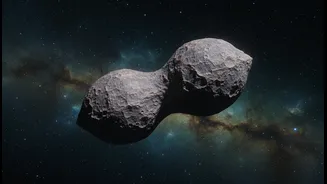
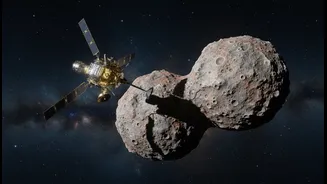
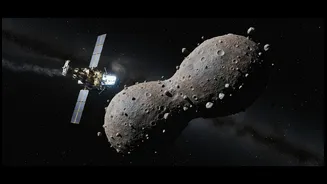
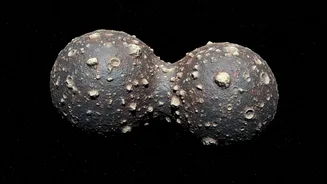
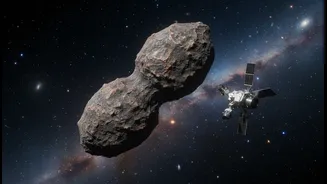
The new subject of study is an asteroid named (98943) Torifune, formerly known as 2001 CC21. It's a near-Earth asteroid about 450 meters in diameter. What makes Torifune interesting is that it's a different type of asteroid than Ryugu. While Ryugu was a carbon-rich C-type asteroid, thought to hold clues about the origins of water and life, Torifune is an S-type asteroid. These are stonier bodies, and studying them provides a different but equally important piece of the solar system puzzle. Recent images from the flyby revealed Torifune is a two-lobed object, resembling a snowman, and is likely a contact binary—two asteroids that have gently merged.
The Hype: Are We Getting More Samples?
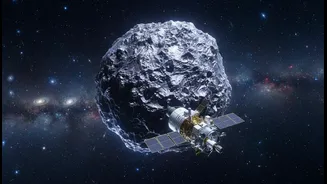
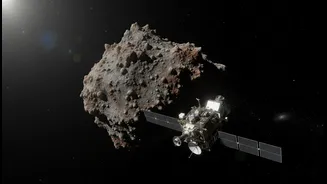
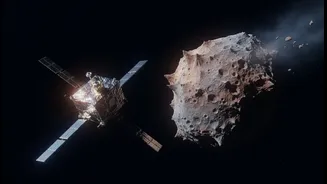
When people hear “Hayabusa2” and “asteroid,” it’s easy to assume another daring sample collection is happening. This is the biggest piece of hype to manage. The Torifune encounter was a high-speed flyby, not a landing or a sample return. The spacecraft zoomed past the asteroid at a relative speed of about 5 kilometers per second. There was no landing, no rovers, and no cratering. The goal was to get as close as possible for a quick snapshot of data without colliding—a maneuver one JAXA official compared to hitting a one-yen coin in Hokkaido from Okinawa. The name Torifune itself, from Japanese mythology, was chosen to express the hope for a safe, high-speed encounter.
The Reality: A High-Speed Data Heist
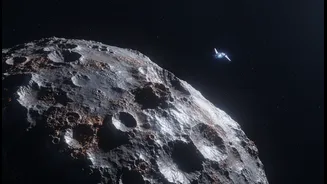
The actual purpose of this flyby was twofold: science and engineering. Scientifically, it was an opportunity to study a new class of asteroid up close, even for a moment. Onboard instruments like the Optical Navigation Camera and Thermal Infrared Imager captured data on Torifune’s shape, surface temperature, and roughness. This information helps scientists understand how these stony asteroids formed and what they are made of. From an engineering perspective, the mission was a crucial test of JAXA’s capabilities. Successfully navigating a probe for a close, high-speed encounter with a small object millions of kilometers away demonstrates incredible precision. This technology is vital for future exploration and for planetary defense—the effort to protect Earth from potential asteroid impacts.
What Comes Next for the Veteran Explorer?
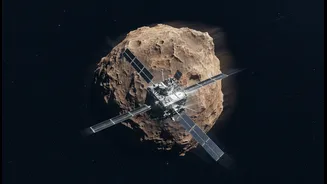
The Torifune flyby is not the end of Hayabusa2's journey. It's a stepping stone on its decade-long extended mission. The spacecraft is now using Earth's gravity to slingshot itself toward its final destination: a tiny, rapidly rotating asteroid named 1998 KY26. It is scheduled to arrive there in July 2031. That rendezvous will be even more challenging, as 1998 KY26 is only about 30 meters in diameter and spins on its axis every 10-11 minutes. If successful, it will be the smallest asteroid ever visited by a spacecraft, pushing the boundaries of deep space exploration once again.