


A New Chapter in the Automation Story
For years, the conversation about AI's impact on work has centered on displacement. However, a detailed forecast from business and technology insights company Gartner projects a different outcome. According to a report released in November 2026, AI is expected
to create 10.6 million new jobs globally by 2030, while eliminating 8.9 million. This results in a net increase of 1.7 million roles, challenging the dystopian view of a jobless future. This projection reframes AI not merely as a tool for replacement, but as a catalyst for economic reinvention. Helen Poitevin, a Distinguished VP Analyst at Gartner, noted that leading organizations see AI as a way to rebalance their workforce and technology capabilities, not just as a substitute for human labor. The story isn't just about the final number; it's about a fundamental transformation in how work gets done. Gartner estimates that over 20% of the global workforce, or more than 435 million people, will need to adapt to significant changes in their roles.
Understanding Job Displacement and Creation
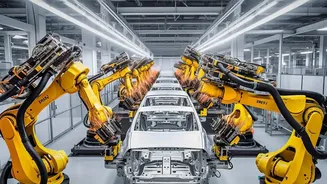
The jobs most at risk are those characterized by repetitive, data-intensive tasks. Roles like data entry clerks, administrative assistants, and some forms of customer service are prime candidates for automation. The World Economic Forum (WEF) echoes this, identifying roles like cashiers and ticket clerks as being in decline due to multiple factors, including technology. However, this displacement is only one side of the coin. The new jobs emerging fall into several categories. There will be a surge in demand for specialists who can build, manage, and maintain AI systems, such as AI and Machine Learning Specialists and Big Data Specialists. Furthermore, new roles will be created to govern the technology, including AI ethics officers and compliance specialists who ensure responsible deployment. A third, and perhaps largest, category involves human-AI collaboration, where technology augments human capabilities rather than replacing them. Think of a marketing professional using AI to analyze vast datasets for campaign insights or a software developer using an AI 'co-pilot' to write and debug code more efficiently.
The Hidden Impact of Deferred Hiring
Beyond direct job creation and loss, Gartner highlights a more subtle effect: deferred hiring. This refers to positions that companies postpone creating as they wait to understand AI's full impact. In 2026 alone, an estimated 1.3 million positions were deferred. This trend creates uncertainty, especially for those entering the job market, as companies hold back on hiring for roles they believe AI might soon reshape. John Lovelock, another Gartner analyst, explained that this is often the first effect felt from AI adoption, with job reductions coming later, and net job additions emerging only once organizations master the technology. By 2030, a cumulative total of five million people are expected to have been affected by these hiring delays.
The Mandate for India: Reskilling and Adaptation
For India, these global trends present both a challenge and an immense opportunity. The nation's large technology services industry is already integrating AI into its core offerings. The key to navigating this transition is not resisting automation, but embracing a culture of continuous learning. According to a report from EY, generative AI could transform 38 million jobs in India by 2030, unlocking significant productivity gains. The focus must shift from a specific degree to a portfolio of evolving skills. Technical literacy will be crucial, but so-called 'soft skills'—critical thinking, creativity, emotional intelligence, and complex problem-solving—will become even more valuable as they are difficult to automate. Indian firms are already redesigning roles and investing in reskilling programs to prepare their workforce. As the WEF notes, India is one of the leading countries for corporate-sponsored upskilling, a sign that industry leaders understand the urgency. The future of work in India will be defined by how effectively it can retrain and redeploy its vast talent pool for this new, augmented reality.