
The Boy Wonder from Bombay
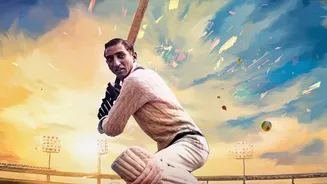
In 1989, the Indian selection committee faced a dilemma. A 16-year-old from Bombay, Sachin Tendulkar, was demolishing domestic attacks. The debate was fierce: was he too young to face Pakistan's formidable pace battery? While some selectors hesitated,
wanting to shield him from the likes of Wasim Akram and a debuting Waqar Younis, others saw a once-in-a-generation talent. Selector Naren Tamhane is said to have passionately argued, "Sachin Tendulkar does not fail." The gamble was taken. Tendulkar was selected for the tour of Pakistan. Though he was dismissed for 15 in his first innings, his courage, particularly after being hit in the face by a bouncer and refusing to leave the field, announced the arrival of a player with immense skill and unbreakable spirit. This single decision gave India a player who would carry its hopes for 24 years, break countless records, and inspire a nation.
Dada's Youth-First Revolution
When Sourav Ganguly took over the captaincy in 2000, Indian cricket was in turmoil, reeling from match-fixing scandals. The team needed a cultural reset. Ganguly's approach was radical: he decided to build a new core by identifying and fiercely backing young, aggressive talent. He scoured the domestic circuit and put his faith in players like Virender Sehwag, Yuvraj Singh, Harbhajan Singh, and Zaheer Khan. His philosophy was simple: if he believed in a player's talent, he would give them a long rope to prove themselves, fostering a fearless atmosphere. One of the most significant beneficiaries was a young wicketkeeper-batsman named MS Dhoni. Despite a slow start to his international career, Ganguly persisted with him, a decision that paid off when Dhoni smashed 148 against Pakistan, an innings that launched his legendary career. This era of selection didn't just produce individual stars; it forged a new 'Team India' identity, one that learned to win overseas and laid the foundation for future World Cup triumphs.
The Captain Cool Anointment
By 2007, the senior guard of Indian cricket was undisputed in the longer formats, but the inaugural T20 World Cup called for a fresh approach. The selectors made a monumental and surprising call: they appointed MS Dhoni, relatively new to the international scene, as the captain of a young, unheralded team. With senior players like Tendulkar, Ganguly, and Dravid opting out, this was a leap into the unknown. Dhoni, known for his calm demeanour and unorthodox thinking, was entrusted with leading a squad of youngsters. The decision proved to be a masterstroke. Dhoni's calm leadership and astute tactical choices guided India through a thrilling tournament, culminating in a historic victory against arch-rivals Pakistan in the final. This single selection not only gave India a T20 World Cup but also its most successful captain across all formats, a leader who would go on to win the 50-over World Cup in 2011 and the Champions Trophy in 2013.
Saving King Kohli's Crown
During India's tour of Australia in 2011-12, a young Virat Kohli was on the verge of being dropped from the Test side. After managing scores of just 11, 0, 23, and 9 in the first two Tests, the selectors were reportedly ready to replace him with Rohit Sharma for the third Test in Perth. However, captain MS Dhoni and vice-captain Virender Sehwag intervened. They believed in Kohli's potential and insisted on giving him another chance. Sehwag later revealed that the team leadership made a conscious decision to back Kohli against the selectors' wishes. Repaying their faith, Kohli scored a crucial 75 in Perth and followed it up with his maiden Test century in Adelaide. That backing proved to be a career-defining moment. It saved a player who would not only become a batting colossus across all formats but also one of India's most successful Test captains. Without that show of faith, the history of modern Indian cricket could look very different.