



What Exactly Is a Planetary Gathering?
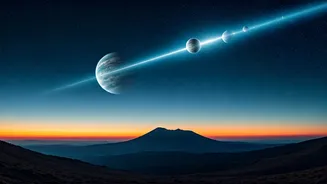
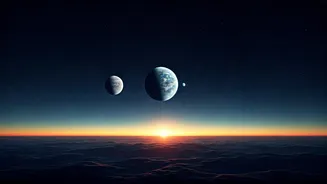
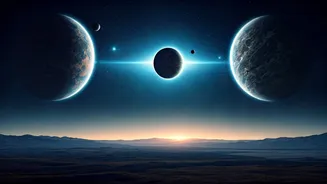
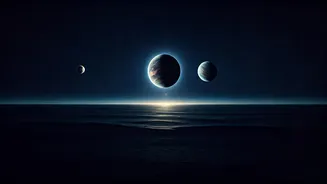
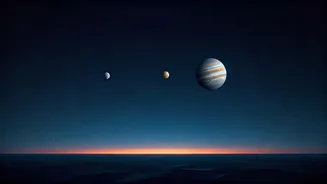
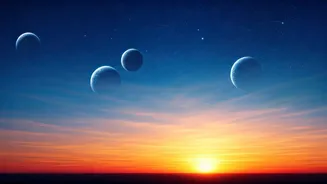
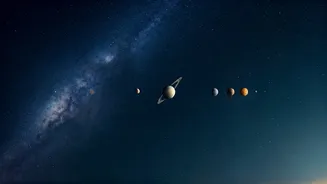
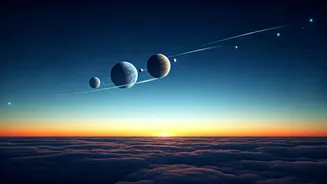
When we hear about planets 'gathering' or in 'conjunction', it doesn't mean they are physically close to each other in space. These planets remain millions of kilometres apart on their own orbits. What we are witnessing is a beautiful line-of-sight illusion
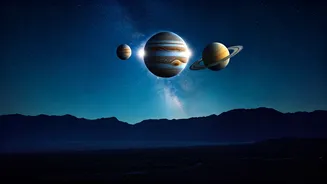
from our vantage point on Earth. The planets appear to cluster together in a small patch of the sky, creating a rare and often breathtaking visual. These events, sometimes involving two, three, or even more celestial bodies, have captivated humans for millennia. For us, it’s a chance to see multiple worlds in a single glance, a cosmic spectacle that unfolds right before our eyes.
Meet the Celestial Guests
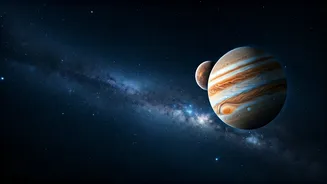
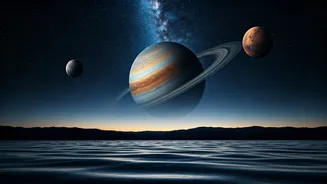
Typically, the brightest and most easily spotted planets are the stars of these shows. Expect to see celestial heavyweights like Jupiter, the largest planet in our solar system, shining with a brilliant, steady white light. You might also spot Saturn, fainter and with a yellowish tint; its famous rings won't be visible without a good telescope, but its presence is still majestic. Mars, the Red Planet, is another common participant, distinguishable by its distinct reddish-orange hue. Venus, the brightest of all, often appears like a dazzling jewel near the horizon around sunrise or sunset. The specific combination of planets varies, making each gathering a unique event.
When and Where to Look From India
For horizon gatherings, timing is everything. These events are usually best viewed shortly after sunset in the western sky or just before sunrise in the eastern sky. The planets will be low on the horizon, so finding a viewing spot with an unobstructed view is crucial. Think open fields, terraces, or a beachfront away from tall buildings and trees. To get precise timings for your city, use a reliable stargazing app like Stellarium, SkyView, or Star Walk. Simply point your phone at the sky, and the app will identify the planets and tell you the exact window of visibility. Check the weather forecast beforehand; a clear, cloudless sky is your best friend.
Do You Need a Telescope?
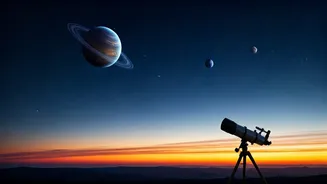
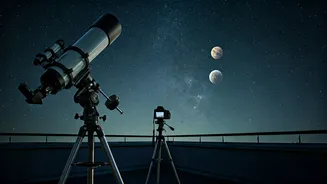
The best part about major planetary conjunctions is that they are often visible to the naked eye. You don't need expensive equipment to enjoy the basic sight. The bright planets will look like unusually brilliant, non-twinkling stars. However, if you have equipment, you can enhance the experience significantly.
**Naked Eye:** You'll clearly see the planets as bright points of light clustered together.
**Binoculars:** A standard pair of 10x50 binoculars will make the planets appear as small, distinct discs of light rather than just points. You might even glimpse Jupiter's four largest moons (the Galilean moons) as tiny pinpricks of light flanking the planet.
**Telescope:** A basic amateur telescope will elevate your viewing to another level. With it, you can resolve the rings of Saturn, see the cloud bands on Jupiter, and get a clearer look at the colour of Mars. It turns a beautiful sight into a detailed astronomical observation.
Tips for the Best Viewing Experience
To make the most of this celestial event, a little preparation goes a long way. First, escape light pollution. The darker your location, the more vivid the sky will be. Even moving to a local park away from streetlights can make a huge difference. Second, give your eyes time to adapt. It takes about 20-30 minutes for your eyes to become fully dark-adapted, which will allow you to see fainter objects. Avoid looking at your bright phone screen; if you need light, use a torch with a red filter, as red light is less disruptive to your night vision. Finally, be patient. Settle in, get comfortable, and simply enjoy the serene beauty of the cosmos.