








Decoding the +F Logo
The '+F' logo is an official symbol from the Food Safety and Standards Authority of India (FSSAI). It signifies that a food product has been 'fortified', meaning essential micronutrients like vitamins and minerals have been added to it. This is done to improve
the nutritional quality of staple foods without changing their taste, texture, or cost. The logo makes it easy for consumers to identify products that meet the government's standards for added nutrition, which are outlined in the Food Safety and Standards (Fortification of Foods) Regulations, 2018. Any food producer using the logo must ensure their products meet these specific levels of fortification.
India's Battle with 'Hidden Hunger'
The reason fortification is so crucial for India is the widespread prevalence of 'hidden hunger', or micronutrient deficiency. This condition affects a vast portion of the population who may get enough calories but lack essential vitamins and minerals. According to the National Family Health Survey (NFHS-5), nearly two-thirds of children under five are anaemic. Iron deficiency is a major cause, but deficiencies in Vitamin D, Vitamin B12, folic acid, and iodine are also alarmingly common. For instance, over 70% of the population is estimated to have insufficient Vitamin D. These deficiencies have severe consequences, leading to impaired brain development in children, reduced immunity, lower work productivity in adults, and pregnancy complications.
How Does Food Fortification Work?
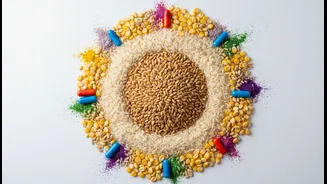
Food fortification is a scientifically proven and cost-effective method to improve nutrition on a large scale. The process involves adding small, carefully measured amounts of key micronutrients to foods that are consumed daily by a large number of people. The most commonly fortified staples in India include rice and wheat flour (fortified with iron, folic acid, and Vitamin B12), milk and edible oil (with Vitamins A and D), and salt (with iodine and iron). This strategy ensures that people receive a nutritional boost through their regular meals without needing to change their dietary habits or buy expensive supplements.
The Impact on Public Health
The goal of food fortification is to bridge the nutritional gaps in the average Indian diet. By enriching staples, the government aims to reduce the rates of debilitating conditions like anaemia, goitre (from iodine deficiency), and night blindness (from Vitamin A deficiency). The nutrients added are intended to provide between 30% to 50% of the recommended daily allowance. This intervention is particularly vital for vulnerable groups like children and pregnant women. Government initiatives like the Public Distribution System (PDS), Mid-Day Meal Scheme, and ICDS are increasingly using fortified foods to reach millions and build a healthier, more resilient population. The Copenhagen Consensus has estimated that every rupee spent on fortification can generate nearly nine rupees in economic and health benefits.
Challenges and the Path Forward
Despite its immense potential, the food fortification program faces challenges. Ensuring consistent quality control, reaching remote rural populations, and overcoming the logistical hurdles for small-scale producers are significant tasks. There are also ongoing debates among experts about the potential risks of excess iron intake for certain populations and whether fortification should overshadow the promotion of dietary diversity. However, the consensus remains that fortification is a powerful complementary strategy. Increasing consumer awareness about the '+F' logo is a critical next step. When more people understand its meaning and actively choose fortified products, it creates a market pull that encourages more producers to adopt these important public health standards.