


Why Go Green With Your Rangoli?
Choosing natural materials for your rangoli is a return to the roots of this beloved art form. Traditionally, rangolis were made with ingredients like rice flour, not just for design but also as an offering to tiny creatures like ants and birds, symbolizing
harmony with nature. In contrast, many modern synthetic powders contain chemical compounds and heavy metals like lead and cadmium that can be harmful to our health and the environment. When washed away, these chemicals pollute soil and water. An eco-friendly rangoli, made from biodegradable materials, avoids these risks, ensuring your celebration is safe for your family, pets, and the planet. It’s a mindful choice that connects cultural heritage with a commitment to sustainability.
Preparing Your Natural Palette
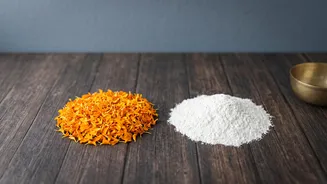
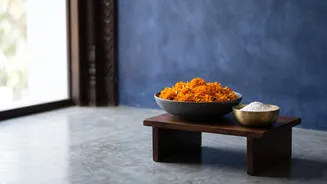
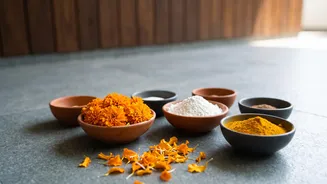
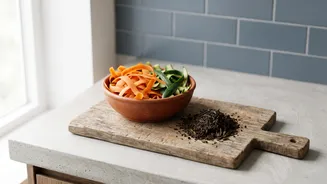
Your kitchen and garden are treasure troves for creating a rich and natural colour palette. The key ingredients from the headline, marigold petals and rice powder, form an excellent base. For marigolds, their auspicious orange and yellow hues are central to many Indian festivals. You can use the petals fresh for a vibrant, textured look or dry them and grind them for a pigmented powder. For the essential white, simply grind raw rice into a fine powder. You can create different textures by grinding it coarsely or finely. To expand your palette, consider turmeric for a brilliant yellow, dried and powdered beetroot for red or pink, and crushed spinach or curry leaves for shades of green. These materials are not only beautiful but also fully biodegradable.
A Step-by-Step Creation Guide
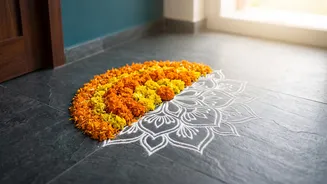
Creating your sustainable masterpiece is a simple, meditative process. First, prepare your canvas by sweeping the area clean. If you're new to rangoli, you might want to lightly sketch your design with chalk first; geometric patterns or dot grids are a great starting point for beginners. Begin your design by creating the outline, traditionally done with white rice powder. Take a pinch of powder between your thumb and forefinger and let it fall in a steady, controlled line. Once the outline is complete, it's time to fill it with colour. Work from the centre of your design outwards to avoid smudging your work. Use a spoon for larger sections and your fingers for more detailed areas.
Design Ideas with Petals and Powder
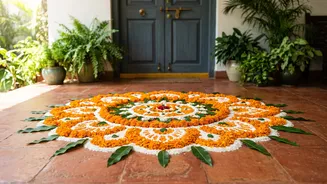
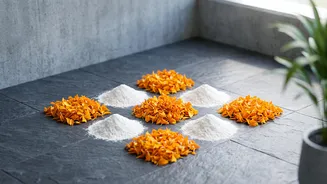
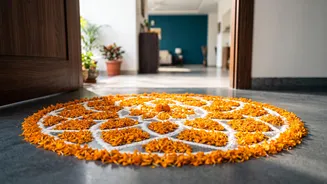
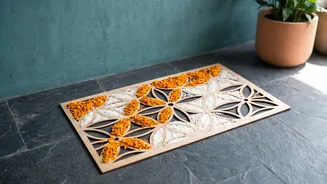
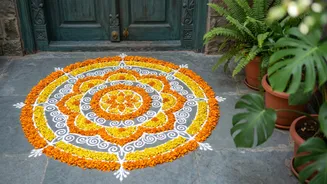
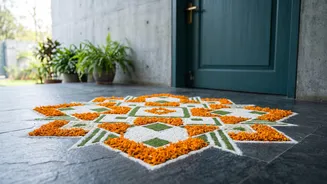
The combination of fresh petals and fine powder allows for endless creativity. Marigold petals are wonderfully versatile; you can lay them flat to create a dense carpet of colour, arrange them in layered circles for a mandala effect, or use them to outline larger shapes. Their texture adds a three-dimensional quality that powders alone cannot achieve. Use the fine rice powder for intricate line work, delicate dots, and sharp geometric patterns that contrast beautifully with the softness of the petals. Don't be afraid to incorporate other natural elements for more texture, such as lentils, seeds, or even fragrant spices like cinnamon for earthy brown tones. Combining these different materials can turn a simple pattern into a complex and captivating work of art.
Care and Conscious Cleanup
A fresh floral rangoli looks its best for about a day or two, especially if kept out of direct sunlight. A powder-based design may last longer but can be susceptible to wind. If you're creating your rangoli outdoors, you can press the powders down slightly to help them set. When the festivities are over, the cleanup is as important as the creation. Unlike chemical colours that need to be carefully disposed of, your eco-friendly rangoli can be returned to the earth. The flower petals, leaves, and spices can be added to your compost pile. The rice powder and grains can be swept onto a patch of soil or left for birds and insects to enjoy, completing the circle of giving back to nature.