





Why Humidity Wreaks Havoc on Hair
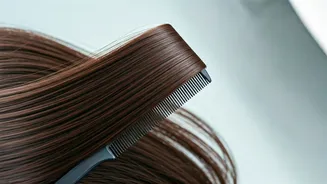
Before we get to the solution, let’s quickly understand the problem. Think of your hair strands as being covered in tiny, overlapping scales called cuticles. When your hair is healthy and moisturised, these cuticles lie flat, giving it a smooth, shiny
appearance. However, when it’s dry or damaged, these cuticles lift up. In humid weather, the air is saturated with moisture. Your thirsty, porous hair tries to absorb this excess water from the atmosphere. As the hair shaft soaks up this moisture, it swells unevenly, causing the cuticles to push up and out. The result? That frizzy, unmanageable texture we all dread, especially in coastal cities or during the monsoon season.
The Usual Suspects (and Their Limits)
To combat this, most of us reach for an arsenal of anti-frizz products. Serums packed with silicones, heavy conditioning creams, and finishing sprays are the standard go-tos. These products work by coating the hair shaft to create a barrier against humidity. And while they can offer a temporary fix, they often have downsides. Heavy silicones can build up on the hair, leaving it feeling greasy and weighed down. Creams can be too much for fine hair, and sprays can create a stiff, unnatural texture. In the face of intense Indian humidity, these surface-level solutions can feel like bringing a water pistol to a water-fight—they simply don’t last.
The Hack: Fight Water With Oil
Here is the game-changing secret: pre-emptive sealing. The most effective way to stop humidity from ruining your hair is to prevent your hair from absorbing excess moisture in the first place. And the simplest way to do that is by using oil. But this isn't about the traditional deep-conditioning ‘champi’ your grandmother swore by. This is a strategic, lightweight application. Oil is hydrophobic, which means it repels water. By applying a very light layer of oil to your hair *before* it’s exposed to water—either from the air or from your shower—you create a protective seal. This barrier locks in your hair’s internal moisture while blocking external humidity from getting in, effectively weather-proofing your strands from the inside out.
Your New Humidity-Proof Ritual
Ready to try it? This simple, four-step process can be easily integrated into your existing wash-day routine. 1. **Choose Your Shield:** Select a lightweight oil. Argan, jojoba, grapeseed, or almond oil are excellent choices as they won't weigh your hair down. Even a light-grade coconut oil can work if used sparingly. 2. **Apply to Dry Hair:** Before you wash your hair, dispense a few drops of oil into your palms and rub them together. Gently smooth the oil over the mid-lengths and ends of your *dry* hair. Focus on the areas that tend to get the frizziest. 3. **Let It Set:** Allow the oil to sit on your hair for at least 20-30 minutes. This gives it enough time to coat the hair shaft and form a protective barrier. 4. **Wash as Usual:** Proceed with your regular shampoo and conditioner routine. You’ll likely notice that your hair feels softer and requires less conditioner than usual.
Tailor the Hack to Your Hair Type
This technique is versatile, but a little customisation goes a long way. If you have **fine hair**, be extremely conservative. Use only 2-3 drops of a very lightweight oil like grapeseed or jojoba and apply it strictly to the very ends. For **thick, coarse, or curly hair**, you can be a bit more generous. Feel free to use a slightly richer oil like avocado or fractionated coconut oil, applying it from the mid-lengths to the ends. The key for everyone is to start with less and add more if needed, aiming for a light sheen, not a greasy soak.
Common Pitfalls to Avoid
To get the best results from this hack, steer clear of a few common mistakes. Firstly, avoid applying the oil directly to your scalp unless you have a very dry scalp, as this can lead to greasy roots. Remember, this is a frizz-fighting technique for your hair lengths, not a scalp treatment. Secondly, don't overdo it. The goal is a light, invisible shield. If your hair looks oily before you've even washed it, you've used too much. Finally, be consistent. Incorporating this into every wash day during humid months will yield the best, most cumulative results.