





The Habit: Tying Up Wet or Damp Hair
Rushing out the door, it’s tempting to tie damp hair into a ponytail or bun. However, this is one of the most damaging habits, especially during the monsoon. Hair is at its most fragile and elastic when wet. Tying it up puts stress on the weakened hair shafts,
leading to significant breakage and split ends. Furthermore, a tightly packed wet bun creates a damp, low-airflow environment on your scalp. This becomes an ideal breeding ground for fungus and bacteria, which can cause dandruff, itchiness, and even scalp infections. For commuters, putting a helmet over damp, tied-up hair only makes this worse, trapping sweat and moisture.
The Fix: Prioritise Air-Drying and Loose Styles
Whenever possible, allow your hair to air-dry at least 80% before leaving home. If you must tie it, opt for loose, protective styles like a soft braid or a low ponytail secured with a gentle tie like a silk scrunchie. These minimise tension and allow air to circulate around the scalp. Using a microfibre towel to gently squeeze out excess water can significantly speed up drying time without causing the friction and frizz that comes from rubbing with a traditional towel. If you get caught in the rain, the first thing to do upon reaching your destination is to undo your hair and let it and your scalp breathe and dry.
The Habit: Aggressive Towel Rubbing
When you're soaked from the rain, the first instinct is often to grab a regular bath towel and rub your hair vigorously to get the water out. This rough friction lifts and damages the hair's outer layer, the cuticle. During the humid monsoon season, an already raised cuticle is more susceptible to absorbing moisture from the air, which is the primary cause of frizz. This action creates tangles, encourages split ends, and roughs up the hair shaft, undoing any efforts to achieve a smooth finish.
The Fix: Squeeze, Blot, and Be Gentle
Switch from your rough bath towel to a soft microfibre towel or even an old cotton t-shirt. Instead of rubbing, gently squeeze and blot the excess water from your hair, working from the roots down to the ends. This method absorbs moisture effectively without disrupting the cuticle, helping to keep it flat and less prone to frizz. This simple change reduces mechanical stress on fragile wet hair and is a foundational step for better hair health throughout the rainy season.
The Habit: Blasting High Heat Immediately
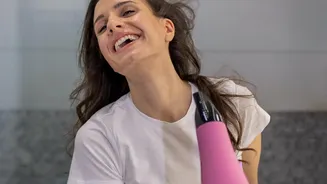
When you're short on time, it feels efficient to turn your blow-dryer to its highest heat setting and blast soaking wet hair. This is extremely damaging. Applying high heat to wet hair can literally boil the water within the hair strands, causing permanent blisters inside the cuticle. This leads to weak, brittle hair that is dull and limp. Furthermore, incorrect blow-drying—like pointing the nozzle upwards or not using one at all—can lift the cuticle, inviting humidity to create frizz.
The Fix: Use Low Heat and Proper Technique
Always apply a heat protectant spray first to create a barrier. Let your hair air-dry or gently towel-dry until it's about 80% dry before you start styling. When you do blow-dry, use a medium or cool setting. Always use the concentrator nozzle and point it downwards along the hair shaft, from root to tip. This technique helps to seal the hair cuticle flat, making it shinier and more resistant to humidity. For commuters who need their style to last, finishing with a cool shot from the dryer can help set the style and further seal the cuticle.