



First, What Is Originality?
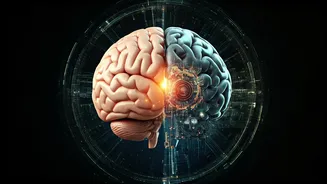
Before we can ask if a machine can be original, we have to define what human originality is. It's more than just creating something new; it's about intent, emotion, and lived experience. When an artist creates, they draw from a unique well of memories,
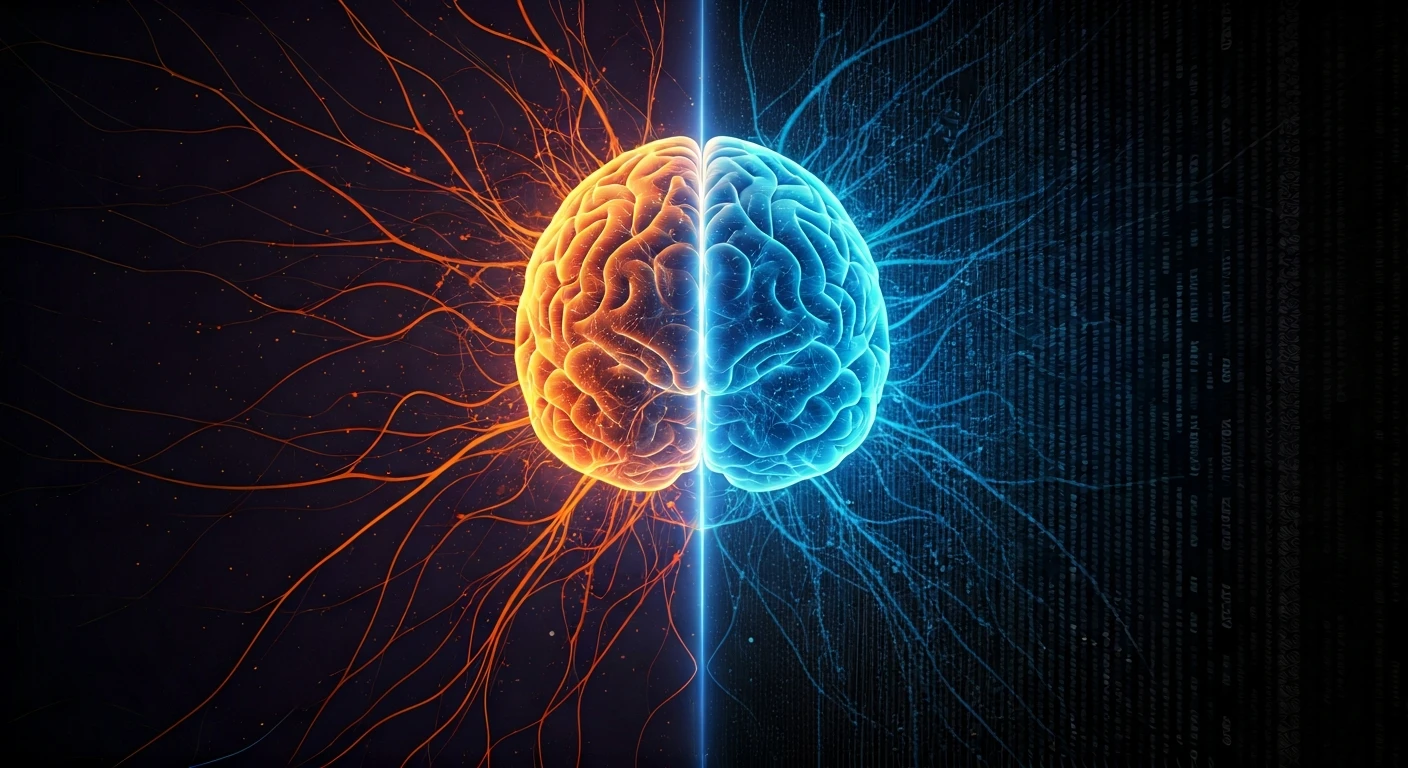
struggles, joys, and cultural context. This ability to produce novel ideas is often considered a hallmark of human intelligence. Neuroscientists explain that creativity isn't located in one part of the brain but is a complex process involving memory, emotion, and problem-solving networks working together. Originality isn't just a remix of what's come before; it's a personal expression, an idea brought into existence with a unique point of view. AI, on the other hand, doesn't have a life story, emotions, or a body to experience the world. This fundamental difference is at the heart of the debate.
The Astonishing Power of AI
There's no denying that AI's creative output is impressive and improving at an exponential rate. Today's generative AI models can write poetry, compose music, design products, and generate stunningly realistic images from simple text prompts. By analysing massive datasets, AI excels at identifying and combining patterns to produce novel content. Some experts, like Google DeepMind CEO Demis Hassabis, predict that artificial general intelligence (AGI)—AI that rivals human abilities—could arrive by 2030. This rapid progress has transformed creative industries, with almost half of creative professionals now using AI daily, according to some 2025 surveys. AI has become a powerful tool for brainstorming and accelerating workflows, helping creators overcome blocks and explore new directions.
The Mimicry Argument
The main argument against true AI originality is that it's a sophisticated mimic, not a genuine creator. AI models are trained on vast amounts of human-created data—text, images, and music. When an AI generates a new piece of content, it is essentially remixing patterns it has learned from this data. It predicts what should come next based on statistical probabilities, not genuine understanding or intent. Critics argue that this process lacks the key ingredients of human creativity: consciousness, personal experience, and emotional depth. An AI can write a poem about love, but it has never been in love. Therefore, its output, while technically proficient, can feel hollow or derivative, lacking the unique spark that comes from human experience.
Roadblocks to the 2030 Goal
For AI to match human originality by 2030, it would need to overcome significant hurdles. The biggest is the development of consciousness and subjective experience. True originality often stems from a personal need to express an internal state, an idea that AI currently cannot replicate. Furthermore, human creativity involves cultural and contextual understanding that AI struggles with. We filter our ideas through a complex web of social norms, ethical considerations, and emotional intelligence. AI lacks this nuanced judgment. While some leaders like Sam Altman and Demis Hassabis are optimistic about achieving human-level intelligence by 2030, others are more skeptical, arguing that today's models are not on a path to genuine understanding. The risk is that over-reliance on AI could lead to a homogenisation of ideas, where efficiency is prioritized over true innovation.
The Collaborative Future
So, can AI match human originality by 2030? The answer is likely no, if by originality we mean the deeply personal, experience-driven creativity that defines human expression. However, the question itself might be misleading. The future of creativity isn't a battle of AI versus humans, but a collaboration between them. AI is proving to be an incredible tool that can augment human creativity, handle repetitive tasks, and provide new perspectives. A 2026 World Economic Forum report highlights that as AI perfects processes, the unpredictable, quirky human element will become the ultimate differentiator. The goal is shifting from simply making things to architecting brand humanity and emotional connection. In this new era, human taste, curation, and strategic direction will become more valuable than ever.