






The Problem with Prolonged Sitting
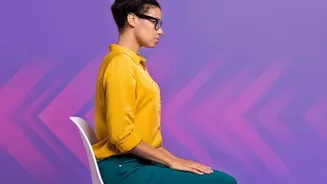
Our bodies are designed for movement, but modern work often keeps us rooted to a chair for eight hours a day. This sedentary lifestyle takes a toll. When you sit for extended periods, especially while focused on a screen, your posture naturally suffers.
You might find your head creeping forward, your shoulders rounding, and your lower back slumping. This forward head posture can add significant strain to your neck, while slouching can overstretch spinal ligaments. Over time, this leads to a cascade of issues: tight hip flexors that pull on your lower back, weakened core and glute muscles that fail to support your spine properly, and chronic tension in the neck and shoulders. This imbalance not only causes discomfort but can damage spinal structures and lead to recurring pain.
Your Five-Minute Fix: An Introduction to Chair Yoga
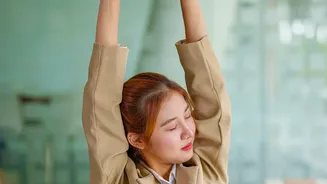
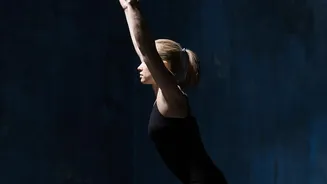
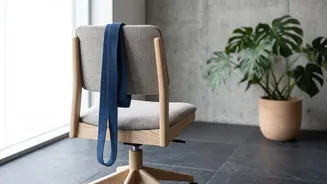
Chair yoga is a gentle, modified form of yoga that adapts traditional poses so they can be performed while seated or using a chair for support. Its brilliance lies in its accessibility. There's no need for a mat, special clothing, or a dedicated studio; you only need your office chair and a few minutes to spare. By integrating short, mindful movement breaks into your day, you can counteract the negative effects of a sedentary job. These simple stretches help improve circulation, relieve muscle tension, calm the nervous system, and, most importantly, strengthen the postural muscles that keep you sitting tall. It’s a practical and effective way to reset your body and mind during a busy workday.
Pose 1: Seated Cat-Cow
This classic yoga movement is excellent for increasing spinal flexibility and relieving tension in the back and neck. To begin, sit tall at the edge of your chair with your feet flat on the floor and your hands on your knees. On an inhale, arch your spine, lift your chest forward, and look slightly upward (Cow Pose). As you exhale, round your spine, tuck your chin toward your chest, and gently pull your navel in (Cat Pose). Flow smoothly between these two positions for five to eight breaths, coordinating the movement with your breathing to wake up your spine.
Pose 2: Seated Spinal Twist
A gentle twist can help improve spinal mobility and relieve mid-back tension. Sit tall with your feet flat and hip-width apart. Keeping your hips facing forward, exhale and gently turn your upper body to the right. You can place your left hand on your right knee and your right hand on the back or arm of the chair to deepen the stretch. Hold for 20-30 seconds, breathing steadily, and remember to lengthen your spine on each inhale. Return to the center and repeat on the left side. This movement is also thought to aid digestion, making it a great post-lunch stretch.
Pose 3: Chair Pigeon Pose
Prolonged sitting leads to tight hips, which can contribute to lower back pain. This pose targets the hip rotators and glutes. Sit toward the front of your chair and place your right ankle on your left thigh, just above the knee. Keep your right foot flexed to protect the knee. Sit tall, and if you feel a good stretch, stay here. For a deeper sensation, you can gently lean forward from your hips, maintaining a long spine. Hold for 30-45 seconds, breathing into any areas of tightness, before switching to the other side.
Pose 4: Seated Forward Bend
This pose helps to release the lower back and stretch the hamstrings. Sit tall near the edge of your seat with your feet flat on the floor. On an exhale, hinge forward from your hips, keeping your spine long. Let your torso rest on your thighs and allow your head and neck to hang heavy, releasing tension. You can let your arms dangle toward the floor. Hold for several slow breaths, feeling the gentle release in your back. To come up, engage your core and slowly roll your spine back to an upright position, one vertebra at a time.
Pose 5: Chest Opener with Clasped Hands
To counteract the shoulder-rounding posture common at desks, a chest opener is essential. Sit tall and clasp your hands behind your back. Straighten your arms as much as is comfortable, drawing your shoulder blades together and down your back. Lift your chest toward the ceiling and feel the stretch across the front of your shoulders and chest. This movement provides a direct contrast to the forward-slumped position of desk work. Hold for 20-30 seconds while taking deep breaths, then release. You can roll your shoulders a few times afterward to release any remaining tension.