





Why Core Stability Matters
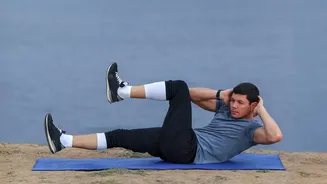
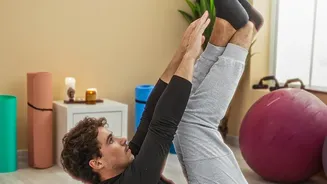
Before jumping into exercises, it’s important to understand what your core actually is. It's not just the 'six-pack' muscles (rectus abdominis) at the front. Your core is a complex series of muscles that includes your abs, lower back, pelvis, and hips,
all working together like a supportive corset for your spine. A strong, stable core is the foundation for almost all movement. It helps you swing a cricket bat, lift groceries, and even just bend down to tie your shoes with ease. Conversely, a weak core can lead to poor posture, nagging lower back pain, and a higher risk of muscle injuries. By focusing on stability, you are building functional strength that supports you in daily life.
1. The Plank
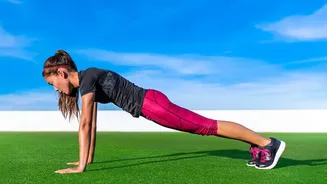
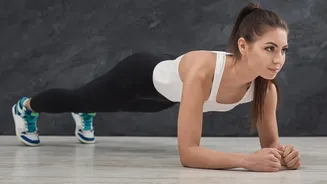
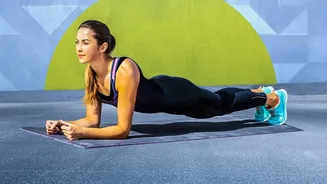
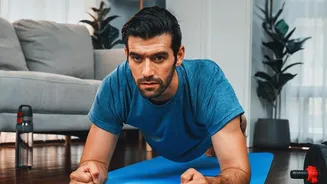
The plank is a foundational core exercise for a reason: it engages multiple core muscles at once. To perform it, get into a position similar to a push-up, but resting on your forearms instead of your hands. Your elbows should be directly under your shoulders. Keep your body in a straight line from your head to your heels, making sure not to let your hips sag or rise too high. Engage your abdominal muscles by imagining you are bracing for a punch to the stomach. Hold this position, breathing steadily. If you're a beginner, start by holding for 20-30 seconds and gradually work your way up to a minute or longer as you get stronger.
2. The Dead Bug
The Dead Bug is excellent for developing core control and stability without straining the back. Lie on your back with your arms extended toward the ceiling and your knees bent at a 90-degree angle, with your shins parallel to the floor. Slowly lower your right arm and your left leg toward the floor simultaneously. Lower them only as far as you can without your lower back arching off the floor. Return to the starting position with control and repeat on the other side, lowering your left arm and right leg. The key is to move slowly and deliberately, keeping your core tight throughout.
3. The Bird-Dog
This move challenges your balance and stability, working the deep muscles of your core and back. Start on all fours, with your hands directly under your shoulders and your knees under your hips. Engage your core to keep your back flat and prevent your hips from rotating. Extend your right arm straight forward and your left leg straight back at the same time, creating a straight line from your fingertips to your heel. Pause for a moment, then slowly return to the starting position. Repeat on the other side, extending your left arm and right leg. This exercise teaches your body to remain stable while your limbs are in motion.
4. The Glute Bridge
While often seen as a glute exercise, the bridge is also a fantastic and simple move for strengthening the posterior part of your core. Lie on your back with your knees bent, feet flat on the floor about hip-width apart, and your arms resting by your sides. Squeeze your glutes and engage your abs, then lift your hips off the floor until your body forms a straight line from your shoulders to your knees. Hold the position for a couple of seconds at the top, focusing on the contraction in your glutes and hamstrings, before slowly lowering your hips back down to the floor. This move is excellent for activating the muscles that support your lower back.
5. Reverse Crunch
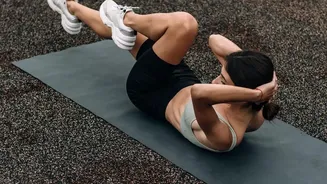
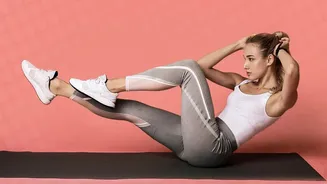
The reverse crunch targets the lower abdominal muscles and is often considered safer for the neck than traditional crunches. Lie on your back with your knees bent and feet lifted off the floor. You can place your hands on the floor by your sides for stability. Using your core, gently curl your hips and tailbone up toward your ribcage, lifting your hips slightly off the floor. Avoid swinging your legs to create momentum; the movement should be small and controlled, initiated by your lower abs. Slowly lower your hips back to the starting position. This focused movement provides a powerful contraction where it counts.