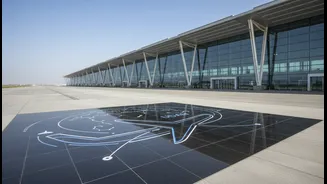









Jodhpur's Upgraded Gateway
On July 4, 2026, a new terminal building was inaugurated at Jodhpur Airport, marking a significant upgrade for one of Rajasthan's key tourism hubs. Developed for Rs 4.8 billion, the terminal is not just a cosmetic facelift; it's a massive capacity expansion
designed to handle the future. Spread over 23,342 square metres, it can manage two million passengers annually and 1,500 during peak hours. Architecturally, the design takes a cue from Rajasthan's royal heritage, incorporating traditional elements like arches and jharokhas with a modern aesthetic, giving travellers a taste of local culture the moment they land. The building also features sustainable elements like water conservation and energy-efficient systems. With 20 check-in counters, six aerobridges, and an apron capable of holding more large aircraft, it’s built to reduce congestion and provide a much smoother travel experience.
Decoding the Modified UDAN Scheme
UDAN, which stands for Ude Desh ka Aam Nagrik ('Let the Common Citizen of the Country Fly'), is a government scheme started in 2016 to make flying more affordable and to connect India's smaller towns and cities. It works by providing subsidies, called Viability Gap Funding (VGF), to airlines to operate on routes that might not otherwise be profitable. This encourages them to fly to and from underserved airports. On July 4, 2026, a modified version of the scheme, sometimes called Viksit UDAN, was launched with an ambitious ten-year plan and a budget of over Rs 28,840 crore. This new phase isn't just about adding routes. It aims to develop 100 existing airstrips into full-fledged airports, build 200 modern helipads for last-mile connectivity in remote areas, and continue funding to keep airlines operating in these regions. It also promotes the use of indigenous aircraft, like HAL's Dornier and Dhruv, to boost self-reliance in aviation.
Connecting the Dots
The Jodhpur terminal and the Modified UDAN scheme are two sides of the same coin. An airport can have a beautiful terminal, but it needs flights to be useful. A policy can create new routes, but it needs airports capable of handling the traffic. The simultaneous launch highlights a coordinated strategy: build the infrastructure and provide the policy support to make it work. A bigger, more efficient Jodhpur airport creates a stronger case for airlines to launch new routes under UDAN, connecting the city to more Tier-2 and Tier-3 cities without forcing travellers to transit through crowded metros. It makes Jodhpur a more resilient and attractive hub for airlines, especially during peak tourist season. This synergy is central to the goal of decentralising India's growth and moving beyond a metro-centric model of development.
What It Means for You
For young Indians, this combination of infrastructure and policy has tangible benefits. First, travel becomes more accessible and affordable. Imagine taking a spontaneous weekend trip to explore the culture of the Blue City or a work-from-anywhere stint in Rajasthan without the hassle of long train journeys or expensive, metro-hopping flights. The expansion of UDAN has already helped connect hundreds of routes across the country. Second, it signals economic opportunity. Enhanced connectivity is a magnet for investment, which in turn creates jobs. A city that’s easier to get to is more attractive for tourism, hospitality, IT services, and creative industries like content creation. This creates a vibrant local economy where young professionals don’t have to move to a metro city to find quality opportunities. It fosters a landscape where you can build a career or a business in your hometown, supported by national-level connectivity. These developments are building a more integrated India, where opportunity and access are more evenly distributed.