





A New Economic Frontier Opens
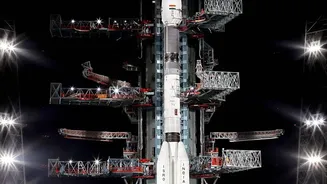
For decades, the Indian space story was synonymous with the Indian Space Research Organisation (ISRO). But recent policy reforms have thrown the doors open to private enterprise, sparking a transformation. The establishment of IN-SPACe (Indian National
Space Promotion and Authorisation Centre) as a single-window agency is a pivotal change, designed to facilitate private participation in everything from building satellites and launch vehicles to downstream applications. This policy shift has ignited a startup boom, with over 400 companies now populating India's space ecosystem. Projections suggest this new environment could see India's space economy grow from around $8.4 billion today to $44 billion by 2033, significantly increasing its share of the global market.
Downstream Data: The Hidden Goldmine
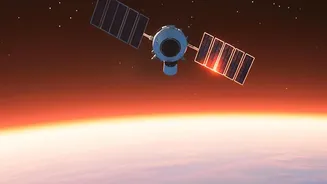
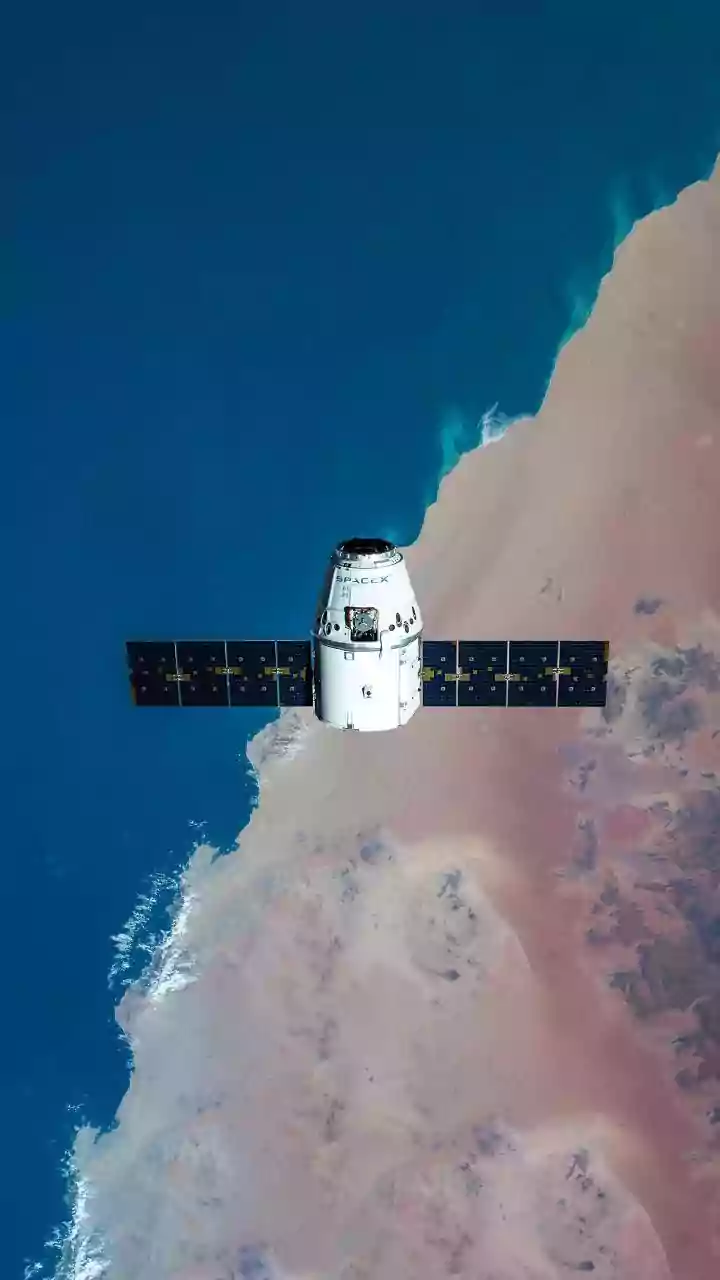
While rocket launches grab headlines, the most significant economic impact may come from downstream applications—services that use data from satellites. Earth Observation (EO) is a prime example. Satellites provide a torrent of data that, when processed with AI, can revolutionize multiple sectors. In agriculture, it enables precision farming, helping farmers monitor crop health, optimize water usage, and increase yields. In finance and insurance, satellite imagery helps in assessing infrastructure projects and verifying claims after natural disasters. Startups like Pixxel are developing constellations of high-resolution hyperspectral imaging satellites to provide this kind of detailed intelligence to clients across agriculture, energy, and mining.
Connecting the Unconnected
Another major industry emerging from space tech is satellite communication (SatCom). This technology is crucial for providing high-speed internet and reliable connectivity to remote and underserved areas where terrestrial infrastructure is lacking. This can bridge the digital divide for rural communities, supporting education and economic growth. Beyond broadband, SatCom is vital for disaster management, ensuring communication lines remain open for rescue and relief operations when ground networks fail. Furthermore, India's own navigation constellation, NavIC, supports a growing ecosystem of location-based services, from logistics and fleet management to consumer applications like ride-hailing apps.
The Upstream Manufacturing Boom
The surge in private space activity is also creating a robust upstream manufacturing industry. It's no longer just about ISRO's supply chain. Startups are now designing and building their own rockets and satellites, creating demand for everything from propulsion systems and space-grade electronics to advanced materials. Companies like Skyroot Aerospace and Agnikul Cosmos are pioneering cost-effective launch vehicles, using innovations like 3D-printed engines to drastically reduce production costs and timelines. This push for local manufacturing is supported by government initiatives like liberalized FDI rules, allowing up to 74% foreign direct investment in satellite manufacturing and operations, which helps attract capital and expertise.
Future Frontiers and Emerging Opportunities
Looking ahead, the possibilities expand even further. Space situational awareness (SSA), which involves monitoring satellites and space debris, is becoming a critical field, with startups like Digantara developing capabilities to ensure the safety of space assets. As technology matures, more futuristic industries like in-space manufacturing, asteroid mining, and even space tourism are moving from science fiction to plausible business plans. The Indian Space Policy 2023 explicitly includes these activities, signaling a long-term vision. While these sectors require significant capital and face long development cycles, they represent the next wave of innovation that could define India's industrial landscape for decades to come.