



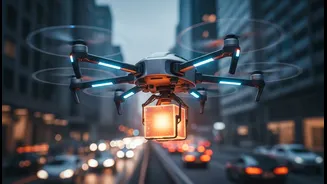




From Groceries to Gadgets and Beyond
Quick commerce, or q-commerce, first captured our attention by solving an immediate problem: running out of milk, onions, or snacks. Platforms like Blinkit, Zepto, and Swiggy Instamart built vast networks of 'dark stores'—hyperlocal warehouses—to deliver
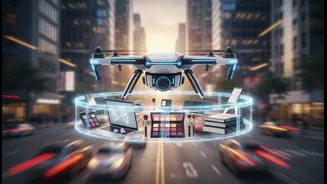
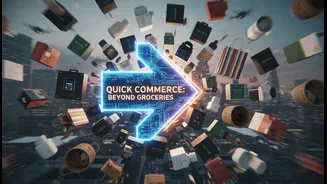
daily essentials within 10 to 30 minutes. Having conquered the low-margin, high-frequency grocery market, these companies are now aggressively expanding into higher-value categories. Today, you can get electronics, beauty products, toys, and even apparel delivered with the same incredible speed. This strategic shift isn't just about offering more products; it's a calculated move to increase average order values and improve profitability. Non-grocery items now account for a significant and growing share of sales, with some platforms reporting that these categories make up 20-25% of their gross sales.
The Psychology of 'I Want It Now'
The magic of quick commerce lies in its ability to close the gap between desire and possession. This taps directly into a powerful psychological trigger: instant gratification. Traditional e-commerce, with its one- or two-day delivery window, provides a 'cooling-off' period where a buyer might reconsider a spontaneous purchase. Quick commerce eliminates this pause. The promise of receiving an item within minutes creates a sense of urgency and excitement, triggering the brain's reward system and making it harder to resist an impulse. Studies on consumer behaviour show that convenience and speed are major drivers of unplanned purchases. When the friction between seeing an item on your screen and holding it in your hand is reduced to almost zero, the emotional, intuitive part of the brain often overrules the rational, deliberative part.
The New Digital Impulse Aisle
For decades, the physical checkout aisle, stocked with candy, magazines, and other small items, was the primary zone for impulse buys. Quick commerce apps have created a far more sophisticated and personalized version of this. Using AI and data analytics, these platforms can predict user needs and push timely promotions or product suggestions that are hard to ignore. A sudden craving for a snack, the need for a last-minute gift, or a desire to try a new skincare product can all be satisfied almost instantly. This transforms the entire app into a potential impulse-buy trigger, moving far beyond the simple replenishment of essentials. Consumer behaviour is shifting from planned weekly shopping to multiple, spontaneous micro-purchases throughout the week, driven by in-the-moment needs and desires.
The Profitability Puzzle and Future Hurdles
Despite the explosive growth, the path to sustainable profitability for quick commerce is still being tested. The high operational costs of maintaining a dense network of dark stores and a large delivery fleet present a significant challenge. Expanding into non-grocery categories is a key part of the solution, as items like electronics and beauty products offer much higher margins than staples. However, these categories also introduce new complexities, such as managing returns and the risk of damage for fragile goods. Furthermore, while the model is thriving in dense Tier-I cities like Mumbai, Bengaluru, and Delhi, its economic viability in Tier-II and Tier-III cities, where order density is lower, remains a question. The industry is in a high-stakes battle where balancing rapid growth with sound unit economics will determine the ultimate winners.