








The Number on the Label
The bold number you see on the front of a protein bar or supplement tub—'20 grams of protein!'—is what we call 'advertised protein'. It refers to the total amount of protein contained in the product by weight. While technically accurate, this number doesn't
tell you the most important part of the story: how much of that protein your body can actually break down, absorb, and put to work for things like muscle repair and immune function. It's a bit like knowing how much fuel you've put in a car, without knowing how efficiently the engine can use it.
Understanding 'Absorbed Protein'
This is where the concept of 'bioavailability' comes in. Protein bioavailability refers to how efficiently your body can digest and use the amino acids from a protein source. Think of it this way: for your body to use protein, it needs to be broken down into its building blocks, called amino acids. Different protein sources have different structures and amino acid profiles. Some are like a perfectly cut key that smoothly unlocks your body’s muscle-building processes, while others are a bit trickier to handle, meaning less of the protein gets used as intended.
How Protein Quality is Graded
Scientists use specific scoring systems to measure protein quality. For years, the standard was the Protein Digestibility Corrected Amino Acid Score (PDCAAS). This method evaluates a protein based on its essential amino acid content and its digestibility, giving it a score up to 1.0. More recently, a newer, more precise method called the Digestible Indispensable Amino Acid Score (DIAAS) has been recommended by global health bodies. DIAAS is considered more accurate because it measures the absorption of individual amino acids at the end of the small intestine, which is where most absorption happens. This provides a clearer picture of how much your body can truly use.
Animal vs. Plant Protein Bioavailability
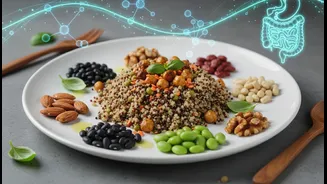
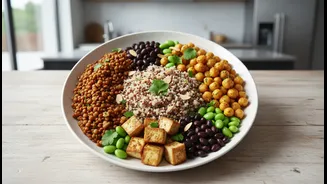
Generally, animal-based proteins from sources like whey, casein (dairy), eggs, and meat are highly bioavailable. They contain all nine essential amino acids in proportions that our bodies can readily use, often scoring 1.0 on the PDCAAS scale. Plant-based proteins can be a different story. While sources like soy are considered high-quality, many plant proteins might be lower in one or more essential amino acids. They can also contain 'anti-nutrients' like fiber and phytates that can slightly reduce the amount of protein absorbed. However, this doesn't mean plant proteins are inferior; it simply means a bit more strategy is needed. Combining different plant sources—like rice and beans—throughout the day can provide a complete amino acid profile.
Making Smarter Choices
So, how can you use this knowledge? Don't just get fixated on the total grams. Instead, focus on quality and variety. Prioritise high-quality protein sources like lean meats, fish, eggs, dairy, and soy. If you rely on plant-based foods, be sure to eat a wide variety of sources to cover all your amino acid needs. When choosing protein supplements, look for those with minimal fillers and artificial ingredients. Remember that a powder made from whey isolate will absorb faster than a whole food like steak, and both have their place in a balanced diet. The goal is not just to eat protein, but to absorb and utilize it effectively.